


A Kaohsiung spring roll vendor who failed to disclose the use of eggs and shredded meat is facing a NT$360,000 fine and possible criminal charges in connection with a food poisoning outbreak that sickened 140 people.
At least 12 of 140 people have tested positive for salmonella, the Kaohsiung City Department of Health said.
The incident first became known on Saturday after a customer posted on social media that six family members had begun to experience stomach pain, diarrhea and other gastrointestinal symptoms within four hours of eating spring rolls from a stall in Zhengyi Market (正義市場) in Lingya District (苓雅).
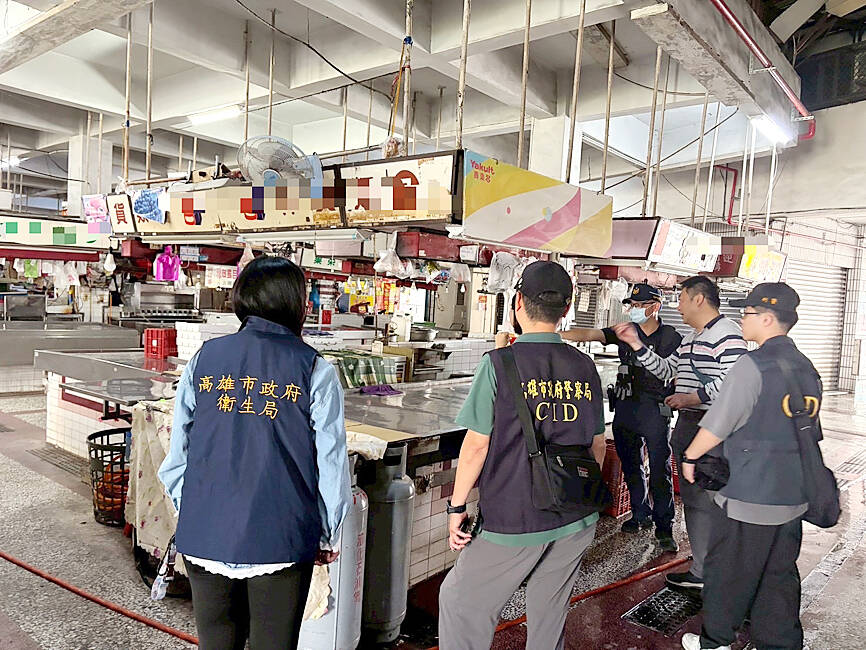
Photo courtesy of the Kaohsiung Department of Health
This was followed by dozens more reports on Sunday of vomiting and diarrhea among people who had consumed spring rolls from the same vendor, who was subsequently ordered to suspend operations.
The Kaohsiung City Department of Health said that 31 people remained hospitalized as of 4pm yesterday, while 18 were under observation and 91 had been discharged.
The department said the vendor initially said the rolls contained only bean sprouts, cabbage, carrots, sausage, dried tofu, sugar and peanut powder, but investigators later found out that the rolls also included eggs and shredded meat.
Officials said they imposed the NT$360,000 fine due to the vendor’s “lack of cooperation and evasive behavior,” adding that the case has been referred to prosecutors for criminal investigation given the severity of the contraventions.
Prosecutors visited the stall yesterday afternoon to collect evidence and investigate potential contraventions of the Act Governing Food Safety and Sanitation (食品安全衛生管理法), the Kaohsiung District Prosecutors’ Office said.
Affected people are advised to retain medical records and receipts to seek compensation for medical expenses, lost income and emotional distress, it said.
Those unable to reach a settlement can file complaints with the city’s consumer service center via the 1950 hotline, it said.
Linkou Chang Gung Memorial Hospital Clinical Poison Center director Yen Tzung-hai (顏宗海) yesterday said that food should not remain in the “danger zone” — 7°C to 60°C — for more than two hours.
Food already falls within this risky range in room temperature, he said, adding that common bacteria such as Staphylococcus aureus, E coli and salmonella can multiply quickly in these conditions, increasing the risk of food poisoning.
The ingredients in spring rolls — such as cabbage, dried tofu, bean sprouts, radish and peanut powder — should not be left at room temperature for too long, he said.
Ideally, they should be consumed within two hours, otherwise they could cause food poisoning, he said.
Food poisoning symptoms often include acute gastroenteritis such as nausea, vomiting, abdominal pain, diarrhea and high fever, Yen said.
If stored for longer periods, spring rolls should be kept in the refrigerator, he said.

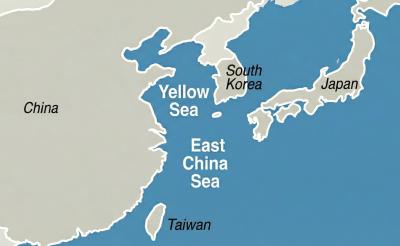
China has reserved offshore airspace in the Yellow Sea and East China Sea from March 27 to May 6, issuing alerts usually used to warn of military exercises, although no such exercises have been announced, the Wall Street Journal (WSJ) reported yesterday. Reserving such a large area for 40 days without explanation is an “unusual step,” as military exercises normally only last a few days, the paper said. These alerts, known as Notice to Air Missions (Notams), “are intended to inform pilots and aviation authorities of temporary airspace hazards or restrictions,” the article said. The airspace reserved in the alert is

South Korea is planning to revise its controversial electronic arrival card, a step Taiwanese officials said prompted them to hold off on planned retaliatory measures, a South Korean media report said yesterday. A Yonhap News Agency report said that the South Korean Ministry of Foreign Affairs is planning to remove the “previous departure place” and “next destination” fields from its e-arrival card system. The plan, reached after interagency consultations, is under review and aims to simplify entry procedures and align the electronic form with the paper version, a South Korean ministry official said. The fields — which appeared only on the electronic form

A bipartisan group of US senators has introduced a bill to enhance cooperation with Taiwan on drone development and to reduce reliance on supply chains linked to China. The proposed Blue Skies for Taiwan Act of 2026 was introduced by Republican US senators Ted Cruz and John Curtis, and Democratic US senators Jeff Merkley and Andy Kim. The legislation seeks to ease constraints on Taiwan-US cooperation in uncrewed aerial systems (UAS), including dependence on China-sourced components, limited access to capital and regulatory barriers under US export controls, a news release issued by Cruz on Wednesday said. The bill would establish a "Blue UAS
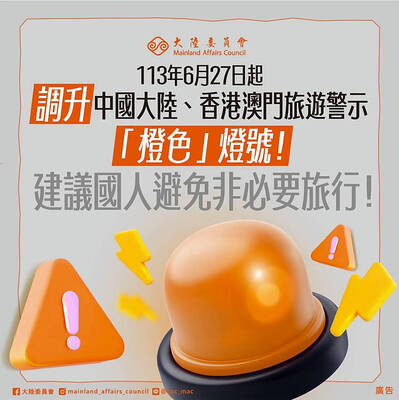
More than 6,000 Taiwanese students have participated in exchange programs in China over the past two years, despite the Mainland Affairs Council’s (MAC) “orange light” travel advisory, government records showed. The MAC’s publicly available registry showed that Taiwanese college and university students who went on exchange programs across the Strait numbered 3,592 and 2,966 people respectively. The National Immigration Agency data revealed that 2,296 and 2,551 Chinese students visited Taiwan for study in the same two years. A review of the Web sites of publicly-run universities and colleges showed that Taiwanese higher education institutions continued to recruit students for Chinese educational programs without


 RSS
RSS