


A limit on the length of detention for Chinese nationals who contravene immigration rules could create a national security loophole, an immigration official said yesterday.
The current system lacks a mechanism to re-detain Chinese nationals who contravene rules after being released from immigration detention, potentially creating a national security risk, the official said, speaking on condition of anonymity.
Under current regulations, once a detention expires, detainees must be released under conditions such as mandatory reporting or residency restrictions, or be required to provide a guarantor, ensuring they remain available for deportation without being imprisoned.
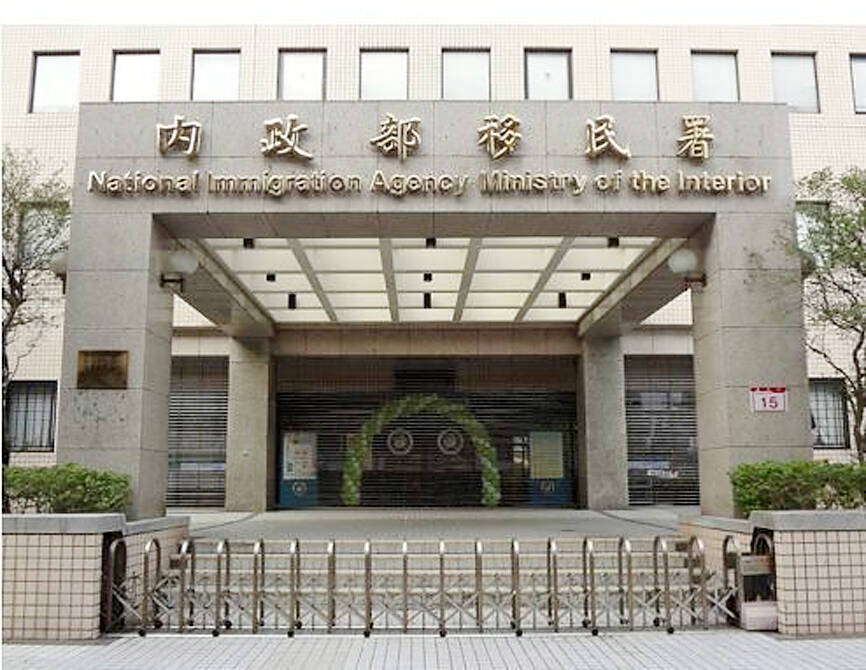
Photo: Taipei Times
For example, Ruan Fangyong (阮芳勇), a self-described former member of the Chinese People’s Liberation Army Navy, on June 8 last year piloted a speedboat from China’s Fujian Province to a pier in New Taipei City along the Tamsui River, illegally entering Taiwan’s waters, the official said.
Ruan’s detention expired before he could be deported due to the state of cross-strait relations, and following his release, he sparked controversy when he spoke to the media, they said.
In another case, a Chinese influencer surnamed Yang (楊) swam from Xiamen, China, to Kinmen County in May 2023.
After being sentenced to three months in prison and held in immigration detention for five months, he spent some time outside the detention center before being deported to China, and later posted videos on social media claiming that after being released from detention he had traveled around Taiwan, the official said.
The National Immigration Agency (NIA) detained more than 20,000 foreign nationals last year, 19,000 of whom were deported before their detention limit expired, agency data showed.
Among the about 1,000 people who were released from detention, more than a dozen were Chinese nationals who had illegally entered Taiwan, but could not be deported in the short term.
The agency operates two separate detention systems, with foreign nationals governed by the Immigration Act (入出國及移民法), while Chinese nationals fall under the Act Governing Relations Between the People of the Taiwan Area and the Mainland Area (臺灣地區與大陸地區人民關係條例).
Following amendments to the Immigration Act three years ago, foreign nationals released after reaching the end of their detention term could be detained again if they contravene regulations or if authorities lose contact with them.
However, Chinese nationals who contravene rules or evade contact are only issued a warning and face no other enforcement measures.
Some experts have expressed concern that if the Chinese Communist Party were to deliberately send large numbers of people to illegally enter Taiwan, they could remain in Taiwan after their detention limit expires if China refuses to cooperate with deportation requests. They could then move freely in Taiwan after their released.
In response, the NIA said it last year forwarded draft amendments that would authorize the agency to re-detain Chinese nationals deemed to pose a threat to national security, with detention periods calculated separately.
The amendments are under review, it said.
The Mainland Affairs Council said the NIA has some enforcement options at its disposable, as there are circumstances in which Chinese nationals deemed to pose a national security threat could be detained again within the scope of existing laws.
Additional reporting by Chen Yu-fu

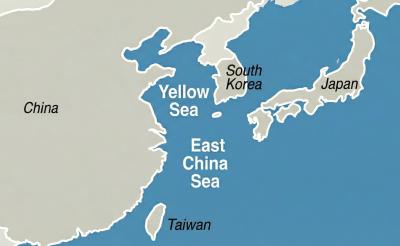
China has reserved offshore airspace in the Yellow Sea and East China Sea from March 27 to May 6, issuing alerts usually used to warn of military exercises, although no such exercises have been announced, the Wall Street Journal (WSJ) reported yesterday. Reserving such a large area for 40 days without explanation is an “unusual step,” as military exercises normally only last a few days, the paper said. These alerts, known as Notice to Air Missions (Notams), “are intended to inform pilots and aviation authorities of temporary airspace hazards or restrictions,” the article said. The airspace reserved in the alert is

South Korea is planning to revise its controversial electronic arrival card, a step Taiwanese officials said prompted them to hold off on planned retaliatory measures, a South Korean media report said yesterday. A Yonhap News Agency report said that the South Korean Ministry of Foreign Affairs is planning to remove the “previous departure place” and “next destination” fields from its e-arrival card system. The plan, reached after interagency consultations, is under review and aims to simplify entry procedures and align the electronic form with the paper version, a South Korean ministry official said. The fields — which appeared only on the electronic form

A bipartisan group of US senators has introduced a bill to enhance cooperation with Taiwan on drone development and to reduce reliance on supply chains linked to China. The proposed Blue Skies for Taiwan Act of 2026 was introduced by Republican US senators Ted Cruz and John Curtis, and Democratic US senators Jeff Merkley and Andy Kim. The legislation seeks to ease constraints on Taiwan-US cooperation in uncrewed aerial systems (UAS), including dependence on China-sourced components, limited access to capital and regulatory barriers under US export controls, a news release issued by Cruz on Wednesday said. The bill would establish a "Blue UAS

More than 6,000 Taiwanese students have participated in exchange programs in China over the past two years, despite the Mainland Affairs Council’s (MAC) “orange light” travel advisory, government records showed. The MAC’s publicly available registry showed that Taiwanese college and university students who went on exchange programs across the Strait numbered 3,592 and 2,966 people respectively. The National Immigration Agency data revealed that 2,296 and 2,551 Chinese students visited Taiwan for study in the same two years. A review of the Web sites of publicly-run universities and colleges showed that Taiwanese higher education institutions continued to recruit students for Chinese educational programs without


 RSS
RSS