


The government has been working on measures to assist local pharmaceutical companies amid US President Donald Trump’s threat to impose new tariffs on drugmakers, Food and Drug Administration (FDA) Director-General Chiang Chih-kang (姜至剛) said at a news conference yesterday.
A Bloomberg report said that Trump could impose the tariffs as early as yesterday on drugmakers that have not reached a deal with him to reduce the cost of medicines in the US.
Trump has previously threatened the industry with tariffs ranging from 100 percent to 200 percent, the report said.
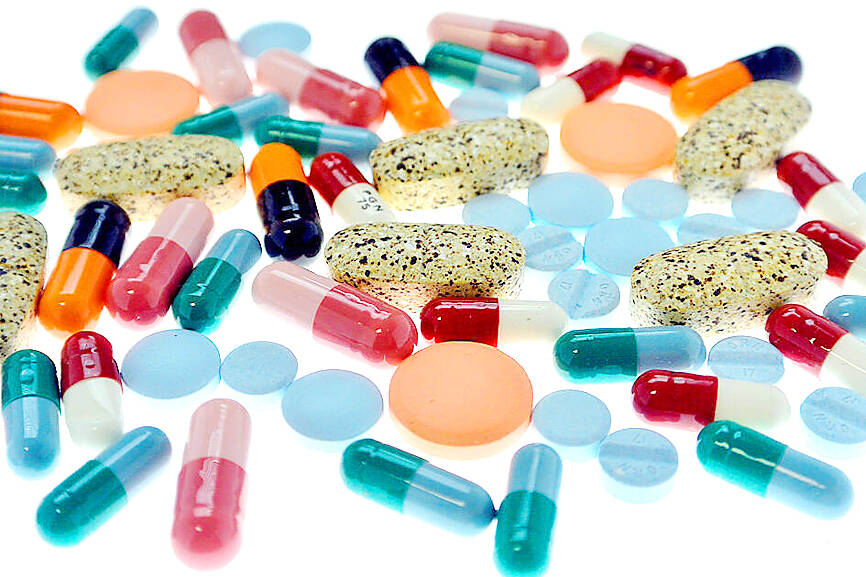
Photo: Reuters
Major pharmaceutical firms, including Pfizer Inc and Eli Lilly & Co, have reached agreements with the Trump administration for a three-year reprieve from such tariffs, it added.
When asked, Chiang said that Taiwan-made drugs mainly supply the domestic market.
In 2024, Taiwanese pharmaceutical exports totaled US$990 million, of which US$323 million went to the US, he said.
Meanwhile, imports of drugs and raw materials for medicines from the US totaled US$306 million, he said.
The trade figures were largely unchanged last year, despite signals that Trump was planning to levy tariffs, Chiang said.
The FDA, in conjunction with the Ministry of Economic Affairs, has been preparing measures to help Taiwanese drugmakers cushion the impact should the US follow through on its tariff threats, he said.
The agency has opened channels with pharmaceutical companies to ensure the government is apprised of the industry’s needs to address problems arising from US tariffs, Chiang said.
Trump’s levies could also drive up global drug prices and negatively affect the availability of medicines in Taiwan, he said.
Taiwan is in the process of enacting measures that would encourage the domestic manufacture of essential drugs, which should increase the competitiveness of the pharmaceutical industry, he said.
The FDA and the National Health Insurance Administration would jointly conduct health technology assessments to explore options for dealing with price hikes in medicines and raw materials that cannot be readily substituted, Chiang said.
Meanwhile, the Trump administration’s 2026 National Trade Estimation Report stated that Taiwan has pledged to remove any unnecessary safety inspections or regulations that contradict the WHO’s Codex Alimentarius regarding ractopamine in meat products.
The substance is a feed additive used to enhance the leanness of beef and pork.
When asked for comment, Chiang said that Taiwan agreed to accept meat products certified as safe for consumption by the US Department of Agriculture under the Agreement on Reciprocal Trade (ART).
The FDA and the Ministry of Health and Welfare carefully assessed the potential health impact and drafted additional measures to reduce risks to public health before this deal in February, he said.
Under the ART, meat products must originate in the US and obtain US FDA approval to be exempt from additional safety inspections in Taiwan.
Producers must also provide Taiwan’s FDA with the data and protocols of relevant tests to qualify, Chiang said.
Details about Taiwan’s implementation of follow-up measures addressing the implications of the ART would be finalized by the Executive Yuan at a later time, he said.

Yangmingshan National Park authorities yesterday urged visitors to respect public spaces and obey the law after a couple was caught on a camera livestream having sex at the park’s Qingtiangang (擎天崗) earlier in the day. The Shilin Police Precinct in Taipei said it has identified a suspect and his vehicle registration number, and would summon him for questioning. The case would be handled in accordance with public indecency charges, it added. The couple entered the park at about 11pm on Thursday and began fooling around by 1am yesterday, the police said, adding that the two were unaware of the park’s all-day live
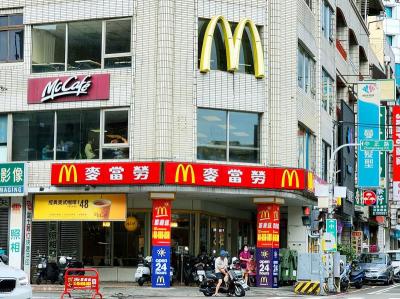
Fast food chain McDonald's is to raise prices by up to NT$5 on some products at its restaurants across Taiwan, starting on Wednesday next week, the company announced today. The prices of all extra value meals and sharing boxes are to increase by NT$5, while breakfast combos and creamy corn soup would go up by NT$3, the company said in a statement. The price of the main items of those meals, if ordered individually, would remain the same. Meanwhile, the price of a medium-sized lemon iced tea and hot cappuccino would rise by NT$3, extra dipping sauces for chicken nuggets would go up

Yangmingshan National Park’s Qingtiangang (擎天崗) nature area has gone viral after a park livestream camera observed a couple in the throes of intimate congress, which was broadcast live on YouTube, drawing large late-night crowds and sparking a backlash over noise, bright lights and disruption to wildlife habitat. The area’s livestream footage appeared to show a couple engaging in sexual activity on a picnic table in the park on Friday last week, with the uncensored footage streamed publicly online. The footage quickly spread across social media, prompting a tide of visitors to travel to the site to “check in” and recreate the

Minister of Digital Affairs Lin Yi-ching (林宜敬) yesterday cited regulatory issues and national security concerns as an expert said that Taiwan is among the few Asian regions without Starlink. Lin made the remarks on Facebook after funP Innovation Group chief executive officer Nathan Chiu (邱繼弘) on Friday said Taiwan and four other countries in Asia — China, North Korea, Afghanistan and Syria — have no access to Starlink. Starlink has become available in 166 countries worldwide, including Ukraine, Malaysia, the Philippines and Vietnam, in the six years since it became commercial, he said. While China and North Korea block Starlink, Syria is not


 RSS
RSS