


The number of severely polluted river monitoring stations in Taiwan has fallen to a record low — only two compared with 66 in 2002 — as the Ministry of Environment (MOENV) moves to tighten enforcement on illegal wastewater discharge and address emerging contaminants in drinking water.
The ministry launched a major project to clean up Taiwan’s rivers in 2002, as improper treatment of wastewater from factories, pig farms and households led to widespread pollution.
Since 2002, Taiwan’s GDP has grown by one-and-a-half times and the number of factories has increased by 27 percent, leading to a corresponding rise in river pollution, Water Quality Protection Department Director-General Wang Yue-bin (王嶽斌) said yesterday.
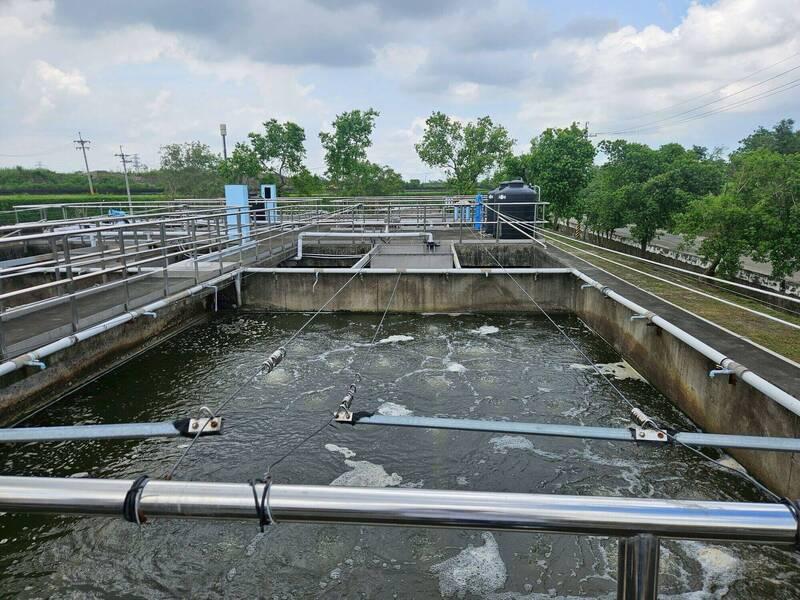
Photo courtesy of the Ministry of Environment
After years of joint efforts by the public and private sectors, the number of severely polluted river monitoring stations has dropped from 66 to just two last year — a record low, Wang said.
The proportion of rivers classified as polluted has also fallen from 14 percent to 1.9 percent, with water quality in 70 percent of national rivers showing steady improvement, he said.
However, water quality in the remaining 30 percent is unstable due to earthquakes, landslides and heavy rainfall brought by climate change, including two rivers in the north, four in central Taiwan, two in the south and eight in the east, Wang said.
The two monitoring stations still classified as severely polluted are the Wugong Bridge station on the Erren River (二仁溪) and the Heping Bridge station on the Beigang River (北港溪), he said.
The former is a drainage channel into which no water treatment plants flow, and the latter is impacted by livestock wastewater, he said, adding that they would continue to be improved.
There are 26 monitoring stations that are on the threshold between moderate and severe pollution, and have been placed under close watch, he added.
In the future, effluent standards would be tightened, and stricter controls would be placed on ammonia nitrogen, copper and phosphorus, Wang said.
The ministry is planning new guidelines and testing for emerging contaminants in drinking water, including 20 types of perfluorinated and polyfluorinated alkyl substances (PFAS), plasticizers, boron and microcystin toxins, he said.
The ministry is tackling illegal wastewater discharge from factories and night markets by installing automatic monitoring stations to detect abnormalities, Deputy Minister of Environment Yeh Jiunn-horng (葉俊宏) said.
Stricter laws have been put in place carrying fines of up to NT$20 million (US$626,576) for illegal discharge and criminal penalties for releasing hazardous substances, Yeh said.
For general wastewater, which is more challenging, the ministry plans to promote grease separation technology and expand sewage systems to reduce environmental impact, he said.
The public and private sectors are working together to deal with livestock wastewater, jointly investing in treatment plants, which have helped significantly, Tainan Environmental Protection Bureau Director-General Hsu Jen-tse (許仁澤) said.
The Tamsui River (淡水河), which was heavily polluted in the past, has noticeably improved thanks in part to a watershed governance platform that built consensus among stakeholders, New Taipei City Environment Protection Bureau Chief Secretary Hsu Ming-chih (許銘志) added.
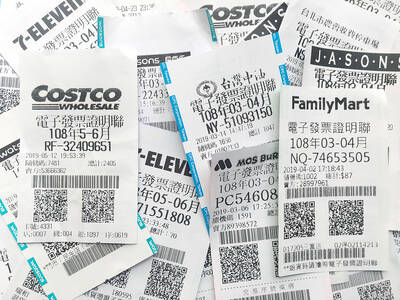
A NT$39 receipt for two bottles of tea at a FamilyMart was among the NT$10 million (US $312,969) special prize winners in the January-February uniform invoice lottery. FamilyMart said that two NT$10 million-winning receipts were issued at its stores, as well as two NT$2 million grand prizes and three NT$200,000 first prizes. The two NT$10 million receipts were issued at stores in Pingtung County and Yilan County’s Dongshan Township (冬山). One winner spent just NT$39 on two bottles of tea, while another spent NT$80 on water, tea and coffee, the company said. Meanwhile, 7-Eleven reported three NT$10 million winners — in New Taipei

Considering that most countries issue more than five denominations of banknotes, the central bank has decided to redesign all five denominations, the bank said as it prepares for the first major overhaul of the banknotes in more than 24 years. Central bank Governor Yang Chin-lung (楊金龍) is expected to report to the Legislative Yuan today on the bank’s operations and the redesign’s progress. The bank in a report sent to the legislature ahead of today’s meeting said it had commissioned a survey on the public’s preferences. Survey results showed that NT$100 and NT$1,000 banknotes are the most commonly used, while NT$200 and NT$2,000

The Centers for Disease Control (CDC) yesterday reported the first case of a new COVID-19 subvariant — BA.3.2 — in a 10-year-old Singaporean girl who had a fever upon arrival in Taiwan and tested positive for the disease. The girl left Taiwan on March 20 and the case did not have a direct impact on the local community, it said. The WHO added the BA.3.2 strain to its list of Variants Under Monitoring in December last year, but this was the first imported case of the COVID-19 variant in Taiwan, CDC Deputy Director-General Lin Ming-cheng (林明誠) said. The girl arrived in Taiwan on

ANNUAL EVENT: Two massive Pokemon balloons are to be set up in Daan Park, with an event zone operating from 10am to 6pm This year’s Taipei Floral Picnic is to be held at Daan Park today and tomorrow, featuring an exclusive Pokemon Go event, a themed food market, a coffee rave picnic area and stage performances, the Taipei Department of Information and Tourism said yesterday. Two massive Pokemon balloons are to be set up in the park as attractions, with an exclusive event zone operating from 10am to 6pm, it said. Participants who complete designated tasks on-site would have a chance to receive limited-edition souvenirs, it added. People could also try the newly launched game Pokemon Pokopia in the trial area, the department said. Three PokeStops are


 RSS
RSS