


The German Institute Taipei on Saturday celebrated the life of late National Taiwan University (NTU) professor Wolfgang Kroll, a theoretical physicist who was the first scientist in Taiwan to publish in an international scientific journal.
Germany’s overseas representative office in Taiwan honored the late scientist on what would have been his 120th birthday on Saturday with a video posted across the institute’s social media accounts.
In the video, the institute’s science and technology officer, Julian Goldmann, praised Kroll as an example of academic exchanges between Taiwan and Germany.

Photo: CNA
Goldmann said Kroll was a student of Werner Heisenberg, the winner of the 1932 Nobel Prize in Physics, but later left Nazi Germany to maintain his scientific freedom in Japan.
While there, he served as a lecturer at Hokkaido University for five years, starting in 1937.
Continuing his academic employment in Japan’s education system, Kroll came to Taiwan in 1941 when Taiwan was still a Japanese colony to teach at the Imperial University of Taipei, which later became NTU.
Kroll decided to stay at NTU following Japan’s defeat in World War II when presented with the opportunity to be promoted to the position of associate professor in the university’s new physics department.
Subsequently, Kroll became one of the pioneering founders of the department and taught several courses, including theoretical physics, quantum mechanics, relativity, statistical mechanics, physical mathematics, and electronics.
He was also known for many "firsts," such as being Taiwan’s first Ph.D. professor of physics after the war and the first scholar in Taiwan to publish in Physical Review, an international peer-reviewed scientific journal established in 1893.
Kroll, who did not speak Mandarin, taught in a mix of English and Japanese. He eventually offered courses outside NTU, guest teaching in many schools around Taiwan even after his mandatory retirement from the university in 1976.
Kroll passed away in Taipei in 1992 from emphysema at the age of 87.
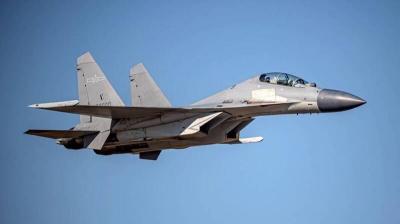
Eight Chinese naval vessels and 24 military aircraft were detected crossing the median line of the Taiwan Strait between 6am yesterday and 6am today, the Ministry of National Defense said this morning. The aircraft entered Taiwan’s northern, central, southwestern and eastern air defense identification zones, the ministry said. The armed forces responded with mission aircraft, naval vessels and shore-based missile systems to closely monitor the situation, it added. Eight naval vessels, one official ship and 36 aircraft sorties were spotted in total, the ministry said.
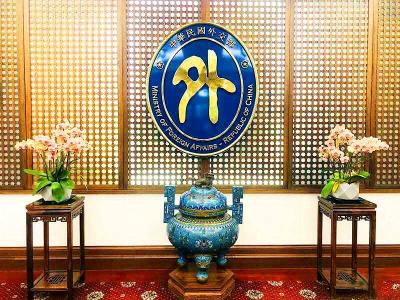
The Ministry of Foreign Affairs (MOFA) today said that if South Korea does not reply appropriately to its request to correct Taiwan’s name on its e-Arrival card system before March 31, it would take corresponding measures to alter how South Korea is labeled on the online Taiwan Arrival Card system. South Korea’s e-Arrival card system lists Taiwan as “China (Taiwan)” in the “point of departure” and “next destination” fields. The ministry said that it changed the nationality for South Koreans on Taiwan’s Alien Resident Certificates from “Korea” to “South Korea” on March 1, in a gesture of goodwill and based on the
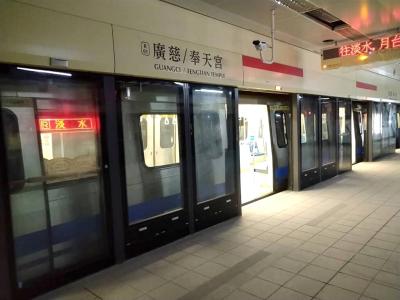
The New Taipei Metro's Sanyin Line and the eastern extension of the Taipei Metro's Tamsui-Xinyi Line (Red Line) are scheduled to begin operations in June, the National Development Council said today. The Red Line, which terminates at Xiangshan Station, would be connected by the 1.4km extension to a new eastern terminal, Guangci/Fengtian Temple Station, while the Sanyin Line would link New Taipei City's Tucheng and Yingge stations via Sanxia District (三峽). The council gave the updates at a council meeting reviewing progress on public construction projects for this year. Taiwan's annual public infrastructure budget would remain at NT$800 billion (US$25.08 billion), with NT$97.3
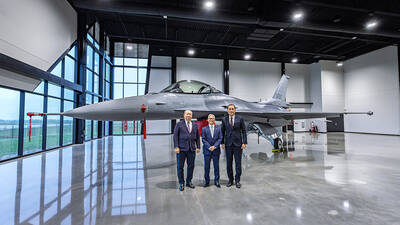
Taiwanese officials were shown the first of 66 F-16V fighter jets purchased by Taiwan from the United States, the Ministry of National Defense said yesterday, adding the aircraft has completed an initial flight test and is expected to be delivered later this year. A delegation led by Deputy Minister of National Defense Hsu Szu-chien (徐斯儉) visited Lockheed Martin’s F-16 C/D Block 70 (also known as F-16V) assembly line in South Carolina on March 16 to view the aircraft. The jet will undergo a final acceptance flight in the US before being delivered to Taiwan, the


 RSS
RSS