


China has never given up attacking Taiwan by force, and its military buildup continues unabated, posing a pressing threat to the nation, Minister of National Defense Wellington Koo (顧立雄) said today.
Effective deterrence is needed to make sure any attack would be very risky for Beijing, Koo told reporters before a legislative session in Taipei.
His comments came after a US intelligence report released on Wednesday said that China does not plan to invade Taiwan next year and seeks to control the nation without the use of force.
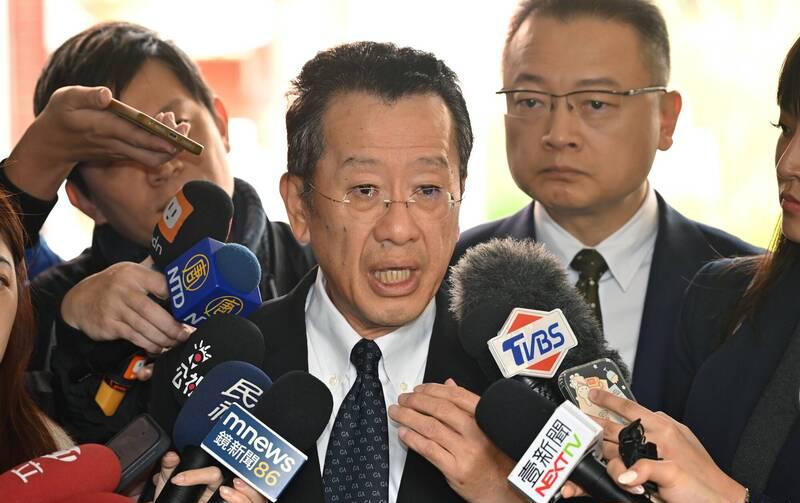
Photo: Chen I-kuan, Taipei Times
Speaking about the US report, Koo said that China has neither given up the option of using force against Taiwan nor slowed its military spending.
Although China’s economic growth is estimated to fall below 5 percent, it has announced a 7 percent increase in its defense budget this year, he said.
"So its military expansion, and the threat it poses to us, remain very serious," he said. "We need to make it feel that any plan to attack Taiwan would carry a high degree of risk: in other words, to make its assessment of a successful invasion very low."
If China continues expanding its military while Taiwan's defense capabilities do not improve, the likelihood of an attack would rise, he said.
"On the other hand, if our defense capabilities continue to improve and our deterrence grows stronger, then its calculation regarding an attack on Taiwan will decrease. That would have the effect of pushing back such a date again and again," Koo said.
The armed forces are closely monitoring signs of Chinese military expansion through several joint intelligence, surveillance and reconnaissance methods to maintain a firm grasp on Beijing’s potential actions, he said.
There has also been no sign of Chinese vessels withdrawing from waters around Taiwan, he said, adding that Chinese warships continue to conduct joint combat readiness patrols and other operations that amount to military harassment.
To deter a potential full-scale invasion by China, Taiwan must steadily improve its capabilities by enhancing equipment, operational capacity and training in line with overall defense needs, he said.
Asked whether the US report would affect opposition parties’ stance on arms purchases from the US, Koo said that Taiwan must continue to build up its self-defense capabilities.
Also speaking in response to the report, Mainland Affairs Council Minister Chiu Chui-cheng (邱垂正) said that the government draws on a wide range of domestic and international assessments when evaluating the threat of a Chinese attack, and would not base its conclusions on a single report.
Taiwan must plan for the worst with the best preparation, he said.
China’s threat is reflected in its Taiwan policy, which remains aimed at “eliminating the Republic of China and annexing Taiwan,” Chiu said.
This intent is manifested in its military aircraft and naval incursions, which have never ceased, he added.
Asked if Beijing aims to “unify” Taiwan by 2049, he said yes, adding that Chinese officials have framed resolving the Taiwan issue as a necessary step in achieving the “great rejuvenation of the Chinese nation.”
China has shown no sign of easing its pressure on Taiwan and is continuing to intensify its preparations, he added.
Taiwan must bolster its self-defense capabilities, deepen cooperation with allies, and enhance economic security and whole-of-society resilience to ensure its safety, he said.

Fast food chain McDonald's is to raise prices by up to NT$5 on some products at its restaurants across Taiwan, starting on Wednesday next week, the company announced today. The prices of all extra value meals and sharing boxes are to increase by NT$5, while breakfast combos and creamy corn soup would go up by NT$3, the company said in a statement. The price of the main items of those meals, if ordered individually, would remain the same. Meanwhile, the price of a medium-sized lemon iced tea and hot cappuccino would rise by NT$3, extra dipping sauces for chicken nuggets would go up

Yangmingshan National Park’s Qingtiangang (擎天崗) nature area has gone viral after a park livestream camera observed a couple in the throes of intimate congress, which was broadcast live on YouTube, drawing large late-night crowds and sparking a backlash over noise, bright lights and disruption to wildlife habitat. The area’s livestream footage appeared to show a couple engaging in sexual activity on a picnic table in the park on Friday last week, with the uncensored footage streamed publicly online. The footage quickly spread across social media, prompting a tide of visitors to travel to the site to “check in” and recreate the

Minister of Digital Affairs Lin Yi-ching (林宜敬) yesterday cited regulatory issues and national security concerns as an expert said that Taiwan is among the few Asian regions without Starlink. Lin made the remarks on Facebook after funP Innovation Group chief executive officer Nathan Chiu (邱繼弘) on Friday said Taiwan and four other countries in Asia — China, North Korea, Afghanistan and Syria — have no access to Starlink. Starlink has become available in 166 countries worldwide, including Ukraine, Malaysia, the Philippines and Vietnam, in the six years since it became commercial, he said. While China and North Korea block Starlink, Syria is not
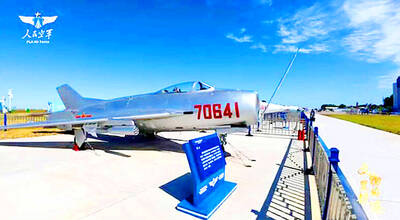
GROUNDED: A KMT lawmaker proposed eliminating drone development programs and freezing funding for counterdrone systems, despite China’s adoption of the technology China has deployed attack drones at air bases near the Taiwan Strait in a strategy aimed at overwhelming Taiwan’s air defense systems through saturation attacks, the Mainland Affairs Council (MAC) said. The council’s latest quarterly report on China said that satellite imagery and open-source intelligence indicate that the Chinese People’s Liberation Army (PLA) had converted retired J-6 fighter jets into J-6W drones, which the PLA has stationed at six air bases near Taiwan, five in China’s Fujian Province and one in Guangdong Province. The report cited J. Michael Dahm, a senior fellow at the US-based Mitchell Institute, as saying that China has


 RSS
RSS