


Taiwan has secured more than half of its liquefied natural gas (LNG) needs for May and crude oil supply through April, ensuring a steady power supply to support its semiconductor industry, which is threatened as the war in the Middle East stretches into a third week, Bloomberg News reported on Monday.
The conflict could “choke off key supplies vital for chipmaking and spike the cost of power in Taiwan,” said the report, titled “Iran War Chokepoints Begin to Cast Doubt on Global Chip Supply.”
Taiwan’s semiconductor industry depends on chemicals, components, machinery and other materials from abroad, including helium and sulfur, Bloomberg said.
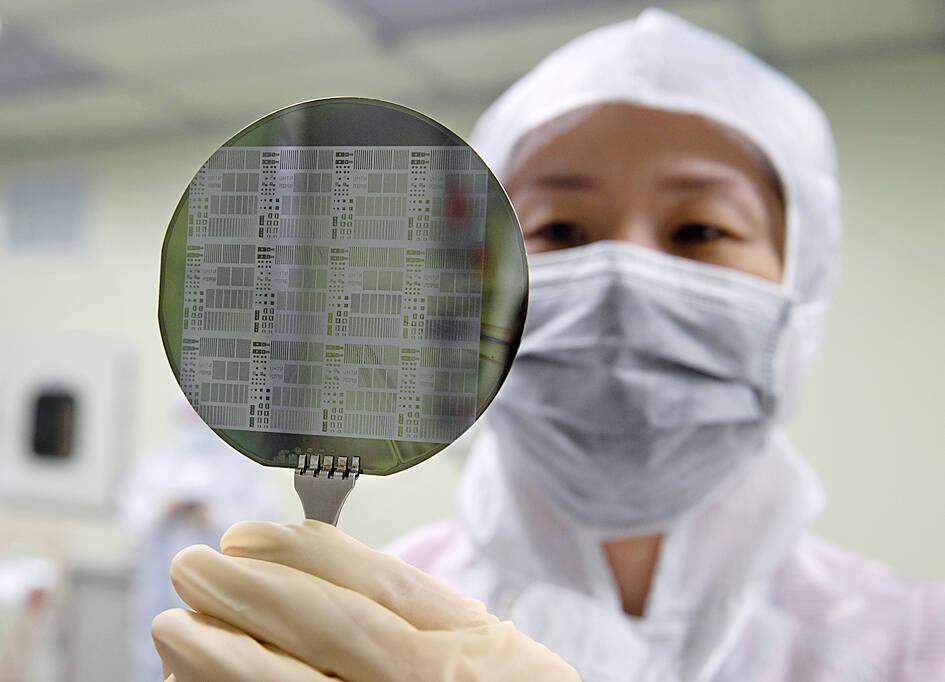
Photo: CNA
Any interruptions to the nation’s helium, one-third of which is processed in Qatar, sulfur, which is made through oil and gas refining, or electrical grid, which draws one-third of its fuel from the Middle East, would affect Taiwan Semiconductor Manufacturing Co, it said.
“A disruption in the Strait of Hormuz wouldn’t automatically halt chip production, but it could ripple through power costs, materials supply, and the economics of building AI infrastructure,” Shawn Kim, head of Asia technology research at Morgan Stanley, told Bloomberg.
Taiwan relies heavily on imports for its fuel, and its LNG reserves are only sufficient for 11 days, leaving it “especially vulnerable to supply disruptions,” Bloomberg said.
In comparison, South Korea can store at least 52 days of LNG and Japan holds about three weeks of stockpiles, it said.
Taiwan has another few weeks of inventory arriving on ships, it added, citing Morgan Stanley.
“Taiwan has a 97 percent dependence on foreign imports for its energy needs” and about 37 percent of its LNG comes from the Middle East, according to a Goldman Sachs report published on Sunday last week, Bloomberg said, adding that Taiwan could pay much more for replacement cargoes.
“Commercial transit through the Strait of Hormuz remains severely disrupted, and Qatar has declared force majeure. For Taiwan, the key risk channel is not only oil prices, but physical gas availability, pricing, and delivery timing,” Goldman Sachs analysts told Bloomberg.
Taiwan has filled the gap left by 22 scheduled LNG shipments from Qatar for this month and next month, ensuring that domestic gas and power supplies remain secure, the Ministry of Economic Affairs said on Saturday last week.
Helium can be obtained through international suppliers and alternative source countries, including Australia and the US, so supply would not be affected by the situation in any single region, the Industrial Development Association said on Thursday last week.
Taiwan plans to lift the statutory minimum natural gas inventory from 11 days to 14 days starting next year, and would review that rule in future, Energy Administration Deputy Director-General Chen Chung-hsien (陳崇憲) told Bloomberg.
The nation has secured more than half of its LNG needs for May and has started negotiations with the US for its June supply, Chen said.
It also secured crude oil for this month and next month, and is working on May shipments, he added.
“Semiconductors is Taiwan’s strategic industry, we will make sure that the power supply to chip plants is stable,” he told Bloomberg.
“If the disruption is sustained over an extended period, helium shortages could force chipmakers to prioritize production of higher-margin AI [artificial intelligence] chips over less profitable components,” Bloomberg Economics analyst Michael Deng said.

Yangmingshan National Park authorities yesterday urged visitors to respect public spaces and obey the law after a couple was caught on a camera livestream having sex at the park’s Qingtiangang (擎天崗) earlier in the day. The Shilin Police Precinct in Taipei said it has identified a suspect and his vehicle registration number, and would summon him for questioning. The case would be handled in accordance with public indecency charges, it added. The couple entered the park at about 11pm on Thursday and began fooling around by 1am yesterday, the police said, adding that the two were unaware of the park’s all-day live
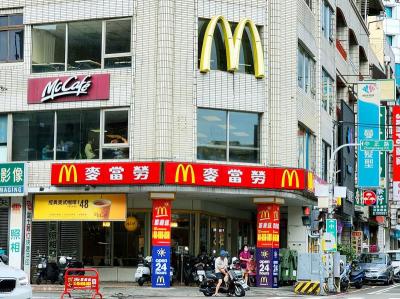
Fast food chain McDonald's is to raise prices by up to NT$5 on some products at its restaurants across Taiwan, starting on Wednesday next week, the company announced today. The prices of all extra value meals and sharing boxes are to increase by NT$5, while breakfast combos and creamy corn soup would go up by NT$3, the company said in a statement. The price of the main items of those meals, if ordered individually, would remain the same. Meanwhile, the price of a medium-sized lemon iced tea and hot cappuccino would rise by NT$3, extra dipping sauces for chicken nuggets would go up

Yangmingshan National Park’s Qingtiangang (擎天崗) nature area has gone viral after a park livestream camera observed a couple in the throes of intimate congress, which was broadcast live on YouTube, drawing large late-night crowds and sparking a backlash over noise, bright lights and disruption to wildlife habitat. The area’s livestream footage appeared to show a couple engaging in sexual activity on a picnic table in the park on Friday last week, with the uncensored footage streamed publicly online. The footage quickly spread across social media, prompting a tide of visitors to travel to the site to “check in” and recreate the

Minister of Digital Affairs Lin Yi-ching (林宜敬) yesterday cited regulatory issues and national security concerns as an expert said that Taiwan is among the few Asian regions without Starlink. Lin made the remarks on Facebook after funP Innovation Group chief executive officer Nathan Chiu (邱繼弘) on Friday said Taiwan and four other countries in Asia — China, North Korea, Afghanistan and Syria — have no access to Starlink. Starlink has become available in 166 countries worldwide, including Ukraine, Malaysia, the Philippines and Vietnam, in the six years since it became commercial, he said. While China and North Korea block Starlink, Syria is not


 RSS
RSS