


Prolonged sleep during long holidays to compensate for sleep deprivation is a “fantasy,” a psychiatrist said, calling on people to prioritize relieving stress over sleeping more.
Psychiatrist Yang Tsung-tsai (楊聰財) on Sunday said that people who are sleep deprived or stay up late during weekdays deliberately sleep more during long weekends or holidays.
For example, they might attempt to pay their sleep debt all at once by sleeping for 10 or 14 consecutive hours in one day, he said.

Photo courtesy of photoAC
Many people believe sleep is like a bank account that they could make deposits into or withdrawals from, but in reality, it is not a resource that could be linearly repaid, Yang said.
Weekend or holiday catch-up sleep does not make up for the lack of sleep, he said, adding that it is a “compensatory” psychological behavior in protest against a stressful lifestyle.
Many people seek to flee from the burden of life by sleeping, and excessive sleep during holidays is an escape mechanism, Yang said.
This problem is common among perfectionists, who are highly repressed in their daily lives and tend to indulge in uncontrolled relaxation during holidays, he said.
People who work in high-stress environments are more likely to be sleep deprived and indulge in catch-up sleep. These include doctors and nurses, tech or service workers or those who work in shifts, Yang said.
Aside from a person’s mental state, social environment is another factor, he said.
While mobile phones and streaming services delay bed time and urban light pollution affects melatonin secretion, modern society also encourages an overwork culture, Yang said.
“Working hard is praised while resting is shamed,” he said.
The issue is exacerbated by long holidays, during which people mess up their daily routine, he said.
The problem is not sleeping too much, but “disrupting the sleep-wake rhythm, Yang said.
Staying up late and sleeping late on holidays would delay bedtime sleepiness and decrease daytime alertness, he said.
The delay in the rise of cortisol levels in the morning affects metabolic efficiency, while sleeping longer than nine or 10 hours reduces the proportion of deep sleep, increases the risks of chronic inflammation and decreases dopamine activity, Yang said.
People who catch up on sleep typically binge-sleep during long weekends or holidays and then wake up feeling weak, listless and heavy-headed, he said.
Real rest does not lie in prolonged sleep, but a balanced lifestyle, Yang said.
Having a regular wake-up time — which is better than having a fixed bedtime — sunbathing and treating yourself with kindness are ways to reconcile your mind and body, he said.
A person could catch up on some sleep for no longer than one hour, or one-and-a-half hours at most, to avoid disrupting the sleep-wake rhythm, Yang said, adding that the approach could be combined with 10 to 20 minutes of sunbathing right after getting up, and a nap of 20 to 30 minutes.
Emotional release is more important than extending sleep, he said, advising people to exercise, talk to someone or keep a diary.
Yang urged people to set a regular wake-up time for the next long weekend and to go to bed no more than one hour later than their regular bedtime during holidays.
Avoid blue light before bed, bask in sunshine in the morning and schedule light activities during holidays to create a rhythmic life pace with emotions and stress properly managed, he said.
“When we stop fighting against our life, sleep would come back sweetly,” Yang said.
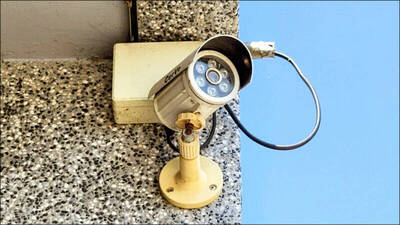
UNREASONABLE SURVEILLANCE: A camera targeted on an road by a neighbor captured a man’s habitual unsignaled turn into home, netting him dozens of tickets The Taichung High Administrative Court has canceled all 45 tickets given to a man for failing to use a turn signal while driving, as it considered long-term surveillance of his privacy more problematic than the traffic violations. The man, surnamed Tseng (曾), lives in Changhua County and was reported 45 times within a month for failing to signal while driving when he turned into the alley where his residence is. The reports were filed by his neighbor, who set up security cameras that constantly monitored not only the alley but also the door and yard of Tseng’s house. The surveillance occurred from July
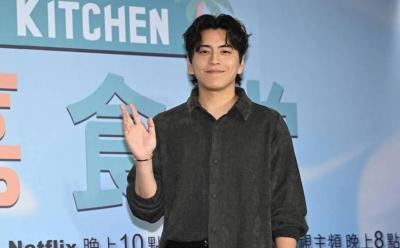
Actor Darren Wang (王大陸) was sentenced to six months in prison, commutable to a fine, by the New Taipei District Court today for contravening the Personal Data Protection Act (個人資料保護法) in a case linked to an alleged draft-dodging scheme. Wang allegedly paid NT$3.6 million (US$114,380) to an illegal group to help him evade mandatory military service through falsified medical documents, prosecutors said. He transferred the funds to Chen Chih-ming (陳志明), the alleged mastermind of a draft-evasion ring, although he lost contact with him as he was already in detention on fraud charges, they said. Chen is accused of helping a

SECURITY: Starlink owner Elon Musk has taken pro-Beijing positions, and allowing pro-China companies to control Taiwan’s critical infrastructure is risky, a legislator said Starlink was reluctant to offer services in Taiwan because of the nation’s extremely high penetration rates in 4G and 5G services, the Ministry of Digital Affairs said yesterday. The ministry made the comments at a meeting of the legislature’s Transportation Committee, which reviewed amendments to Article 36 of the Telecommunications Management Act (電信管理法). Article 36 bans foreigners from holding more than 49 percent of shares in public telecommunications networks, while shares foreigners directly and indirectly hold are also capped at 60 percent of the total, unless specified otherwise by law. The amendments, sponsored by Chinese Nationalist Party (KMT) Legislator Ko

A Japan Self-Defense Forces vessel entered the Taiwan Strait yesterday, Japanese media reported. After passing through the Taiwan Strait, the Ikazuchi was to proceed to the South China Sea to take part in a joint military exercise with the US and the Philippines, the reports said. Japan Self-Defense Force vessels were first reported to have passed through the strait in September, 2024, with two further transits taking place in February and June last year, the Asahi Shimbun reported. Yesterday’s transit also marked the first time since Japanese Prime Minister Sanae Takaichi took office that a Japanese warship has been sent through the Taiwan


 RSS
RSS