


Taipei tops the nation in dependent and mortgage burdens, making it the city where young and middle-aged adults face the heaviest financial and caregiving pressures in Taiwan, juggling responsibilities for both aging parents and children, government statistics show.
Taiwan has become a super-aged society (with 20 percent or more of the population being 65 or older) and has one of the world’s lowest birth rates, so stress on the “sandwich generation,” people in the window of having parents and children to take care of, is becoming heavier.
According to the Ministry of the Interior’s latest statistics, the dependency ratio — the sum of the young population (under age 15) and elderly population (65 or older) relative to the working-age population (ages 15 to 64) — in Taipei increased last year to 56.6 percent.
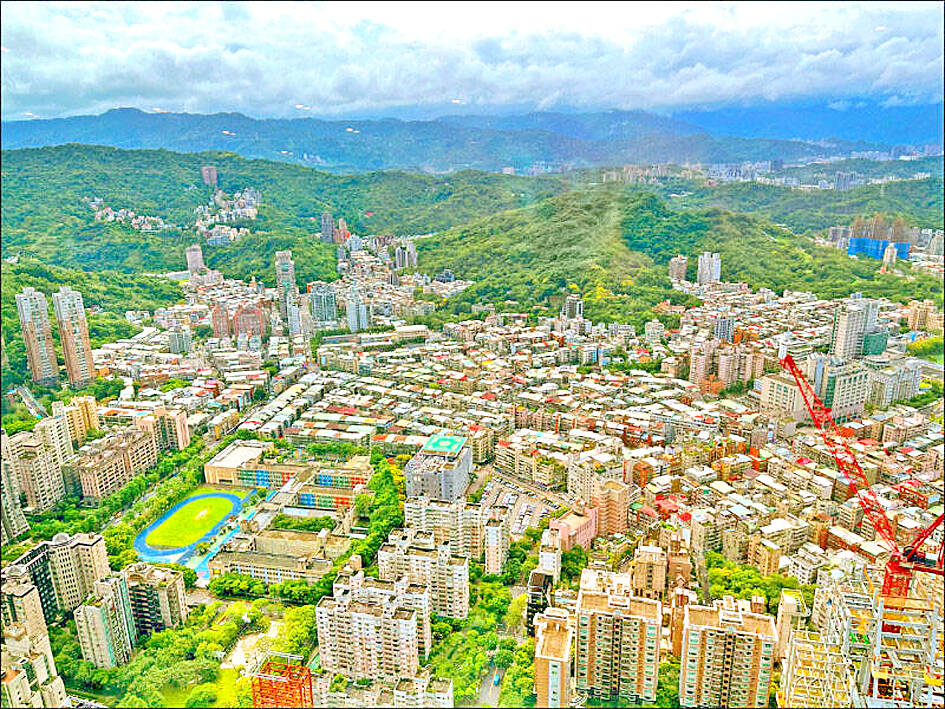
Photo: Taipei Times
If the working-age population is narrowed down to the “sandwich generation,” the stress level becomes even higher, and the elderly dependency ratio (ratio of the elderly population to the working-age population) of 37.86 percent in Taipei is the highest in the country.
Across counties and cities, Taipei is the only one with a dependency ratio more than 50 percent.
Taipei’s mortgage burden rate — the median monthly mortgage payment relative to median monthly household disposable income — is more than 65 percent, the only one exceeding 60 percent in the country.
Government figures show that many of Taipei’s “sandwich generation” not only bear a heavy burden of taking care of elderly and young family members, but also a heavy mortgage burden.
Following closely behind Taipei, the dependency ratio in Nantou County is 48.7 percent, while that in Chiayi County is 47.87 percent.
A ministry official said the numbers indicate severe population decline in these agricultural counties.
The Aging Index is a demographic metric comparing the number of elderly people to children under 15. Using Chiayi — with the highest aging index in the nation, a low youth dependency ratio of only 12.2 percent, and a high elderly dependency ratio of 35.6 percent — as an example, the official said the numbers imply that many of its young and middle-aged adults are going to other cities and counties, while those who remain shoulder a heavy burden caring for the elderly population.
Since recordkeeping began, Taiwan’s greatest generational stress was between 1959 and 1965, when the dependency ratio often exceeded 90 percent, meaning that each working-age person had to bear the burden of caring for either a child or an elderly person, with children being the majority of dependents at the time.
Using statistics from 1956 as an example, the country’s youth dependency ratio was 85.53 percent, while the elderly dependency ratio was only 5.05 percent, so the aging index was about 5.9 percent.
However, statistics from last year showed the country’s youth dependency ratio dropped to 16.83 percent, while the elderly dependency ratio increased to 29.31 percent, and the aging index increased to a record high of 174.24 percent.
The ministry official said these numbers show that the “sandwich generation” stress of young and middle-aged adults in urban areas continues to increase, while agricultural counties are facing the challenge of elderly people with no one to depend on.
When formulating welfare policies, subsidies should be precisely tailored to the demographic structures of each municipality, while long-term care and childcare resources should be allocated fairly to prevent “rich becoming richer while the poor get poorer” among counties, they said.

EXCUSES: Beijing is using government and research vessels as a pretext to harass the nation and enter its EEZ, and engage in ‘hegemonic expansion,’ the coast guard said The Coast Guard Administration yesterday said it drove away Chinese oceanographic research vessel Xiang Yang Hong 22 (向陽紅33) from restricted waters after warning it that it was in Taiwan’s exclusive economic zone (EEZ). The Chinese vessel entered restricted waters off the coast of Yilan County’s Suao (蘇澳) at 11:35pm on Thursday, the coast guard said, adding that it dispatched the Lanyu patrol vessel and the boat PP-10077 to shadow the Chinese ship and issue radio warnings ordering it to leave. China has no sovereignty over waters off Taiwan’s east coast, Lanyu’s crew told Xiang Yang Hong 22 over the radio, and demanded
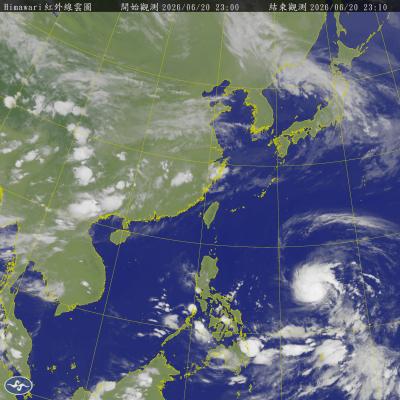
Tropical Storm Mekkhala is forecast to strengthen into a typhoon tomorrow and could come close enough to Taiwan later in the week to prompt a sea warning, the Central Weather Administration (CWA) said yesterday. As of 2 pm, the storm was located 1,870 kilometers southeast of Taiwan's southern tip and moving west- northwest at 23 km per hour. CWA forecaster Cheng Chieh-jen (鄭傑仁) said Mekkhala is expected to continue moving west-northwest through Tuesday under the influence of the Pacific high- pressure system before gradually turning north toward waters east of Taiwan or south of the Ryukyu Islands. The timing and angle of the
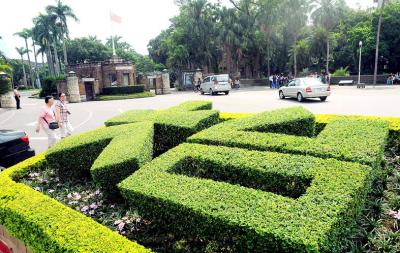
Four Taiwanese universities have been ranked among the world's top 200 institutions in the Quacquarelli Symonds (QS) World University Rankings for next year, the highest Taiwan has ever placed in the category, with National Taiwan University (NTU) achieving its best performance at 54th globally and 17th in Asia. The four Taiwanese institutions in the global top 200 are NTU (54th), National Tsing Hua University (142nd), National Yang Ming Chiao Tung University (177th) and National Cheng Kung University (191st), the rankings showed. All four universities achieved their highest-ever global rankings this year, QS data showed. National Cheng Kung University entered the top 200 for

RISING POPULARITY: Enhanced flight connectivity and a visa waiver trial program are among the motivations that have boosted travel to Taiwan by Filipinos, the agency said The Tourism Administration said yesterday that it is stepping up efforts to attract tourists from the Philippines following strong growth during the first quarter. The agency’s data showed the nation welcomed 210,000 Filipino visitors from January to March, marking a 43 percent increase compared with the same period last year. The Philippines is Taiwan’s top source of inbound tourists among the Southeast Asian nations, data showed. With a population of 116 million and national median age of 26, the Philippines boasts a young demographic with strong travel potential, the Tourism Administration said. Outbound travel demand in the Philippines continues to rise amid robust


 RSS
RSS