


The holding of a Japan-US leaders’ meeting ahead of US President Donald Trump’s visit to China is positive news for Taiwan, former Japan-Taiwan Exchange Association representative Hiroyasu Izumi said yesterday.
After the Liberal Democratic Party’s landslide victory in Japan’s House of Representatives election, Japanese Prime Minister Sanae Takaichi is scheduled to visit the US next month, where she is to meet with Trump ahead of the US president’s planned visit to China from March 31 to April 2 for a meeting with Chinese President Xi Jinping (習近平).
Japan and the US are expected to hold in-depth discussions on Taiwan-related issues during the meeting, Japanese sources said.
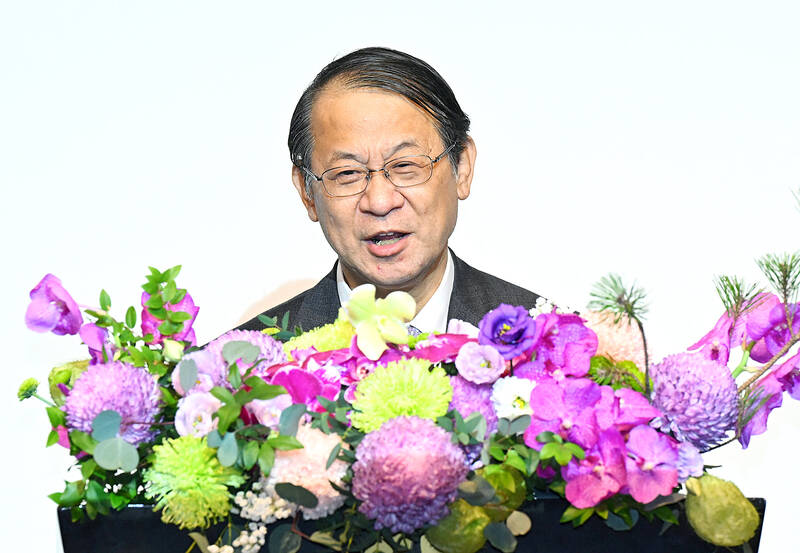
Photo: Liao Chen-huei, Taipei Times
Izumi in an interview with the Chinese-language Liberty Times (sister paper of the Taipei Times) said that he expected the Takaichi administration to actively pursue economic and military security policies while having a clear understanding of Taiwan’s role in regional security.
Holding the Japan-US leaders’ meeting is a positive development for Taiwan, Izumi said.
Takaichi’s Cabinet includes several pro-Taiwan lawmakers, which should ensure that Japan-Taiwan relations remain stable, he said, adding that with no major political disputes between the two nations, this is an ideal moment to focus on resolving key issues.
For example, strengthening communication mechanisms between defense authorities, and promoting Taiwan’s inclusion in the Comprehensive and Progressive Agreement for Trans-Pacific Partnership (CPTPP), Izumi said.
Taiwan’s own efforts are crucial to the CPTPP issue, he said, adding that it is not only important to express a desire to join, but also to demonstrate tangible progress and explain Taiwan’s preparations to the international community.
Takaichi in November last year said that a Chinese attack on Taiwan could mean a “survival-threatening situation” for Japan, implying that her nation could deploy its military with other nations in that scenario, he said.
Izumi said that Takaichi’s remarks were meant to highlight that, in the event of a crisis in the Taiwan Strait or an attack on US forces, Japan would invoke the Japan-US Security Treaty and classify the situation as a “threat to Japan’s survival,” thereby exercising collective self-defense.
This is not a new perspective and China is well aware of it, he said.
Japan and the US are committed to maintaining peace and security in the Taiwan Strait, he added.
Following the war in Ukraine, Europe has grown more wary of powerful nations, leading to a noticeable shift in its attitude toward Taiwan, Izumi said.
Taiwan’s semiconductor industry has also gained increased attention due to supply chain and economic security concerns, he said, adding that the more crucial factor remains Taiwan’s geopolitical strategic value.
Taiwan sits at the strategic crossroads of the East China Sea, South China Sea and western Pacific, he added.
If Taiwan were to fall under China’s control, Chinese nuclear submarines would have easier access to the Pacific, allowing them to operate covertly and pose a direct threat to the US, Izumi said, adding that the US could not allow this to happen.
“I believe that if something happens to Taiwan, the US would definitely come to Taiwan’s aid,” he said.
However, he said that US military assistance would take time and during that period Taiwan must be able to defend itself.
A nation that cannot protect itself would not receive help from others, he added.

Actor Darren Wang (王大陸) was sentenced to six months in prison, commutable to a fine, by the New Taipei District Court today for contravening the Personal Data Protection Act (個人資料保護法) in a case linked to an alleged draft-dodging scheme. Wang allegedly paid NT$3.6 million (US$114,380) to an illegal group to help him evade mandatory military service through falsified medical documents, prosecutors said. He transferred the funds to Chen Chih-ming (陳志明), the alleged mastermind of a draft-evasion ring, although he lost contact with him as he was already in detention on fraud charges, they said. Chen is accused of helping a

SECURITY: Starlink owner Elon Musk has taken pro-Beijing positions, and allowing pro-China companies to control Taiwan’s critical infrastructure is risky, a legislator said Starlink was reluctant to offer services in Taiwan because of the nation’s extremely high penetration rates in 4G and 5G services, the Ministry of Digital Affairs said yesterday. The ministry made the comments at a meeting of the legislature’s Transportation Committee, which reviewed amendments to Article 36 of the Telecommunications Management Act (電信管理法). Article 36 bans foreigners from holding more than 49 percent of shares in public telecommunications networks, while shares foreigners directly and indirectly hold are also capped at 60 percent of the total, unless specified otherwise by law. The amendments, sponsored by Chinese Nationalist Party (KMT) Legislator Ko

UNREASONABLE SURVEILLANCE: A camera targeted on an road by a neighbor captured a man’s habitual unsignaled turn into home, netting him dozens of tickets The Taichung High Administrative Court has canceled all 45 tickets given to a man for failing to use a turn signal while driving, as it considered long-term surveillance of his privacy more problematic than the traffic violations. The man, surnamed Tseng (曾), lives in Changhua County and was reported 45 times within a month for failing to signal while driving when he turned into the alley where his residence is. The reports were filed by his neighbor, who set up security cameras that constantly monitored not only the alley but also the door and yard of Tseng’s house. The surveillance occurred from July
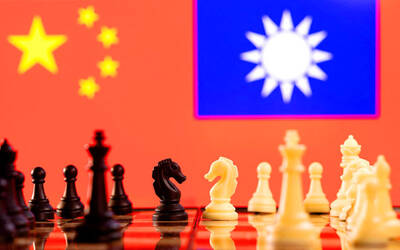
‘SAME OLD TRICK’: Even if Beijing resumes individual travel to Taiwan, it would only benefit Chinese tourism companies, the Economic Democracy Union convener said China’s 10 new “incentives” are “sugar-coated poison,” an official said yesterday, adding that Taiwanese businesses see them clearly for what they are, but that Beijing would inevitably find some local collaborators to try to drums up support. The official, speaking on condition of anonymity, made the remark ahead of a news conference the General Chamber of Commerce is to hold today. The event, titled “Industry Perspectives on China’s Recent Pro-Taiwan Policies,” is expected to include representatives from industry associations — such as those in travel, hotels, food and agriculture — to request the government cooperate with China’s new measures, people familiar with


 RSS
RSS