


The public is advised to use serving utensils during holiday banquets to reduce the risk of Helicobacter pylori infection, which is a common cause of stomach cancer, the Health Promotion Administration (HPA) said yesterday.
With Lunar New Year reunion dinners in full swing, diners passing dishes back and forth and sharing bites could spread H pylori among family and friends, the HPA said.
The bacteria are primarily transmitted via oral contact and the common practice of sharing dishes and cups during holiday gatherings could potentially increase the risk of stomach cancer, HPA cancer prevention division director Hsu Tsui-hsia (徐翠霞) said.
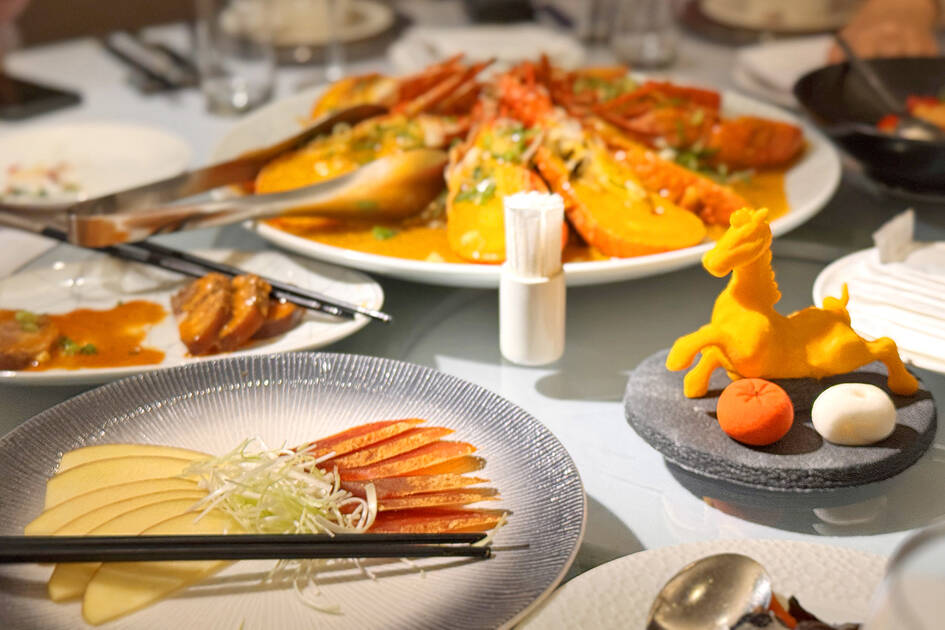
Photo: Chiu Chih-jou, Taipei Times
Stomach cancer is the seventh-deadliest and the ninth-most common cancer in Taiwan, with more than 4,000 new cases and 2,000 related deaths recorded every year, Ministry of Health and Welfare data showed.
About 80 to 90 percent of stomach cancer cases in the nation are linked to H pylori infection, making it the primary risk factor, the data showed.
Detection of stomach cancer relies heavily on screening and regular health checkups, the HPA said.
The government on Jan. 1 started offering free lifetime stomach cancer screening for people aged 45 to 74 to help lower incidence rates, it said.
Those who test positive should seek medical advice on further treatment or examinations and encourage family members living in the same household to undergo screening, as early detection and treatment could reduce the risk of stomach cancer, it said.
Disease prevention should start with daily habits, HPA Director-General Shen Ching-fen (沈靜芬) said, advising the public to eat thoroughly cooked food, drink boiled water and reduce consumption of pickled, smoked and raw foods.
Meanwhile, doctors also warned that as Lunar New Year tables are often laden with rich meats, fried foods and sweet snacks, overeating or consuming greasy food can cause indigestion, abdominal pain or vomiting in children, while improperly stored or insufficiently reheated leftovers might lead to bacterial or viral gastroenteritis.
Parents should ensure food ingredients are fresh and hygienic, refrigerate leftovers properly and reheat them thoroughly, said Sun Jo-yao (孫若堯), director of pediatrics at Wuri Lin Shin Hospital.
Children should avoid raw foods, drink plenty of boiled water, and eat more fruits and vegetables to maintain healthy bowel movements, he said.
If a child develops severe vomiting or diarrhea, parents should watch for signs of dehydration, such as reduced urination, dry mouth, sunken eyes or decreased activity, and seek immediate medical attention when necessary, the hospital said.
In addition, children are particularly vulnerable to respiratory infections such as colds, influenza and COVID-19 during the holiday due to crowded indoor spaces and poor ventilation at temples, Sun said.
Temple visits might also trigger allergic rhinitis, asthma or skin allergies in children, he said, urging parents to prepare antipyretics, thermometers, oral rehydration solutions and basic first-aid supplies in advance to cope with sudden illness.
Cold weather, active viruses, disrupted sleep schedules, frequent gatherings and irregular eating habits also make children particularly susceptible to illness during the holiday.
Emergency room visits for influenza-like illness peak during the Lunar New Year holiday, the Centers for Disease Control said.
As outpatient services are limited during the break, parents should ensure their children receive influenza vaccinations in advance, Sun said.

FUKUOKA SITUATION: Japanese media reported that the pathogen is expected to be identified by the summer, while the CDC downplayed the idea that it was hMPV A “mysterious cold-like illness” reported in Japan’s Fukuoka Prefecture does not seem to be a new disease, but Japanese authorities have been asked about the situation, the Centers for Disease Control (CDC) said yesterday. The Fukuoka Prefectural Medical Association on Wednesday told a news conference that a “mystery cold” that has become a hot topic on social media is “highly likely to be caused by some kind of viral infection,” Japan’s KBC News reported. “Many people are experiencing symptoms starting with a sore throat, followed by a runny nose, phlegm and a severe cough,” KBC News reported, citing association officials. Health authorities are

Nvidia Corp CEO Jensen Huang (黃仁勳) arrived in Taiwan yesterday ahead of upcoming AI and technology events, saying he plans to meet with clients and Taiwan Semiconductor Manufacturing Co Chairman C.C. Wei (魏哲家) during his visit. After landing at Taipei Songshan Airport, Huang posed for photos with fans and handed out Yakult drinks to reporters and supporters waiting at the scene, saying he has “a lot to do” during the trip. Asked about reports that Nvidia’s planned headquarters site in Taipei’s Beitou Shilin Technology Park could break ground on May 27, Huang said that if the company holds an event, he would

The Ministry of Finance this afternoon announced the winning numbers for the March-April uniform invoice lottery. The winning number for the NT$10 million (US$318,060) special prize is 19531471, and the winning number for the NT$2 million grand prize is 85941329. Three numbers were drawn for the NT$200,000 first prize: 07225810, 20231230 and 83518781. Those with receipts matching the last seven digits of any of the first-prize numbers will win the NT$40,000 second prize, while those matching the last six digits will win the NT$10,000 third prize. Those whose receipts match the last five digits of the first-prize numbers can claim the NT$4,000 fourth prize,
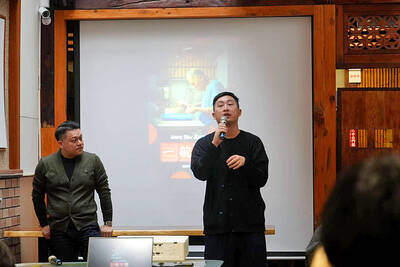
Taiwan Travelogue (臺灣漫遊錄), which earlier this week became the first Taiwanese novel to win the International Booker Prize, is to be adapted into a television series through a Taiwan-Japan coproduction, producer Chang Chen-yu (張辰漁) said yesterday. Chang, a producer at World Softest Production Film Co, wrote on Facebook that the company had been searching for projects with international appeal that retain a strong Taiwanese identity after colleagues and Japanese partners strongly recommended the novel. After reading the book, Chang said he immediately decided to pursue the screen rights. “A great story has the power to transcend time and borders, and connect countless people,”


 RSS
RSS