


A Democratic Progressive Party (DPP) lawmaker and a scholar yesterday slammed producers of a film about the unresolved murders of three members of democracy advocate Lin I-hsiung’s (林義雄) family, after it was discovered that producers had not sought the family’s consent before shooting the film.
The film, named Murder of the Century (世紀血案), is facing calls for a boycott, as producers did not seek Lin’s consent and due to some cast members’ statements at a promotional event.
“These people dance on the bones of the victims on this land as they kowtow to a hostile foreign hegemony,” DPP Legislator Puma Shen (沈伯洋) said in a social media post yesterday. “I spit at them and their arrogance, which lingers on Taiwan’s wounds like a stench.”

Photo courtesy of the Taiwan Peace Foundation
Li Jung-shian (李忠憲), a professor in National Cheng Kung University’s Institute of Computer and Communications Engineering, said in a social media post that Taiwanese are boycotting the movie out of frustration over the lack of justice in the post-White Terror period.
The film’s creators sought no input from Lin’s or other Martial Law era victims’ experiences, raising doubts about its accuracy, Li said.
The filmmakers, by using dubious sources to retell the story, reverse the role of victimhood and attempt to rewrite history without denying it outright, thereby gaining power over the narrative, he said.
Murder of the Century belongs to a common genre of revisionist film comparable to movies shot by descendants of Nazis that paint a sympathetic picture of German soldiers during World War II, he said.
“When an incident of political violence is rewritten into a family drama about personal growth and an abstract fable on human nature, the culpability of the power structure is obscured,” Li said.
“The real issue is not just about a movie, but that there are those who want to decide what history will become before it is written,” he said.

SPACE VETERAN: Kjell N. Lindgren, who helps lead NASA’s human spaceflight missions, has been on two expeditions on the ISS and has spent 311 days in space Taiwan-born US astronaut Kjell N. Lindgren is to visit Taiwan to promote technological partnerships through one of the programs organized by the US for its 250th national anniversary. Lindgren would be in Taiwan from Tuesday to Saturday next week as part of the US Bureau of Educational and Cultural Affairs’ US Speaker Program, organized to celebrate the 250th anniversary of the signing of the Declaration of Independence, the American Institute in Taiwan (AIT) said in a statement yesterday. Lindgren plans to engage with key leaders across the nation “to advance cutting-edge technological partnerships and inspire the next generation of scientists and engineers,”

UNREASONABLE SURVEILLANCE: A camera targeted on an road by a neighbor captured a man’s habitual unsignaled turn into home, netting him dozens of tickets The Taichung High Administrative Court has canceled all 45 tickets given to a man for failing to use a turn signal while driving, as it considered long-term surveillance of his privacy more problematic than the traffic violations. The man, surnamed Tseng (曾), lives in Changhua County and was reported 45 times within a month for failing to signal while driving when he turned into the alley where his residence is. The reports were filed by his neighbor, who set up security cameras that constantly monitored not only the alley but also the door and yard of Tseng’s house. The surveillance occurred from July

A Japan Self-Defense Forces vessel entered the Taiwan Strait yesterday, Japanese media reported. After passing through the Taiwan Strait, the Ikazuchi was to proceed to the South China Sea to take part in a joint military exercise with the US and the Philippines, the reports said. Japan Self-Defense Force vessels were first reported to have passed through the strait in September, 2024, with two further transits taking place in February and June last year, the Asahi Shimbun reported. Yesterday’s transit also marked the first time since Japanese Prime Minister Sanae Takaichi took office that a Japanese warship has been sent through the Taiwan
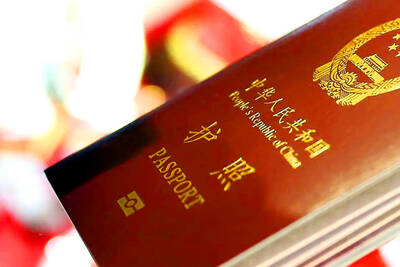
ANOTHER OPTION: The 13-year-old, whose residency status was revoked for holding a Chinese passport, could still apply for residency on humanitarian grounds, the government said The Executive Yuan has rejected an appeal from a 13-year-old Chinese student surnamed Lu (陸), whose permanent residency was revoked after immigration officers discovered he held a Chinese passport. Lu in December 2023 applied to settle in Taiwan to be with his mother, surnamed Lin (林), who is a Taiwan resident, an appeal decision released this month by the Executive Yuan showed. Lin settled in Taiwan after marrying a Taiwanese man in 2003, but the two divorced in 2011, and after marrying a Chinese man, she had Lu, the Executive Yuan’s appeals committee said. Lu’s application was approved in December 2024, and in


 RSS
RSS