

This year’s Han Kuang military drills would maintain last year’s 10-day, nine-night schedule, focusing on decentralized command and control, operations in designated “kill” zones, and urban resilience, Minister of National Defense Wellington Koo (顧立雄) said.
Since last month, the military has also fully adopted 14-day reservist training, phasing out the old five-to-seven-day system, Koo told reporters.
The army’s modernized base resistance training has been extended from five days and four nights to 10 days and nine nights, with one-year conscripts set to participate, he said.

Photo: Ou Su-mei, Taipei Times
In response to enemy threats, the military’s 41st annual Han Kuang exercises in July last year were extended to 10 days and nine nights, compared with previous drills that lasted seven days and six nights or five days and four nights, making them the longest ever.
The armed forces would continue to uphold a mission-oriented, training-for-war principle, substantially advancing training reforms to enhance “high readiness” at all levels, Koo said.
The completion of immediate readiness drills and branch-specific tactical evaluations last year effectively supported the nation’s joint operations plans, he said.
From April to November, the military plans to conduct immediate readiness drills, joint defense exercises, the Han Kuang exercises and joint resistance drills to further improve key combat capabilities, he said.
The 42nd Han Kuang drills would emphasize decentralized operations, battlefield management, anti-drone measures and personnel mobilization, while incorporating urban resilience drill modules in coordination with local governments, he said.
The drills would adhere to “real troops, real locations, real equipment and real-time” scenarios to meet the requirements of modern combat, Koo said.
The army has drawn on US military training, and testing experience and models, with units this year to begin implementing modernized branch base training, divided into three phases: preparatory training, tactics and combat capability evaluation, he said.
The tactical phase, which previously lasted five days, would be a 24-hour continuous resistance drill lasting 10 days, with operational plans designed to validate ground coordination and test troops’ combat will and battlefield stress tolerance, he said.
While one-year conscripts who graduate from university are expected to enlist next year, an infantry battalion, composed mainly of high-school graduates, would this year train with the army’s 584th Combined Arms Brigade in a tri-service joint live-fire evaluation, he said.
The focus would be on defensive positioning, communication and fire support coordination, he added.

The donation of offshore patrol vessel Kinmen to the Philippines includes provisions that protect Taiwanese fishers and facilitate security cooperation across the First Island Chain, officials said yesterday. The comment was made during the Cabinet’s comprehensive administrative report at the legislature after Chinese Nationalist Party (KMT) Legislator Hsu Yu-chen (許宇甄) expressed concerns about the decision to give a ship to a country whose coast guard had in 2013 fired on a Taiwanese trawler and killed its captain without provocation. The Cabinet should lay out the safeguards that have been established to prevent the Philippine government from using the Kinmen to harass, expel
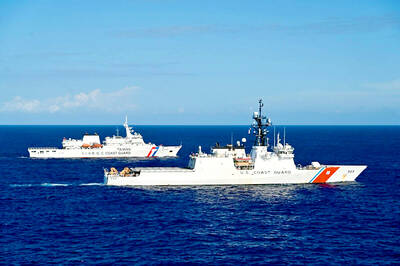
GROWING TIES: The CGA is planning a goodwill mission to the Philippines, in what would be the first time since 1975 a Taiwanese paramilitary vessel has visited the country The Coast Guard Administration (CGA) plans to significantly expand its participation in international security cooperative frameworks and its operational capabilities, a budget proposal for next year showed. The budget indicates a transformation of the CGA from a maritime law enforcement arm into a national defense and intelligence gathering entity capable of tackling larger regional security matters. The proposal showed that personnel from the coast guard’s Intelligence Division and Special Action Support Center are to participate in high-level national security talks with the US. As the CGA has dealt with China’s rising “gray zone” threats around Taiwan, it has become a valuable asset to

The National Police Agency’s Third Special Police Corps yesterday said that from May to July, it intercepted five smuggling operations from China, seizing more than 70,000 counterfeit Beyblades with an estimated infringement value of NT$34.45 million (US$1.08 million). It added that any bootleg unit that reached the local market could present hidden health hazards to players. Beyblades, a line of spinning toy tops used in competitive gaming and developed in Japan by toy company Takara Tomy, have become popular in Taiwan, making them a target for fraudsters. The Third Special Police Corps, dedicated to safeguarding maritime borders and trade lines,
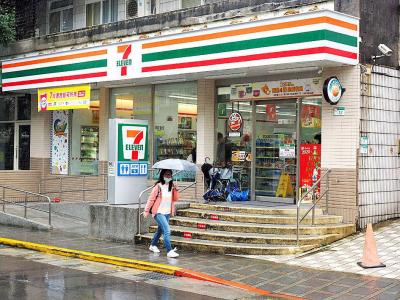
Five customers who made purchases at 7-Eleven stores across Taiwan won the top NT$10 million (US$313,716) special prize in the July-August uniform invoice lottery, including one who spent just NT$27 on photocopying, the convenience store chain said today. The five special prize winners made their purchases at stores in Taoyuan, Taipei, Taichung and Kaohsiung, 7-Eleven operator President Chain Store Corp said. The five winning purchases included NT$29 spent on snacks at a store in Taoyuan's Zhongli District (中壢), NT$27 on photocopying at a store in Taipei's Zhongzheng District (中正), NT$139 on City Cafe coffee and daily necessities at a store in Taipei's


 RSS