


Taiwan’s Tech World pavilion at the World Expo in Osaka, Japan, is to be recreated in Chiayi County for a temporary exhibition from March 1 to 15 during the Taiwan Lantern Festival, Premier Cho Jung-tai (卓榮泰) announced today.
Online reservations are expected to open tomorrow.
The pavilion in Osaka attracted more than 1.16 million visitors at last year’s World Expo, showcasing Taiwan’s scenic beauty and cutting-edge artificial intelligence (AI) technology.

Photo: CNA
The exhibition invited visitors to take a virtual tour of Taiwan and, with the help of a smart bracelet and AI algorithms, receive customized trip suggestions to scenic spots around the country.
The pavilion’s recreation was a joint effort between Minister Without Portfolio Ma Yung-cheng (馬永成) and the Ministry of Economic Affairs, Cho said.
Chiayi was chosen to host the exhibition as the pavilion’s “Nature Theater” showcases the county’s Yushan (Jade Mountain, 玉山), he said.

Photo: CNA
The pavilion’s exterior cannot be exactly replicated, although it would be recreated in a similar fashion, Taiwan External Trade Development Council (TAITRA) Chairman James Huang (黃志芳) said.
The three exhibits — Life Theater, Nature Theater and Future Theater — would maintain their original essence, he added.
Although the Osaka World Expo required all pavilions to dismantle the structures and recycle the materials after the exposition ended in October, cutting-edge technology would be used to recreate its original appearance, International Trade Administration Deputy Director Susan Hu (胡啟娟) said.
The exhibition would not be permanent and would close after March 15, she added.
It would be funded using the remaining budget from its original construction and supplementary support from the Executive Yuan, she said, adding that the estimated cost is between NT$80 million and NT$90 million (US$2.53 million and US$2.85 million).
Construction of the original pavilion cost NT$2 billion, TAITRA said.
After visiting the festival, legislators should return to Taipei to secure necessary funding, Cho added, referencing recent debates over budgets between the ruling and opposition parties.
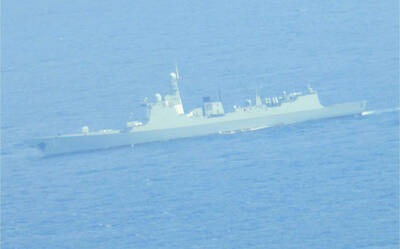
The military has spotted two Chinese warships operating in waters near Penghu County in the Taiwan Strait and sent its own naval and air forces to monitor the vessels, the Ministry of National Defense (MND) said. Beijing sends warships and warplanes into the waters and skies around Taiwan on an almost daily basis, drawing condemnation from Taipei. While the ministry offers daily updates on the locations of Chinese military aircraft, it only rarely gives details of where Chinese warships are operating, generally only when it detects aircraft carriers, as happened last week. A Chinese destroyer and a frigate entered waters to the southwest
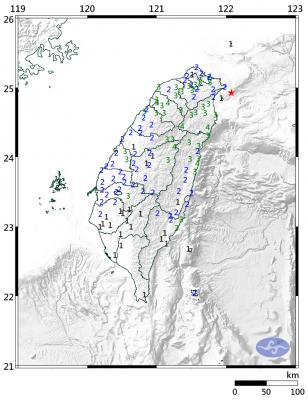
A magnitude 6.1 earthquake struck off the coast of Yilan County at 8:39pm tonight, the Central Weather Administration (CWA) said, with no immediate reports of damage or injuries. The epicenter was 38.7km east-northeast of Yilan County Hall at a focal depth of 98.3km, the CWA’s Seismological Center said. The quake’s maximum intensity, which gauges the actual physical effect of a seismic event, was a level 4 on Taiwan’s 7-tier intensity scale, the center said. That intensity level was recorded in Yilan County’s Nanao Township (南澳), Hsinchu County’s Guansi Township (關西), Nantou County’s Hehuanshan (合歡山) and Hualien County’s Yanliao (鹽寮). An intensity of 3 was

Japanese Prime Minister Sanae Takaichi’s comment last year on Tokyo’s potential reaction to a Taiwan-China conflict has forced Beijing to rewrite its invasion plans, a retired Japanese general said. Takaichi told the Diet on Nov. 7 last year that a Chinese naval blockade or military attack on Taiwan could constitute a “survival-threatening situation” for Japan, potentially allowing Tokyo to exercise its right to collective self-defense. Former Japan Ground Self-Defense Force general Kiyofumi Ogawa said in a recent speech that the remark has been interpreted as meaning Japan could intervene in the early stages of a Taiwan Strait conflict, undermining China’s previous assumptions
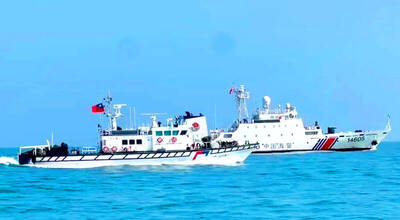
Instead of focusing solely on the threat of a full-scale military invasion, the US and its allies must prepare for a potential Chinese “quarantine” of Taiwan enforced through customs inspections, Stanford University Hoover fellow Eyck Freymann said in a Foreign Affairs article published on Wednesday. China could use various “gray zone” tactics in “reconfiguring the regional and ultimately the global economic order without a war,” said Freymann, who is also a nonresident research fellow at the US Naval War College. China might seize control of Taiwan’s links to the outside world by requiring all flights and ships entering or leaving Taiwan


 RSS
RSS