


The Ministry of Health and Welfare yesterday announced the establishment of an International High-Computing and Federated Learning Center, which is expected to benefit Taiwanese hospitals and serve as a foundation for Taiwan-Thailand collaboration.
The center is intended to train international “smart” medical models, to develop artificial intelligence (AI) while observing information security and respect for information privacy, to establish models that could be adopted across hospitals, and to establish certification and verification systems that can be used internationally, the ministry said.
Minister of Health and Welfare Shih Chung-liang (石崇良) said that the ministry has been gradually expanding the center since 2024, citing concerns about sovereignty and information privacy.
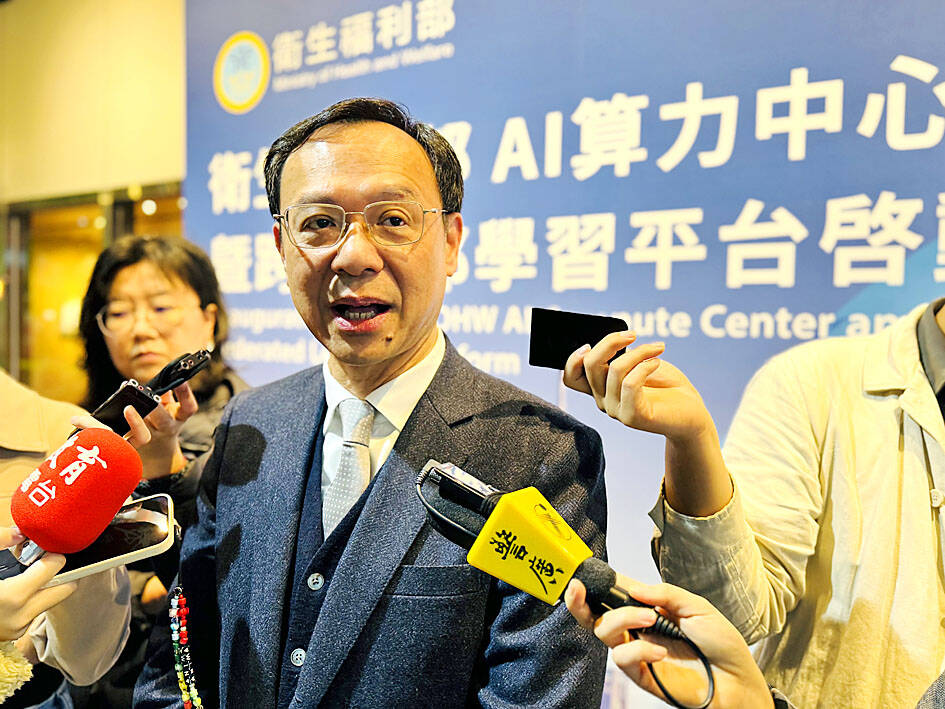
Photo: CNA
The ministry adopted the federated learning model, with proof of concept completed after involving 16 major hospitals, Shih said, adding that the ministry hopes to expand the system to 100 regional hospitals and ultimately include all Taiwanese hospitals.
Only a portion of medical data and clinical information was taken from the National Health Insurance program’s database, while the remaining information remains stored on local servers, Shih said.
With the ministry-configured AI model, local hospitals can now connect to the system and allow it to learn from their data using a federated learning system, while the information remains safe on local servers, he said.
The center would also help facilitate collaborations between Taiwan and Thailand’s Mahidol University to jointly develop standards to help innovative medical products be verified and marketed in ASEAN, and allow ASEAN and Thai AI models to undergo clinical trials and verification in Taiwan, Shih said.
The center’s need for power and its coolant systems would be met gradually, and its computational resources would be evenly distributed, facilitating the training of AI models, improving the efficiency of edge computing, and expediting government adoption of applied AI and the transition to a digital government, the ministry said.
Separately, Shih said that the amended Standards of Process for the Assessment of Hospitals and Educational Hospitals (醫院評鑑及教學醫院評鑑作業程序) would shift the assessment cycle from every four years to every six.
The changes were modeled after measures undertaken during the COVID-19 pandemic, which had positive effects, reduced infections, and also diminished the amount of preparatory work and documentation for hospitals, Shih said.
In addition, the ministry would periodically monitor hospitals and conduct unannounced inspections to ensure they provide the best medical services, he said.
Citing the case of Taichung Veterans General Hospital allowing unlicensed contractors to perform surgery, Shih said patient security is the foundation of medical quality and the ministry has arranged a special inspection.
Taichung Veterans General Hospital on Jan. 7 was reported to have allowed unlicensed medical device vendors to enter operating rooms and perform minimally invasive spinal endoscopic surgeries for at least three years, operating on up to 180 patients without their knowledge.
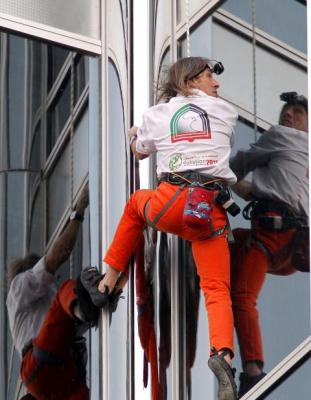
Alain Robert, known as the "French Spider-Man," praised Alex Honnold as exceptionally well-prepared after the US climber completed a free solo ascent of Taipei 101 yesterday. Robert said Honnold's ascent of the 508m-tall skyscraper in just more than one-and-a-half hours without using safety ropes or equipment was a remarkable achievement. "This is my life," he said in an interview conducted in French, adding that he liked the feeling of being "on the edge of danger." The 63-year-old Frenchman climbed Taipei 101 using ropes in December 2004, taking about four hours to reach the top. On a one-to-10 scale of difficulty, Robert said Taipei 101
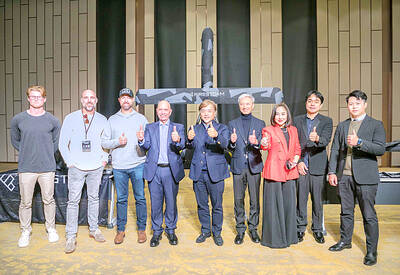
Taiwanese and US defense groups are collaborating to introduce deployable, semi-autonomous manufacturing systems for drones and components in a boost to the nation’s supply chain resilience. Taiwan’s G-Tech Optroelectronics Corp subsidiary GTOC and the US’ Aerkomm Inc on Friday announced an agreement with fellow US-based Firestorm Lab to adopt the latter’s xCell, a technology featuring 3D printers fitted in 6.1m container units. The systems enable aerial platforms and parts to be produced in high volumes from dispersed nodes capable of rapid redeployment, to minimize the risk of enemy strikes and to meet field requirements, they said. Firestorm chief technology officer Ian Muceus said
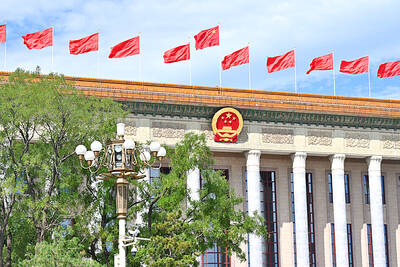
MORE FALL: An investigation into one of Xi’s key cronies, part of a broader ‘anti-corruption’ drive, indicates that he might have a deep distrust in the military, an expert said China’s latest military purge underscores systemic risks in its shift from collective leadership to sole rule under Chinese President Xi Jinping (習近平), and could disrupt its chain of command and military capabilities, a national security official said yesterday. If decisionmaking within the Chinese Communist Party has become “irrational” under one-man rule, the Taiwan Strait and the regional situation must be approached with extreme caution, given unforeseen risks, they added. The anonymous official made the remarks as China’s Central Military Commission Vice Chairman Zhang Youxia (張又俠) and Joint Staff Department Chief of Staff Liu Zhenli (劉振立) were reportedly being investigated for suspected “serious

American climber Alex Honnold is to attempt a free climb of Taipei 101 today at 9am, with traffic closures around the skyscraper. To accommodate the climb attempt and filming, the Taipei Department of Transportation said traffic controls would be enforced around the Taipei 101 area. If weather conditions delay the climb, the restrictions would be pushed back to tomorrow. Traffic controls would be in place today from 7am to 11am around the Taipei 101 area, the department said. Songzhi Road would be fully closed in both directions between Songlian Road and Xinyi Road Sec 5, it said, adding that bidirectional traffic controls would


 RSS
RSS