


A 15 percent tariff agreement reached with the US would bring economic and trade ties between the two countries even closer, President William Lai (賴清德) said today, urging lawmakers to support the deal.
The agreement would help Taiwanese industries retain a foothold in Taiwan while also expanding their global footprint, Lai told reporters before appearing at the Taichung Exhibition of Various Trades and Industries.
Lai said he had not slept all night, watching negotiations develop until the announcement was made in the early hours of this morning.
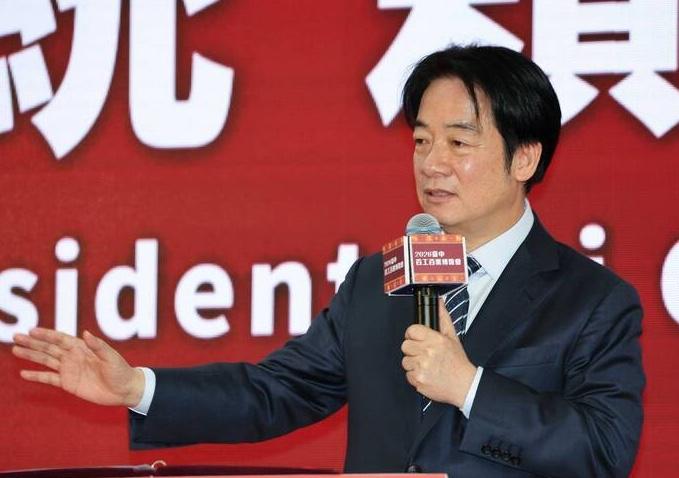
Photo: Tsai Shu-yuan, Taipei Times
Everyone has worked hard to ensure a better future for Taiwan, he said, adding that he hopes all party caucuses would support the final agreement so Taiwan can move forward as one.
The US yesterday agreed to lower tariffs on Taiwanese goods from 20 to 15 percent, without stacking them on existing most-favored-nation (MFN) rates, the Executive Yuan said in a news release this morning.
It was also agreed that Taiwanese semiconductor, electronics manufacturing service, artificial intelligence (AI) and energy companies would invest US$250 billion in the US based on their own plans, it said.
Taiwan's government has also agreed to provide up to US$250 billion in credit guarantees for financial institutions to support investments in the US market by the semiconductor and information and communication technology sectors, it added.
Japan and South Korea formerly had free-trade agreements or similar arrangements with the US, giving their exports a competitive edge over Taiwan, Lai said.
Now everyone is on an equal footing, allowing Taiwanese companies the opportunity to expand into US markets, he added.
Washington has also recognized and accepted a "Taiwan model" that Taipei proposed to allow Taiwanese companies to follow their own plans for investing in the US and moving closer geographically to their US clients, the Cabinet said.
Under the “Taiwan model,” the US would assist the Taiwanese government with land acquisition as well as water and electricity infrastructure, enabling Taiwanese companies investing in the US to form industrial clusters, Lai said.
It would also drive US-Taiwan collaboration in research and development, design, and gaining access to larger markets, further integrating Taiwanese industries into the US economic structure, he added.
The US has agreed to invest in Taiwan in sectors including semiconductors, AI, defense, security and surveillance, next-generation communications and biomedical technology, he said.
Today’s results were hard won after almost 10 months of fraught negotiations, Premier Cho Jung-tai (卓榮泰) said.
In the meantime, the government has also promoted the Special Act for Strengthening Economic, Social and National Security Resilience in Response to International Circumstances (因應國際情勢強化經濟社會及民生國安韌性特別條例) and a special budget act, with support from the legislature, he said.
In July last year, Taiwan negotiated a reduction on the original 32 percent reciprocal tariff rate to a provisional rate of 20 percent, he added.
The final agreement now also grants semiconductors and related products most favorable treatment under Section 232 of the Trade Expansion Act, he said.
This shows that the US values Taiwan as a strategic partner, he added.
Further negotiations still lie ahead, he said, adding that he hopes all ministries and relevant agencies would build on this foundation to complete an overall Taiwan-US trade agreement.
The agreement is to be submitted to the Legislative Yuan for review, he said, urging the ruling and opposition parties to support its passage.
Additional reporting by Chen Cheng-yu
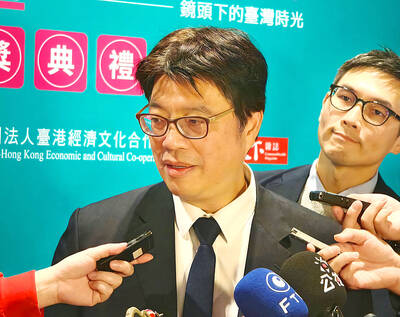
Taiwanese can file complaints with the Tourism Administration to report travel agencies if their activities caused termination of a person’s citizenship, Mainland Affairs Council Minister Chiu Chui-cheng (邱垂正) said yesterday, after a podcaster highlighted a case in which a person’s citizenship was canceled for receiving a single-use Chinese passport to enter Russia. The council is aware of incidents in which people who signed up through Chinese travel agencies for tours of Russia were told they could obtain Russian visas and fast-track border clearance, Chiu told reporters on the sidelines of an event in Taipei. However, the travel agencies actually applied
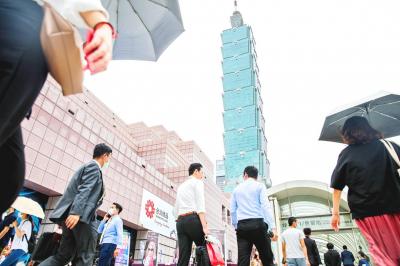
Japanese footwear brand Onitsuka Tiger today issued a public apology and said it has suspended an employee amid allegations that the staff member discriminated against a Vietnamese customer at its Taipei 101 store. Posting on the social media platform Threads yesterday, a user said that an employee at the store said that “those shoes are very expensive” when her friend, who is a migrant worker from Vietnam, asked for assistance. The employee then ignored her until she asked again, to which she replied: "We don't have a size 37." The post had amassed nearly 26,000 likes and 916 comments as of this
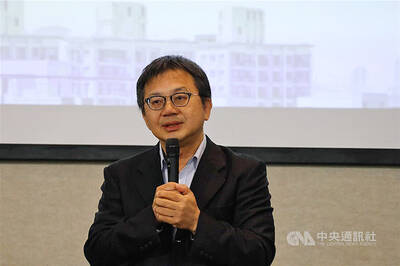
New measures aimed at making Taiwan more attractive to foreign professionals came into effect this month, the National Development Council said yesterday. Among the changes, international students at Taiwanese universities would be able to work in Taiwan without a work permit in the two years after they graduate, explainer materials provided by the council said. In addition, foreign nationals who graduated from one of the world’s top 200 universities within the past five years can also apply for a two-year open work permit. Previously, those graduates would have needed to apply for a work permit using point-based criteria or have a Taiwanese company
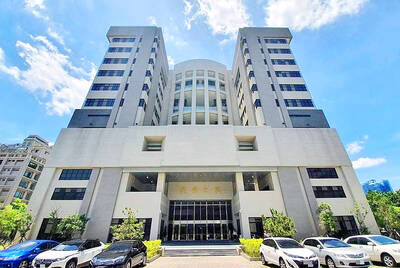
The Shilin District Prosecutors’ Office yesterday indicted two Taiwanese and issued a wanted notice for Pete Liu (劉作虎), founder of Shenzhen-based smartphone manufacturer OnePlus Technology Co (萬普拉斯科技), for allegedly contravening the Act Governing Relations Between the People of the Taiwan Area and the Mainland Area (臺灣地區與大陸地區人民關係條例) by poaching 70 engineers in Taiwan. Liu allegedly traveled to Taiwan at the end of 2014 and met with a Taiwanese man surnamed Lin (林) to discuss establishing a mobile software research and development (R&D) team in Taiwan, prosecutors said. Without approval from the government, Lin, following Liu’s instructions, recruited more than 70 software


 RSS
RSS