


Many school-aged children in Taiwan take jobs to assist their families, but about 20 percent are being underpaid or work in unsafe conditions, World Vision Taiwan (WVT) said last week.
“For underprivileged families assisted by our staff, 26.1 percent have children that work while in school, of whom 80.1 percent said they did so to help their family pay for food, housing, transportation and other daily living expenses,” the children’s advocacy organization said.
“Of employed children from poorer households, 69.2 percent hold jobs in the service sector and 21.8 percent are in manual labor jobs, cleaning services or other physically intensive work. These positions are low-entry threshold, easy to replace and not long-term careers,” it said.
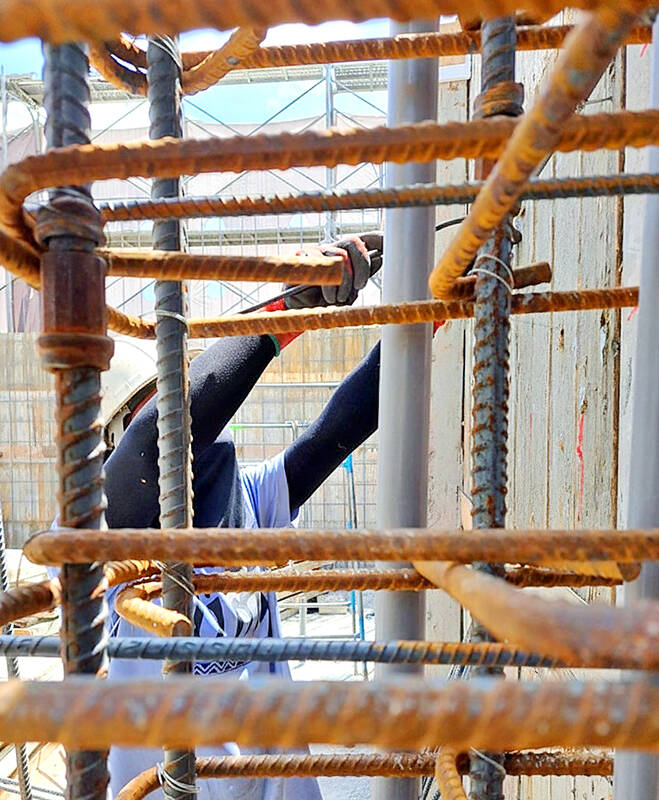
Photo courtesy of World Vision Taiwan via CNA
WVT said 21.2 percent of these children are in jobs paid less than the legal minimum hourly wage of NT$196 or minimum monthly wage of NT$29,500, trapping the children in a vicious cycle of low-skill and low-paying employment.
“These children mostly had to take temporary jobs, such as carrying and climbing scaffolds at construction sites, mixing cement or other jobs that pay by the day. In doing so, some children and their parents fall victim to scammers or get saddled with increasing debts,” said Lin Yen-ting (林晏渟), a WVT social worker.
“The figures show that 71.4 percent of these children severely lack educational support, and one in four quit school after finishing junior-high school. Of those, 10.5 percent said they gave up further schooling for economic reasons,” Lin added.
She cited the case of Hao Hao (浩浩), a high-school student in southern Taiwan, whose family’s economic woes and legal issues compelled Hao to take a low-paying job at a metal plant.
Some children have to take on multiple jobs or work nights, which can affect their sleep, health and immune systems during a critical developmental period, Lin said.
“They have to work excessive hours due to economic pressure on their family, but it is important to teach them how to speak up to their manager, to know their labor rights and the legal minimum wage, and to understand how to be safe in the workplace,” she added.
WVT offers educational scholarships for children of underprivileged families, grants for family guidance and assistance, and job training.
“We send social workers to find out what services are needed for these families, and provide assistance for children in the workplace,” WVT said.
WVT is working to offer scholarships for more than 100,000 teenage students and to expand service programs, asking the public to support their “Pass on Love via Red Envelope” donation drive to support children during their critical teenage years.

Taiwanese can file complaints with the Tourism Administration to report travel agencies if their activities caused termination of a person’s citizenship, Mainland Affairs Council Minister Chiu Chui-cheng (邱垂正) said yesterday, after a podcaster highlighted a case in which a person’s citizenship was canceled for receiving a single-use Chinese passport to enter Russia. The council is aware of incidents in which people who signed up through Chinese travel agencies for tours of Russia were told they could obtain Russian visas and fast-track border clearance, Chiu told reporters on the sidelines of an event in Taipei. However, the travel agencies actually applied
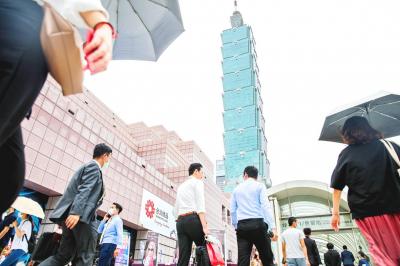
Japanese footwear brand Onitsuka Tiger today issued a public apology and said it has suspended an employee amid allegations that the staff member discriminated against a Vietnamese customer at its Taipei 101 store. Posting on the social media platform Threads yesterday, a user said that an employee at the store said that “those shoes are very expensive” when her friend, who is a migrant worker from Vietnam, asked for assistance. The employee then ignored her until she asked again, to which she replied: "We don't have a size 37." The post had amassed nearly 26,000 likes and 916 comments as of this

New measures aimed at making Taiwan more attractive to foreign professionals came into effect this month, the National Development Council said yesterday. Among the changes, international students at Taiwanese universities would be able to work in Taiwan without a work permit in the two years after they graduate, explainer materials provided by the council said. In addition, foreign nationals who graduated from one of the world’s top 200 universities within the past five years can also apply for a two-year open work permit. Previously, those graduates would have needed to apply for a work permit using point-based criteria or have a Taiwanese company
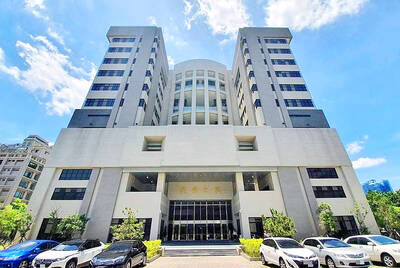
The Shilin District Prosecutors’ Office yesterday indicted two Taiwanese and issued a wanted notice for Pete Liu (劉作虎), founder of Shenzhen-based smartphone manufacturer OnePlus Technology Co (萬普拉斯科技), for allegedly contravening the Act Governing Relations Between the People of the Taiwan Area and the Mainland Area (臺灣地區與大陸地區人民關係條例) by poaching 70 engineers in Taiwan. Liu allegedly traveled to Taiwan at the end of 2014 and met with a Taiwanese man surnamed Lin (林) to discuss establishing a mobile software research and development (R&D) team in Taiwan, prosecutors said. Without approval from the government, Lin, following Liu’s instructions, recruited more than 70 software


 RSS
RSS