


Students at public elementary and junior high schools in Kaohsiung and Taichung are to receive free lunches starting from the 2026-2027 school year, the two cities announced yesterday.
About 214,000 Taichung students are expected to benefit from the policy, the annual budget of which is about NT$2.5 billion to NT$3 billion (US$79.19 million to US$95.03 million), Taichung Mayor Lu Shiow-yen (盧秀燕) told a news conference.
The city would need to propose additional budget allocations in March to fund the policy, but the expense is necessary, she said, urging city councilors to support the plan.
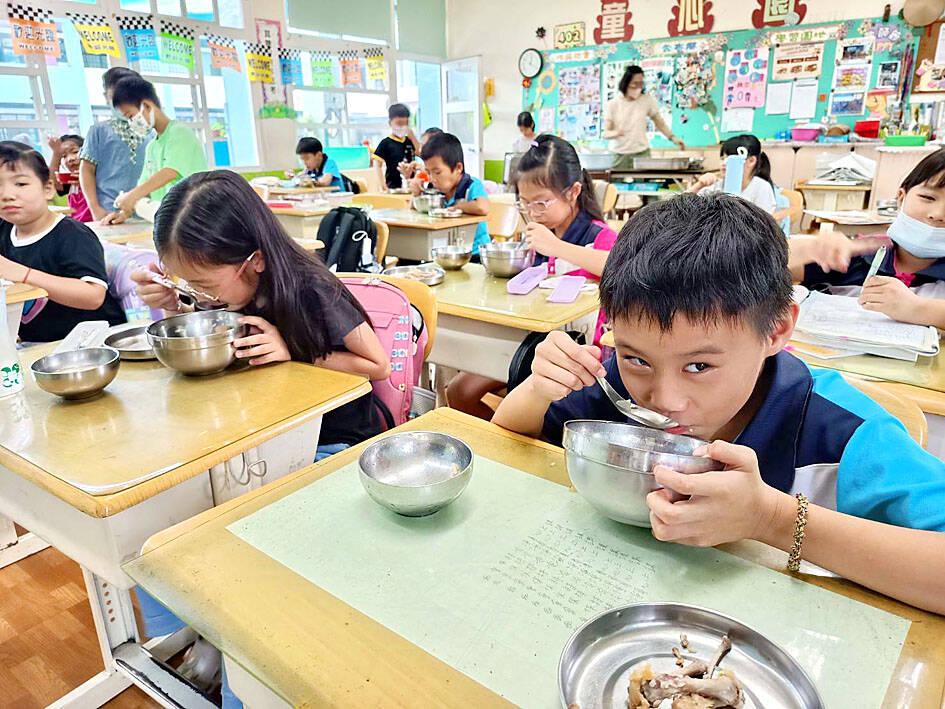
Photo: Huang Shu-li, Taipei Times
The policy received support from Taichung councilors across party lines.
Councilors from the Chinese Nationalist Party (KMT) and the Taiwan People’s Party said the policy should be fair and comprehensive, with the benefits extended to private schools and high schools.
Democratic Progressive Party councilors said they hoped the quality of school lunches would not be compromised by their “free” status, and that the city should propose concrete funding sources and implementation plans.
Kaohsiung Mayor Chen Chi-mai (陳其邁) announced the policy on Facebook, saying 180,000 students would benefit from it and that it would have an additional NT$1.8 billion budget.
The city would continue to push for school lunches to use ingredients that hold Certified Agricultural Standards, Traceable Agricultural Products and Taiwan Organic labels, as well as a traceable QR code, Chen said.
Starting from the 2026-2027 school year, the city is self-funding budgets to ensure that schools use domestic and traceable food ingredients, he added.
Taoyuan has been providing free school lunches for elementary and junior high schools since the second semester of the 2022-2023 school year, while Taipei announced the same policy for all elementary and junior high schools on Tuesday.
New Taipei City and Tainan provide school lunch subsidies for disadvantaged students in public schools.
Yilan, Hualien, Changhua, Nantou, Hsinchu, Lienchiang, Kinmen, Penghu, Miaoli and Taitung counties, as well as Taipei, Keelung, Taoyuan, Taichung, Kaohsiung and Hsinchu City are providing or are to provide free lunches in elementary and junior high schools.
New Taipei City Mayor Hou You-yi (侯友宜) called on the government to maintain a unified policy to prevent funding discrepancies between cities and counties.
Executive Yuan spokeswoman Michelle Lee (李慧芝) said the amended Act Governing the Allocation of Government Revenues and Expenditures (財政收支劃分法), which came into effect yesterday, has significantly weakened the central government’s finances.
She urged municipal heads to work with local legislators to push for a review of the Executive Yuan’s proposal to further amend the act, which would provide students nationwide with equal subsidies.
The National Federation of Teachers’ Unions in a statement said it is unfair that student welfare varies by location.
The federation said it was glad local leaders are paying attention to school lunches, but cautioned that pursuing the policy could trigger welfare policy competition among local governments while doing nothing to improve meal quality.
Education, personnel availability and quality should not be sacrificed for attention-grabbing policies, it added.
Additional reporting by Jake Chung and Kayleigh Madjar
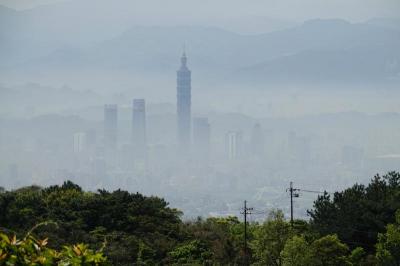
A strong continental cold air mass is to bring pollutants to Taiwan from tomorrow, the Ministry of Environment said today, as it issued an “orange” air quality alert for most of the country. All of Taiwan except for Hualien and Taitung counties is to be under an “orange” air quality alert tomorrow, indicating air quality that is unhealthy for sensitive groups. In China, areas from Shandong to Shanghai have been enveloped in haze since Saturday, the ministry said in a news release. Yesterday, hourly concentrations of PM2.5 in these areas ranged from 65 to 160 micrograms per cubic meter (mg/m³), and pollutants were
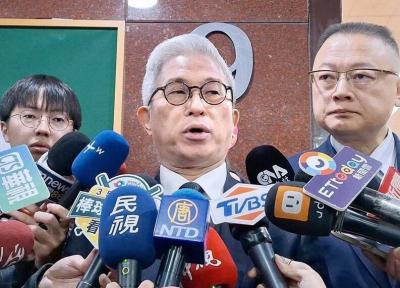
Taiwan’s armed forces have established response protocols for a wide range of sudden contingencies, including the “Wan Chun Plan” to protect the head of state, the Ministry of Defense (MND) said today. After US President Donald Trump on Saturday launched a series of airstrikes in Venezuela and kidnapped Venezuelan President Nicolas Maduro, concerns have been raised as to whether China would launch a similar “decapitation strike” on Taiwan. The armed forces regularly coordinate with relevant agencies and practice drills to ensure preparedness for a wide range of scenarios, Vice Minister of National Defense Hsu Szu-chien (徐斯儉) told reporters before a
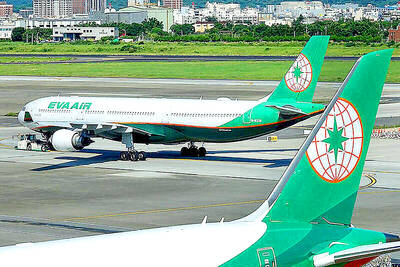
EVA Airways on Saturday said that it had suspended a pilot and opened an investigation after he allegedly lost his temper and punched the first officer several times as their plane was taxiing before takeoff at Los Angeles International Airport. According to a report published on Thursday by The Reporter, the incident occurred after the flight’s Malaysian first officer tried to warn the Taiwanese pilot, surnamed Wen (文), that he was taxiing faster than the speed limit of 30 knots (55.6kph). After alerting the pilot several times without response, the first officer manually applied the brakes in accordance with standard operating
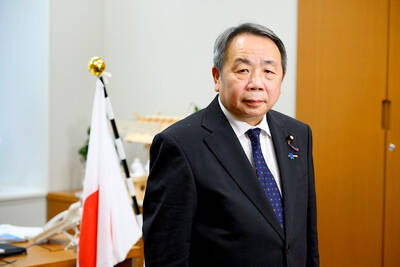
Japanese Councilor Hei Seki (石平) on Wednesday said that he plans to visit Taiwan, saying that would “prove that Taiwan is an independent country and does not belong to China.” Seki, a member of the Japan Innovation Party, was born in Chengdu in China’s Sichuan Province and became a naturalized Japanese in 2007. He was elected to the House of Concilors last year. His views on the Chinese Communist Party (CCP) — espoused in a series of books on politics and history — prompted Beijing to sanction him, including barring Seki from traveling to China. Seki wrote on X that he intends


 RSS
RSS