


President William Lai (賴清德) is to join Premier Cho Jung-tai (卓榮泰) and Democratic Progressive Party (DPP) legislators in holding public events around the country to promote the passage of this year’s general budget, a source said on Sunday.
Cho plans to organize events in collaboration with local leaders to open up discussions about how the blocking of the budget by opposition party legislators would affect people’s livelihoods, the source said, speaking on condition of anonymity.
Cabinet and ministry officials must get out of their offices and visit municipalities across the country to turn the discussion about abstract budget figures into tangible issues such as how construction projects and social programs directly benefit the public, shifting the pressure to opposition lawmakers who are blocking passage of the budget, they said.

Photo: Wang Chun-chi, Taipei Times
Lai and Cho in the past few days have emphasized close cooperation between the central and local governments, they said.
At a ceremony marking the opening of the north concourse of Taiwan Taoyuan International Airport’s Terminal 3 last month, Lai said the government aims for the airport to handle 83 million passengers by 2045, creating an economic impact of NT$2.2 trillion (US$69.81 billion).
At an inspection of a senior care center in Yilan County last week, the president said that if the legislature does not pass the government’s NT$120 billion allocation for the Long-term Care 3.0 plan, it would leave many elderly people without the funding and assistance they need.
“We have seen a number of public surveys indicating that a majority of people are worried about the general budget not being approved, which would lead to the suspension of important programs and projects, and delay the disbursement of funds for social welfare assistance,” the source said.
“Most people are concerned about these issues. The DPP plans to commission surveys and publicize the results, to show that the actions of opposition parties to block the budget run contrary to mainstream public sentiment,” they said.
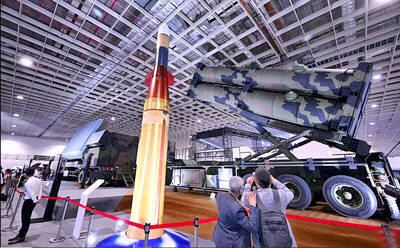
Taiwan is to commence mass production of the Tien Kung (天弓, “Sky Bow”) III, IV and V missiles by the second quarter of this year if the legislature approves the government’s NT$1.25 trillion (US$39.78 billion) special defense budget, an official said yesterday. Commenting on condition of anonymity, a defense official with knowledge of the matter said that the advanced systems are expected to provide crucial capabilities against ballistic and cruise missiles for the proposed “T-Dome,” an advanced, multi-layered air defense network. The Tien Kung III is an air defense missile with a maximum interception altitude of 35km. The Tien Kung IV and V
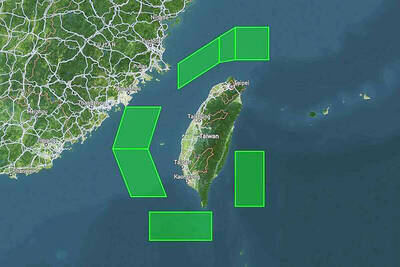
The disruption of 941 flights in and out of Taiwan due to China’s large-scale military exercises was no accident, but rather the result of a “quasi-blockade” used to simulate creating the air and sea routes needed for an amphibious landing, a military expert said. The disruptions occurred on Tuesday and lasted about 10 hours as China conducted live-fire drills in the Taiwan Strait. The Civil Aviation Administration (CAA) said the exercises affected 857 international flights and 84 domestic flights, affecting more than 100,000 travelers. Su Tzu-yun (蘇紫雲), a research fellow at the government-sponsored Institute for National Defense and Security Research, said the air
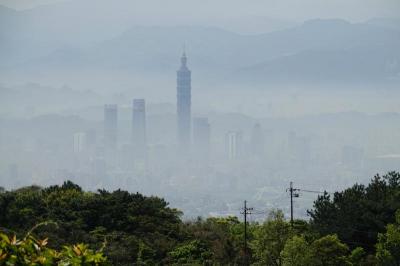
A strong continental cold air mass is to bring pollutants to Taiwan from tomorrow, the Ministry of Environment said today, as it issued an “orange” air quality alert for most of the country. All of Taiwan except for Hualien and Taitung counties is to be under an “orange” air quality alert tomorrow, indicating air quality that is unhealthy for sensitive groups. In China, areas from Shandong to Shanghai have been enveloped in haze since Saturday, the ministry said in a news release. Yesterday, hourly concentrations of PM2.5 in these areas ranged from 65 to 160 micrograms per cubic meter (mg/m³), and pollutants were
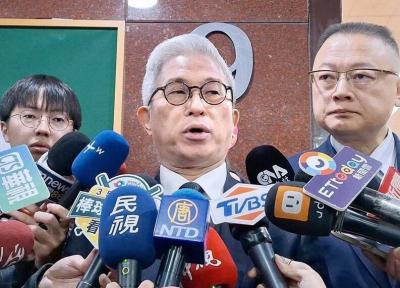
Taiwan’s armed forces have established response protocols for a wide range of sudden contingencies, including the “Wan Chun Plan” to protect the head of state, the Ministry of Defense (MND) said today. After US President Donald Trump on Saturday launched a series of airstrikes in Venezuela and kidnapped Venezuelan President Nicolas Maduro, concerns have been raised as to whether China would launch a similar “decapitation strike” on Taiwan. The armed forces regularly coordinate with relevant agencies and practice drills to ensure preparedness for a wide range of scenarios, Vice Minister of National Defense Hsu Szu-chien (徐斯儉) told reporters before a


 RSS
RSS