


Former Taiwan People's Party (TPP) chairman Ko Wen-je (柯文哲) today urged cross-party support for the party’s proposed amendments to the Artificial Reproduction Act (人工生殖法), which would legalize surrogacy as well as fertilization treatment for same-sex couples and single women.
Ko today met with the Chinese Nationalist Party (KMT) caucus and members of the legislature’s Social Welfare and Environmental Hygiene Committee to lobby for legalizing surrogacy.
It was the first time that Ko, also a former Taipei mayor, has appeared at the Legislative Yuan since he was released on NT$70 million (US$2.3 million) bail in September last year in a corruption case.
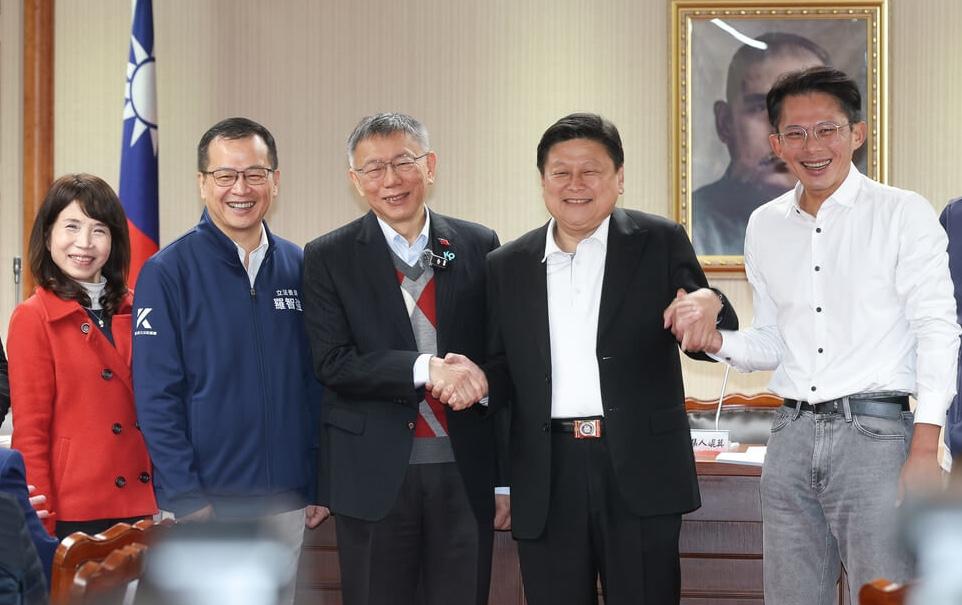
Photo: CNA
Speaking at a news conference following a TPP meeting, Ko described the bill as a livelihood issue that should not be opposed for partisan reasons.
"I am here to persuade the Democratic Progressive Party (DPP) and the KMT to support the amendment," Ko said. "The act is not ideological. It is for the public good."
The Cabinet last month unveiled its own amendment to the act, aiming to extend access to assisted reproduction from infertile heterosexual couples to also include single women and married lesbian couples.
Under the proposal drafted by the Ministry of Health and Welfare, single women and lesbian couples would be granted access to assisted reproductive technology.
Another proposal by TPP Legislator Chen Gao-tzu (陳昭姿), a doctor-turn politician, that she has pushed for since early 2024 would include a surrogate mother mechanism and male same-sex couples.
The DPP has opposed the idea, leading to accusations from Chen that the party is putting politics above public welfare.
Ko said that the issue is deeply personal for Chen.
When he invited Chen to serve as a legislator at-large, she told him her lifelong wish was to see the bill passed, he said.
He said that he had been "naive" to think the legislative process would be simple when he initially designated it a TPP priority.
Ko said that after his release, he read court documents every day for oral arguments in his case.
Now that the trial has ended, he said he had time to visit political parties and urge them to pass Chen's amendment.
Asked whether Chen would step down under the party’s so-called “two-year clause” if the bill fails to pass during the current session, Ko said the matter would be discussed privately.
The “two-year clause” was a pledge Ko made ahead of the 2023 presidential election requiring the TPP’s eight at-large legislators to resign halfway through their four-year terms to make room for younger party members.
Asked whether he has plans to run in the 2028 presidential election, Ko said: “Let’s get through 2026 first.”
Ko was also asked about his family’s financial situation after his wife, retired pediatrician Peggy Chen (陳佩琪), recently said that his legal cases had left the family tens of millions of New Taiwan dollars in debt.
Ko said that his bail alone amounted to NT$70 million, and that when fines, forfeitures and litigation costs were added, the total is “an enormous sum.”
He said he told his wife they have to cover living expenses, adding that she is looking for work.
In response to Ko’s lobbying efforts, Health Promotion Administration Director-General Shen Ching-fen (沈靜芬) said the core direction of the amendments remains balancing women's reproductive health and the best interests of children born through assisted reproduction.
The agency has referenced international systems and gathered extensive opinions from medical, academic and social sectors to carefully draft the amendments, she said.
The bill would extend eligibility to registered female same-sex couples and unmarried women to meet the needs of diverse family structures, she said.
However, Shen remained cautious regarding surrogacy, saying that it involves complex ethical, health, human rights and legal issues.
She stressed the need for comprehensive evaluation based on international practices, local norms, public expectations and children's best interests.
Broader social dialogue is needed to build public consensus, she added.

Trips for more than 100,000 international and domestic air travelers could be disrupted as China launches a military exercise around Taiwan today, Taiwan’s Civil Aviation Administration (CAA) said yesterday. The exercise could affect nearly 900 flights scheduled to enter the Taipei Flight Information Region (FIR) during the exercise window, it added. A notice issued by the Chinese Civil Aviation Administration showed there would be seven temporary zones around the Taiwan Strait which would be used for live-fire exercises, lasting from 8am to 6pm today. All aircraft are prohibited from entering during exercise, it says. Taipei FIR has 14 international air routes and
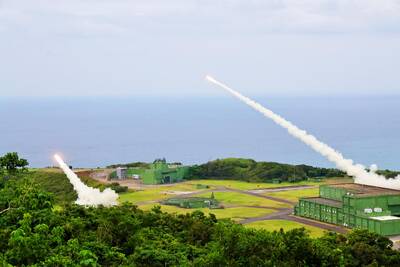
Taiwan lacks effective and cost-efficient armaments to intercept rockets, making the planned “T-Dome” interception system necessary, two experts said on Tuesday. The concerns were raised after China’s military fired two waves of rockets during live-fire drills around Taiwan on Tuesday, part of two-day exercises code-named “Justice Mission 2025.” The first wave involved 17 rockets launched at 9am from Pingtan in China’s Fujian Province, according to Lieutenant General Hsieh Jih-sheng (謝日升) of the Office of the Deputy Chief of the General Staff for Intelligence at the Ministry of National Defense. Those rockets landed 70 nautical miles (129.6km) northeast of Keelung without flying over Taiwan,
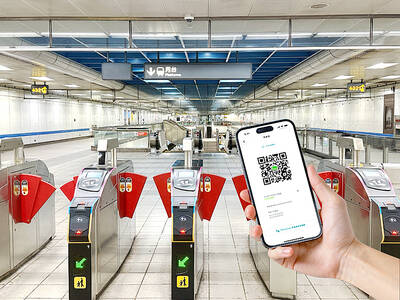
City buses in Taipei and New Taipei City, as well as the Taipei MRT, would on Saturday begin accepting QR code payments from five electronic payment providers, the Taipei Department of Transportation said yesterday. The new option would allow passengers to use the “transportation QR code” feature from EasyWallet, iPass Money, iCash Pay, Jkopay or PXPay Plus. Passengers should open their preferred electronic payment app, select the “transportation code” — not the regular payment code — unlock it, and scan the code at ticket readers or gates, General Planning Division Director-General Liu Kuo-chu (劉國著) said. People should move through the
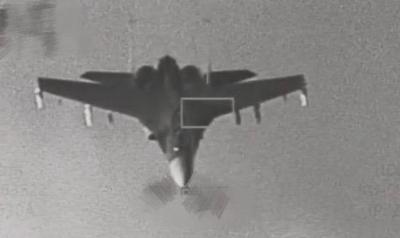
The Ministry of National Defense (MND) today released images of the military tracking China’s People's Liberation Army (PLA) movements during the latest round of Chinese drills around Taiwan. The PLA began "Justice Mission 2025" drills today, carrying out live-fire drills, simulated strikes on land and maritime targets, and exercises to blockade the nation's main ports. The exercises are to continue tomorrow, with the PLA announcing sea and air space restrictions for five zones around Taiwan for 10 hours starting from 8:30am. The ministry today released images showing a Chinese J-16 fighter jet tracked by a F-16V Block 20 jet and the


 RSS
RSS