


The military should abolish centralized deployment and instead adopt something like the US’ Integrated Battle Command System (IBCS) to maximize survivability through dispersed deployment and mobile defenses, an Institute for National Defense and Security Research analyst said yesterday.
The Chinese People’s Liberation Army (PLA) demonstrated long-range rocket-strike capabilities during its “Justice Mission 2025” exercise on Monday and Tuesday.
Chinese rocket forces still rely heavily on pre-designated bases that Taiwanese radar or satellites could detect, institute researcher Shu Hsiao-huang (舒孝煌) said.
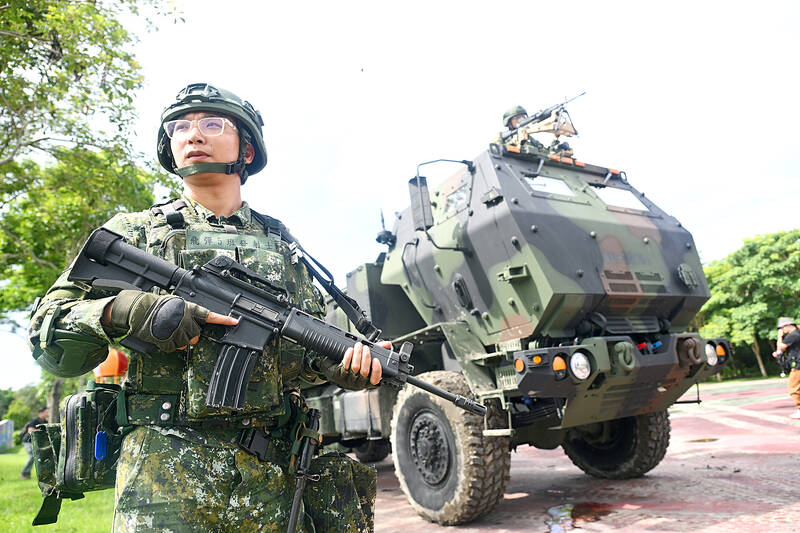
Photo: Liao Yao-tung, Taipei Time
In light of Chinese capabilities, the Taiwanese military must change its tactics, Shu said.
Defense installations near tourist sites or bunkers on the coasts are passe and are an open invitation for bombardment, Shu said, adding that “mobility, firepower and accuracy” have proven to be the key to survival for modern militaries in the Russia-Ukraine war.
The military should put the M109A7 Paladin self-propelled howitzers and the High Mobility Artillery Rocket System to better use, he said, citing the importance of scattering strike-capable units and adopting “hit-and-run” tactics to prevent being targeted by PLA drones.
The “Taiwan Dome” project would essentially be an adoption of the US’ IBCS system, allowing Taiwan’s military to more effectively integrate the army’s multiple radar systems and firing units, he said.
The Taiwan Dome would have high-level detection and interception capabilities, and is a part of an eight-year, NT$1.25 trillion (US$39.76 billion) special defense budget, he added.
The funds would be allocated from this year to 2033, although the bill is stalled in the legislature.
The dome system would prevent the military’s launch capabilities from being paralyzed if radar stations are crippled, Shu said.
Asked whether Taiwan could establish a system similar to Israel’s Iron Dome, Shu said that missile interception is costly and its effectiveness is limited.
The core principle for Taiwan’s defense is evasion and to ensure that key areas are protected, Shu said, adding that units should as much as possible be able to evade incoming strikes by being highly mobile.
As for air bases and critical infrastructure, systems similar to the US’ Indirect Fire Protection Capability should be adopted, he said.
A US Congress report on the indirect fire system said it is “a mobile, ground-based weapon system designed to defeat cruise missiles, uncrewed aircraft systems, and rocket, artillery and mortars.”
Shu said that such systems would allow Taiwan to protect key infrastructure, even if resources are limited.
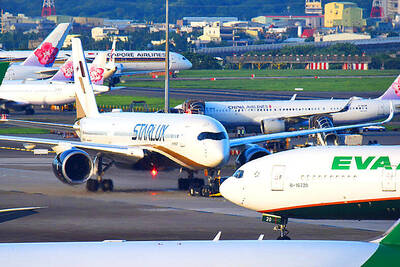
Trips for more than 100,000 international and domestic air travelers could be disrupted as China launches a military exercise around Taiwan today, Taiwan’s Civil Aviation Administration (CAA) said yesterday. The exercise could affect nearly 900 flights scheduled to enter the Taipei Flight Information Region (FIR) during the exercise window, it added. A notice issued by the Chinese Civil Aviation Administration showed there would be seven temporary zones around the Taiwan Strait which would be used for live-fire exercises, lasting from 8am to 6pm today. All aircraft are prohibited from entering during exercise, it says. Taipei FIR has 14 international air routes and
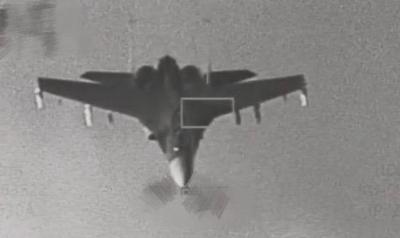
The Ministry of National Defense (MND) today released images of the military tracking China’s People's Liberation Army (PLA) movements during the latest round of Chinese drills around Taiwan. The PLA began "Justice Mission 2025" drills today, carrying out live-fire drills, simulated strikes on land and maritime targets, and exercises to blockade the nation's main ports. The exercises are to continue tomorrow, with the PLA announcing sea and air space restrictions for five zones around Taiwan for 10 hours starting from 8:30am. The ministry today released images showing a Chinese J-16 fighter jet tracked by a F-16V Block 20 jet and the
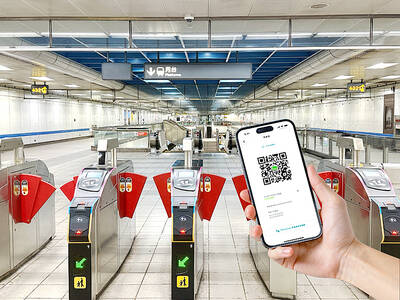
City buses in Taipei and New Taipei City, as well as the Taipei MRT, would on Saturday begin accepting QR code payments from five electronic payment providers, the Taipei Department of Transportation said yesterday. The new option would allow passengers to use the “transportation QR code” feature from EasyWallet, iPass Money, iCash Pay, Jkopay or PXPay Plus. Passengers should open their preferred electronic payment app, select the “transportation code” — not the regular payment code — unlock it, and scan the code at ticket readers or gates, General Planning Division Director-General Liu Kuo-chu (劉國著) said. People should move through the

Snow fell on Yushan (Jade Mountain, 玉山) yesterday morning as a continental cold air mass sent temperatures below freezing on Taiwan’s tallest peak, the Central Weather Administration (CWA) said. Snowflakes were seen on Yushan’s north peak from 6:28am to 6:38am, but they did not fully cover the ground and no accumulation was recorded, the CWA said. As of 7:42am, the lowest temperature recorded across Taiwan was minus-5.5°C at Yushan’s Fengkou observatory and minus-4.7°C at the Yushan observatory, CWA data showed. On Hehuanshan (合歡山) in Nantou County, a low of 1.3°C was recorded at 6:39pm, when ice pellets fell at Songsyue Lodge (松雪樓), a


 RSS
RSS