


US President Donald Trump yesterday signed into law the National Defense Authorization Act (NDAA), which includes authorization for up to US$1 billion for the Taiwan Security Cooperation Initiative.
The NDAA, signed by Trump after the US Senate passed it 77-20 a day earlier, also expands opportunities for US Coast Guard training teams to operate in Taiwan and has a provision supporting Taiwan's bid to join the IMF.
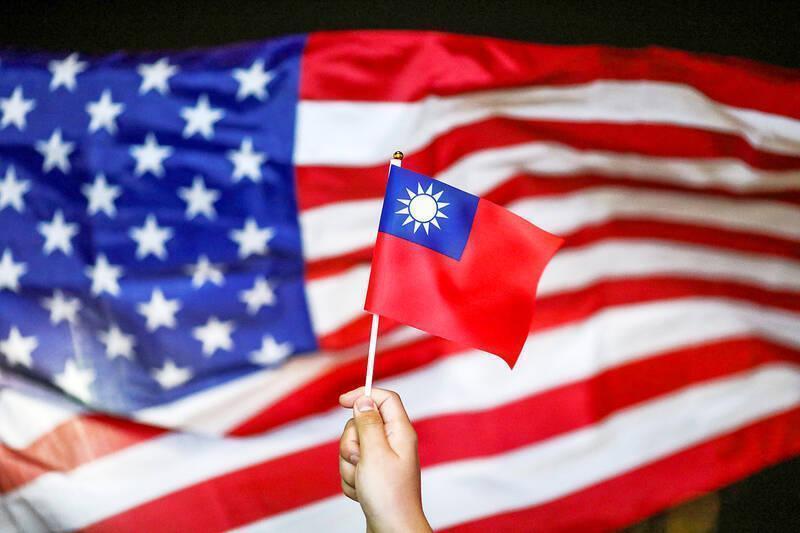
Photo: Reuters
Passage of the NDAA, which authorizes the US government to spend more than US$900 billion on defense programs, does not guarantee that the funds will be appropriated.
The US Congress must still pass separate defense appropriations bills for the funds to be allocated.
In signing the bill, Trump said it supported critical objectives, but he expressed concerns about specific provisions, including a joint US-Taiwan plan for uncrewed and anti-uncrewed systems and support for Taiwan's IMF participation.
He said that the provisions seek to "dictate the position of the United States in external military and foreign affairs," and that he, as commander in chief and the president of the US, would wield his constitutional authority over US military and foreign matters.
Under the NDAA, the Pentagon is required to "enable fielding of uncrewed and anti-uncrewed systems capabilities" with Taiwan by March 1 next year, including coproducing the system for the use of the US and Taiwan army in compliance with the Taiwan Relations Act.
The US$1 billion authorized for the Taiwan Security Cooperation Initiative would go toward expanding support for medical equipment, supply capabilities and battlefield casualty care, the NDAA says.
The legislation also directs the Pentagon to develop a plan for enhanced joint Taiwan-US coast guard training and the deployment of US personnel to Taiwan to bolster maritime security, law enforcement and deterrence.
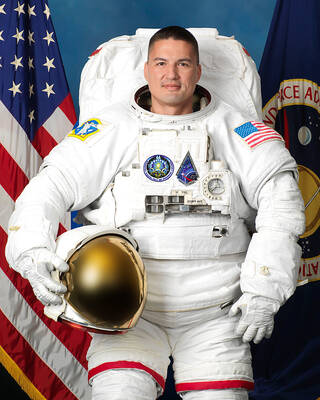
SPACE VETERAN: Kjell N. Lindgren, who helps lead NASA’s human spaceflight missions, has been on two expeditions on the ISS and has spent 311 days in space Taiwan-born US astronaut Kjell N. Lindgren is to visit Taiwan to promote technological partnerships through one of the programs organized by the US for its 250th national anniversary. Lindgren would be in Taiwan from Tuesday to Saturday next week as part of the US Bureau of Educational and Cultural Affairs’ US Speaker Program, organized to celebrate the 250th anniversary of the signing of the Declaration of Independence, the American Institute in Taiwan (AIT) said in a statement yesterday. Lindgren plans to engage with key leaders across the nation “to advance cutting-edge technological partnerships and inspire the next generation of scientists and engineers,”

UNREASONABLE SURVEILLANCE: A camera targeted on an road by a neighbor captured a man’s habitual unsignaled turn into home, netting him dozens of tickets The Taichung High Administrative Court has canceled all 45 tickets given to a man for failing to use a turn signal while driving, as it considered long-term surveillance of his privacy more problematic than the traffic violations. The man, surnamed Tseng (曾), lives in Changhua County and was reported 45 times within a month for failing to signal while driving when he turned into the alley where his residence is. The reports were filed by his neighbor, who set up security cameras that constantly monitored not only the alley but also the door and yard of Tseng’s house. The surveillance occurred from July
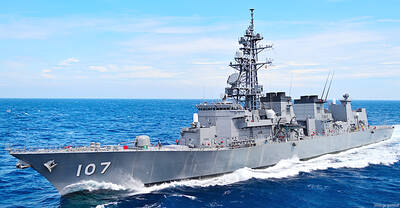
A Japan Self-Defense Forces vessel entered the Taiwan Strait yesterday, Japanese media reported. After passing through the Taiwan Strait, the Ikazuchi was to proceed to the South China Sea to take part in a joint military exercise with the US and the Philippines, the reports said. Japan Self-Defense Force vessels were first reported to have passed through the strait in September, 2024, with two further transits taking place in February and June last year, the Asahi Shimbun reported. Yesterday’s transit also marked the first time since Japanese Prime Minister Sanae Takaichi took office that a Japanese warship has been sent through the Taiwan
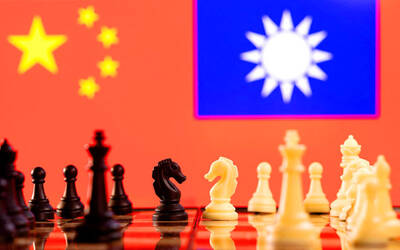
‘SAME OLD TRICK’: Even if Beijing resumes individual travel to Taiwan, it would only benefit Chinese tourism companies, the Economic Democracy Union convener said China’s 10 new “incentives” are “sugar-coated poison,” an official said yesterday, adding that Taiwanese businesses see them clearly for what they are, but that Beijing would inevitably find some local collaborators to try to drums up support. The official, speaking on condition of anonymity, made the remark ahead of a news conference the General Chamber of Commerce is to hold today. The event, titled “Industry Perspectives on China’s Recent Pro-Taiwan Policies,” is expected to include representatives from industry associations — such as those in travel, hotels, food and agriculture — to request the government cooperate with China’s new measures, people familiar with


 RSS
RSS