


A South Korean court found two contractors who worked on Taiwan’s submarine program guilty of leaking designs for torpedo-launching systems, calling the case a potential “diplomatic burden” for Seoul, according to a ruling reviewed by Reuters.
The Masan Branch of the Changwon District Court on Tuesday sentenced the chief executive of one South Korean contractor to two-and-a-half years in jail, and handed down jail terms of one-and-a-half years to two employees of another firm, according to the ruling.
The ruling did not name the defendants and the companies involved, but it did name their lawyers, who declined to comment.
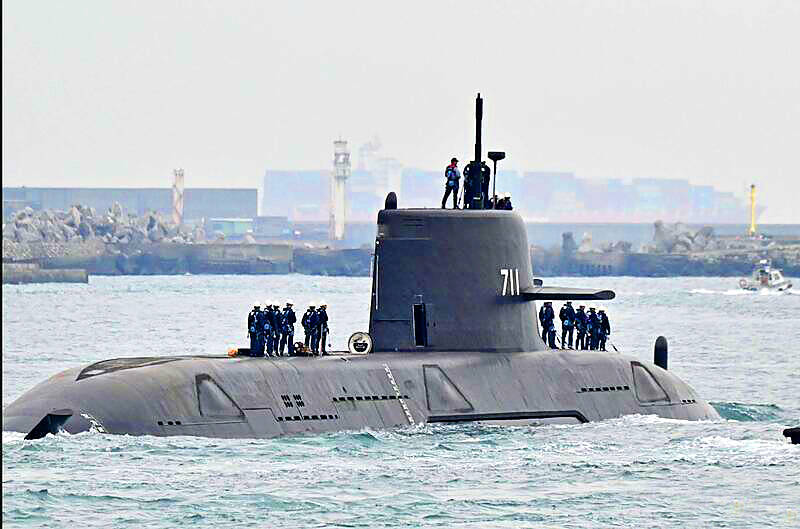
Photo: Lee Hui-chou, Taipei Times
The defendants, who were hired to build torpedo-launching tubes and storage for Taiwan’s submarine project, were accused of leaking highly classified information on designs to Taiwan, the ruling said.
The court said the case risked becoming a “major diplomatic burden” for South Korea.
“This crime is a matter that could pose a significant threat to South Korea’s security, as strategic technology was exported without the approval of the Defense Acquisition Program Administration (DAPA) and the export partner is Taiwan, which has a tense relationship with neighbors in East Asia,” the ruling said.
DAPA is South Korea’s national arms-sales regulator.
South Korea, like most nations, only has formal diplomatic ties with Beijing, not Taipei.
The defendants denied wrongdoing and argued that the information they shared with Taiwan did not involve business secrets or sensitive technology requiring export permits, the ruling said.
In Taipei, the Ministry of National Defense referred questions about the case to CSBC Corp, the Taiwanese shipbuilder that is leading the construction of the submarines.
CSBC did not immediately respond to requests for comment.
Taiwan is seeking to build eight submarines, but the program has been hit by delays. The prototype’s maiden sea trial took place in June.
The government has made military modernization a key policy platform and has repeatedly pledged to spend more on its defense given the rising threat from China, including developing homegrown submarines.
Taiwan plans to boost defense spending by one-fifth next year, surpassing 3 percent of GDP, as it invests more in new equipment to convince the US that it is serious about building up its military.
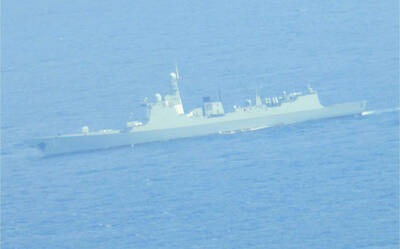
The military has spotted two Chinese warships operating in waters near Penghu County in the Taiwan Strait and sent its own naval and air forces to monitor the vessels, the Ministry of National Defense (MND) said. Beijing sends warships and warplanes into the waters and skies around Taiwan on an almost daily basis, drawing condemnation from Taipei. While the ministry offers daily updates on the locations of Chinese military aircraft, it only rarely gives details of where Chinese warships are operating, generally only when it detects aircraft carriers, as happened last week. A Chinese destroyer and a frigate entered waters to the southwest
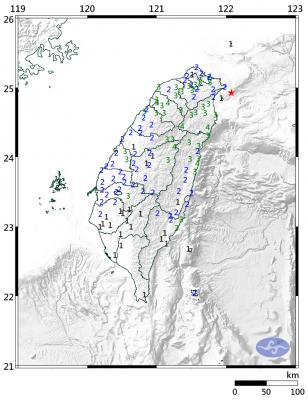
A magnitude 6.1 earthquake struck off the coast of Yilan County at 8:39pm tonight, the Central Weather Administration (CWA) said, with no immediate reports of damage or injuries. The epicenter was 38.7km east-northeast of Yilan County Hall at a focal depth of 98.3km, the CWA’s Seismological Center said. The quake’s maximum intensity, which gauges the actual physical effect of a seismic event, was a level 4 on Taiwan’s 7-tier intensity scale, the center said. That intensity level was recorded in Yilan County’s Nanao Township (南澳), Hsinchu County’s Guansi Township (關西), Nantou County’s Hehuanshan (合歡山) and Hualien County’s Yanliao (鹽寮). An intensity of 3 was
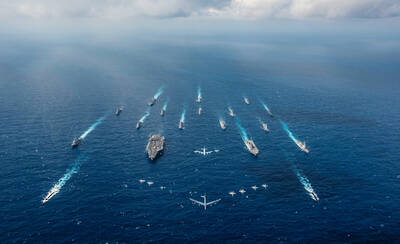
Japanese Prime Minister Sanae Takaichi’s comment last year on Tokyo’s potential reaction to a Taiwan-China conflict has forced Beijing to rewrite its invasion plans, a retired Japanese general said. Takaichi told the Diet on Nov. 7 last year that a Chinese naval blockade or military attack on Taiwan could constitute a “survival-threatening situation” for Japan, potentially allowing Tokyo to exercise its right to collective self-defense. Former Japan Ground Self-Defense Force general Kiyofumi Ogawa said in a recent speech that the remark has been interpreted as meaning Japan could intervene in the early stages of a Taiwan Strait conflict, undermining China’s previous assumptions
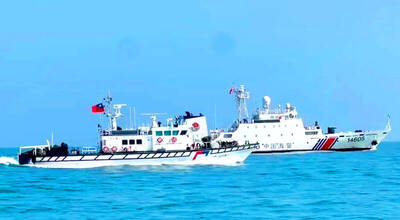
Instead of focusing solely on the threat of a full-scale military invasion, the US and its allies must prepare for a potential Chinese “quarantine” of Taiwan enforced through customs inspections, Stanford University Hoover fellow Eyck Freymann said in a Foreign Affairs article published on Wednesday. China could use various “gray zone” tactics in “reconfiguring the regional and ultimately the global economic order without a war,” said Freymann, who is also a nonresident research fellow at the US Naval War College. China might seize control of Taiwan’s links to the outside world by requiring all flights and ships entering or leaving Taiwan


 RSS
RSS