


Beijing’s actions toward Japan in the past few weeks reflect its long-standing “wolf warrior” approach of intimidation, Representative to Japan Lee Yi-yang (李逸洋) said.
“China has long been accustomed to bullying-style operations, with opaque decisionmaking and a lack of democracy,” Lee told the Central News Agency in an interview.
Tensions between China and Japan have continued to rise, with Beijing having adopted what he described as a combined economic, diplomatic, political and military “compound attack” strategy.

Photo: CNA
China’s military activities in the Yellow Sea earlier this month, including multiple drills and radar-locking incidents involving Japan Self-Defense Forces aircraft, are provocations comparable to “aiming a gun and preparing to pull the trigger,” he said.
The latest developments also underscore US support for Japan, with US bombers flying over the Sea of Japan, he added.
The actions align with the US’ latest National Security Strategy, which calls on allies such as Japan, South Korea and Australia to significantly increase defense spending to maintain stability in the Indo-Pacific region, Lee said.
Prospects for a short-term thaw in tensions between China and Japan do not look good, given Beijing’s demand that Japanese Prime Minister Sanae Takaichi retract her remarks about a potential “Taiwan contingency” threatening Japan, he said.
On Nov. 7, Takaichi told the Japanese Diet that use of force against Taiwan by China would constitute a “survival-threatening” crisis for Japan that could warrant a military response from Tokyo.
Takaichi has made it clear she would not change her position, making it difficult for bilateral tensions to improve, Lee said.
He cited Japanese public opinion polls as showing that Takaichi’s approval rating has remained at about 70 percent, adding that about half of respondents supported her remarks, while only about 20 percent opposed them.
While tensions between China and Japan remain high, the likelihood of a full-scale deterioration is limited, Lee said.
Japan’s position in global semiconductor supply chains is particularly critical, with a 50 percent market share in semiconductor materials and a 30 percent share in equipment — much of which is exported to China, he said.
“If Japan were to use this as a countermeasure, China would also suffer a major impact,” so Beijing is unlikely to escalate pressure indefinitely, he said.
Japan’s rising tensions with China underscore the strategic value of Taiwan-Japan cooperation, Lee said.
The two countries’ economies are highly complementary in areas such as semiconductors and drone technology, and it is an optimal time to jointly build supply chains independent of China and pursue a “next wave of economic growth,” he said.
China yesterday sanctioned a former top Japanese military officer for “colluding with ‘Taiwanese independence’ separatist forces,” the Chinese Ministry of Foreign Affairs said, amid the weeks-long row.
Shigeru Iwasaki, who was chief of staff of the Japan Self-Defense Forces Joint Staff from 2012 to 2014, was named as an adviser to Taiwan’s government in March, Taiwanese media reported.
The Japanese Ministry of Foreign Affairs said it was “regrettable for the Chinese side to take a unilateral measure that seems to intimidate someone with a different position.”
Additional reporting by AFP

Taiwanese can file complaints with the Tourism Administration to report travel agencies if their activities caused termination of a person’s citizenship, Mainland Affairs Council Minister Chiu Chui-cheng (邱垂正) said yesterday, after a podcaster highlighted a case in which a person’s citizenship was canceled for receiving a single-use Chinese passport to enter Russia. The council is aware of incidents in which people who signed up through Chinese travel agencies for tours of Russia were told they could obtain Russian visas and fast-track border clearance, Chiu told reporters on the sidelines of an event in Taipei. However, the travel agencies actually applied
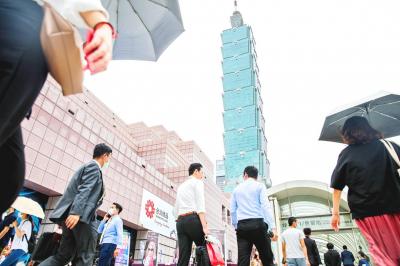
Japanese footwear brand Onitsuka Tiger today issued a public apology and said it has suspended an employee amid allegations that the staff member discriminated against a Vietnamese customer at its Taipei 101 store. Posting on the social media platform Threads yesterday, a user said that an employee at the store said that “those shoes are very expensive” when her friend, who is a migrant worker from Vietnam, asked for assistance. The employee then ignored her until she asked again, to which she replied: "We don't have a size 37." The post had amassed nearly 26,000 likes and 916 comments as of this

New measures aimed at making Taiwan more attractive to foreign professionals came into effect this month, the National Development Council said yesterday. Among the changes, international students at Taiwanese universities would be able to work in Taiwan without a work permit in the two years after they graduate, explainer materials provided by the council said. In addition, foreign nationals who graduated from one of the world’s top 200 universities within the past five years can also apply for a two-year open work permit. Previously, those graduates would have needed to apply for a work permit using point-based criteria or have a Taiwanese company
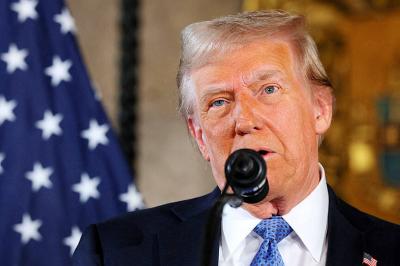
US President Donald Trump said "it’s up to" Chinese President Xi Jinping (習近平) what China does on Taiwan, but that he would be "very unhappy" with a change in the "status quo," the New York Times said in an interview published yesterday. Xi "considers it to be a part of China, and that’s up to him what he’s going to be doing," Trump told the newspaper on Wednesday. "But I’ve expressed to him that I would be very unhappy if he did that, and I don’t think he’ll do that," he added. "I hope he doesn’t do that." Trump made the comments in


 RSS
RSS