

The Institute for Biotechnology and Medicine Industry (IBMI) yesterday signed an agreement with a Czech nonprofit organization to jointly launch a 200 million euros (US$233.5 million) African medical aid procurement program.
The cooperation agreement was signed by IBMI vice president Yang Pan-chyr (楊泮池) and Petr Foit, chairman of the Czech Health Technology Institute, during the opening of the Healthcare+ Expo Taiwan in Taipei.
Since 2023, IBMI has worked with the Czech institute to help a range of Taiwanese medical products — including handheld ultrasound devices, microplate readers and electrocardiography systems — enter European markets through various projects, Yang said.
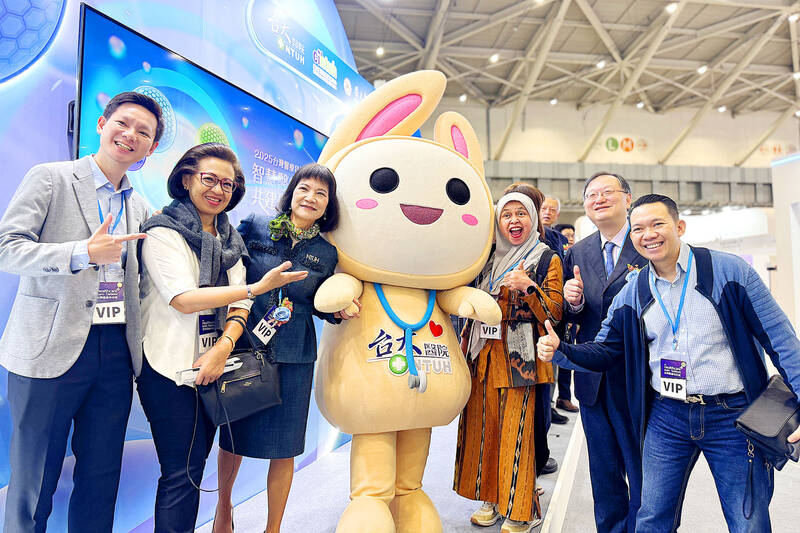
Photo: Chiu Chih-jou, Taipei Times
This year, the partnership would be deepened through the launch of the African medical aid procurement program.
The procurement program would source a range of medical equipment from Taiwan to enhance primary healthcare, maternal and child care, and regional and central hospital resilience in sub-Saharan Africa, according to IBMI.
The equipment would include about 20 items, such as intensive care respiratory devices and vital-sign monitoring equipment, including fetal heart monitors, it said.
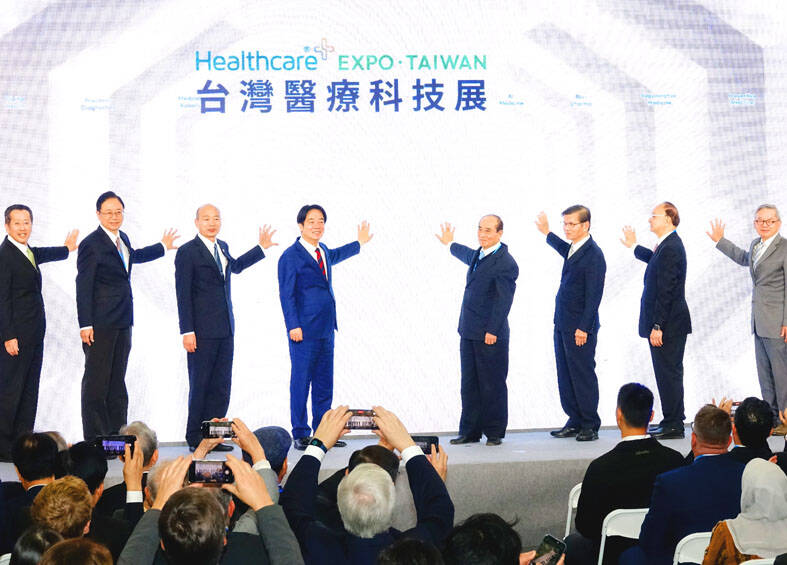
Photo: Tien Yu-hua, Taipei Times
It is a major step as Taiwan’s medical technology sector seeks to go international, enabling cooperation with more countries under the EU framework and helping to expand into the European and emerging markets, the IBMI said.
The Healthcare+ Expo Taiwan is being held at the Nangang Exhibition Center in Taipei through Sunday, including a networking reception with global healthcare and association leads.
At the opening yesterday, President William Lai (賴清德) touted the government’s five-year, NT$48.9 billion (US$1.56 billion) investment in a comprehensive plan to create a “healthy Taiwan,” a priority of which is promoting smart healthcare.
The plan includes adopting the Fast Healthcare Interoperability Resources standard to streamline the integration of technology into medicine, he said.
Taiwan boasts not just high-quality healthcare, but a sizeable biotechnology industry and a powerful technology sector, laying a solid foundation for the continued development of Taiwan’s medical technology industry, he added.
Additional reporting by Kayleigh Madjar
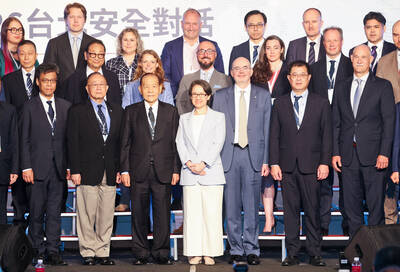
Taiwan’s growing defense preparations might be sending a stronger signal to the US than to Beijing, highlighting the need for Taipei to tailor its deterrence efforts to different audiences, a US security academic said yesterday. Stanford University Freeman Spogli Institute for International Studies fellow Oriana Skylar Mastro made the comment during a Taipei Security Dialogue panel examining lessons Taiwan could draw from the wars in Ukraine and the Middle East. Mastro said she was impressed by Taiwan’s increased defense spending, emphasis on asymmetric capabilities and efforts to prepare society for conflict, but questioned whom those initiatives were influencing. She said when she asked
A total of 400 foreign “high- level” professionals have been naturalized as Republic of China (Taiwan) citizens over the past decade as the government has eased nationality rules to attract talent from a wider range of fields, the Ministry of the Interior said yesterday. The 400th high-level professional, who works in the electronics industry, was approved for ROC citizenship on Aug. 26, the MOI said. The MOI quoted the newly naturalized citizen as saying that Taiwan is a leader in fields such as semiconductors, electronics manufacturing, artificial intelligence development and energy technology. He also said
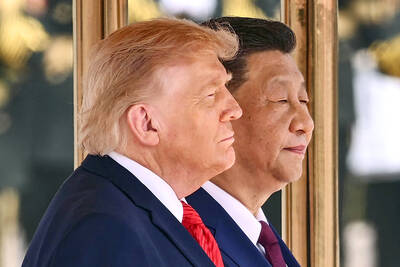
China has warned that it could cancel a planned US-China leaders’ summit if Washington approves new arms sales to Taiwan, a Japanese media outlet quoted sources as saying yesterday. US President Donald Trump, “apparently eager to showcase some diplomatic achievements ahead of November’s midterm congressional elections, places great importance on holding the summit with Chinese President Xi Jinping (習近平),” Japan’s Kyodo News reported. “While preparing for Xi’s upcoming trip, China has restated its position that the Taiwan issue is a ‘red line’ in bilateral relations,” the report said. The report said that when Xi met with Trump in Beijing in May, Xi said
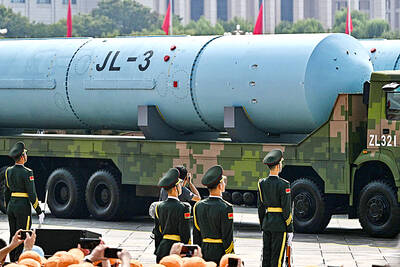
SUB-LAUNCHED SUBOPTIMAL: The JL-3, an upgraded version of the missile test-fired earlier in the summer, would have the range to strike at much of the country Refits to Chinese nuclear submarines to carry JL-3 intercontinental ballistic missiles would put much of the US in striking distance, Taiwanese defense analysts said in a report commissioned by the Mainland Affairs Council. Researchers from National Defense University’s Graduate Institute of China Military Affairs Studies said that the Chinese People’s Liberation Army Navy (PLAN) in July test-fired a missile with a training warhead. Chinese state media reported without elaborating that a PLAN nuclear-powered ballistic missile submarine (SSBN) launched a missile with a training warhead, which accurately hit the designated target area in the Pacific, the report said. The launch was a rare display


 RSS
RSS