


Minister of Economic Affairs Kung Ming-hsin (龔明鑫) yesterday gave no guarantee that the decommissioned Ma-anshan Nuclear Power Plant could restart generating electricity as soon as 2028, saying that the required safety inspections by the nation's nuclear safety regulator could take 18 months to six years.
Kung made the comments during a legislative session when asked by an opposition lawmaker if the Pingtung County-based plant could resume operation as early as 2028 once it passes required safety checks, as reported by local media.
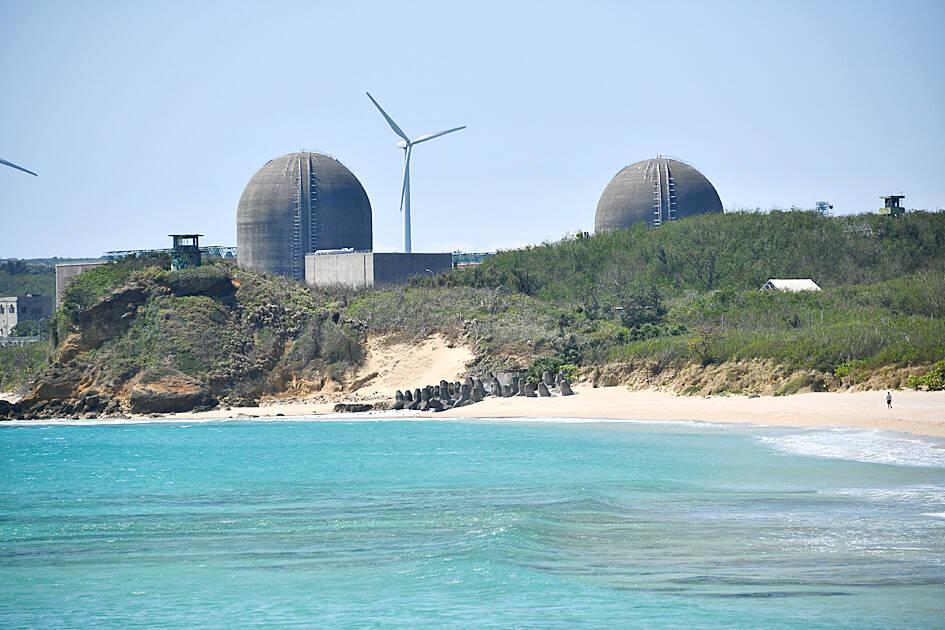
Photo: Tsai Tsung-hsien, Taipei Times
The Ministry of Economic Affairs last week announced that the state-run Taiwan Power Co is expected to submit a plan for restarting the Ma-anshan Nuclear Power Plant and the Kuosheng Nuclear Power Plant in New Taipei City to the Nuclear Safety Commission (NSC) by March next year for review.
Safety inspections at the Ma-anshan plant would require peer review and assistance from the original manufacturer, a process expected to take about one and a half to two years to complete, the ministry said in a statement on Friday.
Based on the statement, several local media reported over the weekend that the plant could resume operation as early as late 2027 or in 2028.
Asked to comment on the predictions, Kung told lawmakers yesterday that it is true that in the best-case scenario, the decommissioned Ma-anshan plant could be restarted in 2028 "if everything goes smoothly" with the plant passing safety inspections in one-and-a-half years.
However, the inspections could take as long as five to six years, Kung said, citing similar checks on decommissioned plants in other countries.
Kung also said he did not know how long it would take for the NSC to conduct safety reviews.
"Our top priority is to make sure it is safe" for the power plant to restart, he added.
The No. 2 reactor at the Ma-anshan plant, Taiwan's last operational nuclear reactor, was shut down on May 17.
The ministry's evaluation report was carried out in response to amendments to the Nuclear Reactor Facilities Regulation Act (核子反應器設施管制法) passed in May, which provide a legal basis for continuing to operate nuclear power plants even after they have entered the decommissioning stage.

Yangmingshan National Park authorities yesterday urged visitors to respect public spaces and obey the law after a couple was caught on a camera livestream having sex at the park’s Qingtiangang (擎天崗) earlier in the day. The Shilin Police Precinct in Taipei said it has identified a suspect and his vehicle registration number, and would summon him for questioning. The case would be handled in accordance with public indecency charges, it added. The couple entered the park at about 11pm on Thursday and began fooling around by 1am yesterday, the police said, adding that the two were unaware of the park’s all-day live
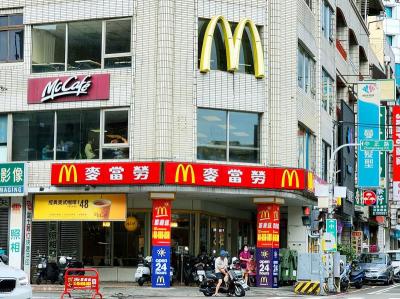
Fast food chain McDonald's is to raise prices by up to NT$5 on some products at its restaurants across Taiwan, starting on Wednesday next week, the company announced today. The prices of all extra value meals and sharing boxes are to increase by NT$5, while breakfast combos and creamy corn soup would go up by NT$3, the company said in a statement. The price of the main items of those meals, if ordered individually, would remain the same. Meanwhile, the price of a medium-sized lemon iced tea and hot cappuccino would rise by NT$3, extra dipping sauces for chicken nuggets would go up
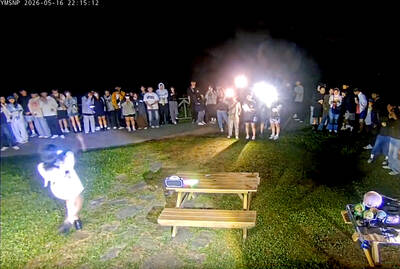
Yangmingshan National Park’s Qingtiangang (擎天崗) nature area has gone viral after a park livestream camera observed a couple in the throes of intimate congress, which was broadcast live on YouTube, drawing large late-night crowds and sparking a backlash over noise, bright lights and disruption to wildlife habitat. The area’s livestream footage appeared to show a couple engaging in sexual activity on a picnic table in the park on Friday last week, with the uncensored footage streamed publicly online. The footage quickly spread across social media, prompting a tide of visitors to travel to the site to “check in” and recreate the

Minister of Digital Affairs Lin Yi-ching (林宜敬) yesterday cited regulatory issues and national security concerns as an expert said that Taiwan is among the few Asian regions without Starlink. Lin made the remarks on Facebook after funP Innovation Group chief executive officer Nathan Chiu (邱繼弘) on Friday said Taiwan and four other countries in Asia — China, North Korea, Afghanistan and Syria — have no access to Starlink. Starlink has become available in 166 countries worldwide, including Ukraine, Malaysia, the Philippines and Vietnam, in the six years since it became commercial, he said. While China and North Korea block Starlink, Syria is not


 RSS
RSS