


The average temperature this autumn was 26.5°C, the warmest fall on record, while a higher-than-average 13 typhoons formed in the northwestern Pacific, the Central Weather Administration (CWA) said today.
The CWA held a news conference to discuss the upcoming winter, with Weather Forecast Center Deputy Director Lo Ya-yin (羅雅尹) first reporting trends from this past season.
The average temperature over the past three months was 26.5°C, marking the warmest fall since complete records began in 1951, Lo said, adding that fall temperatures have averaged around 25.1°C.
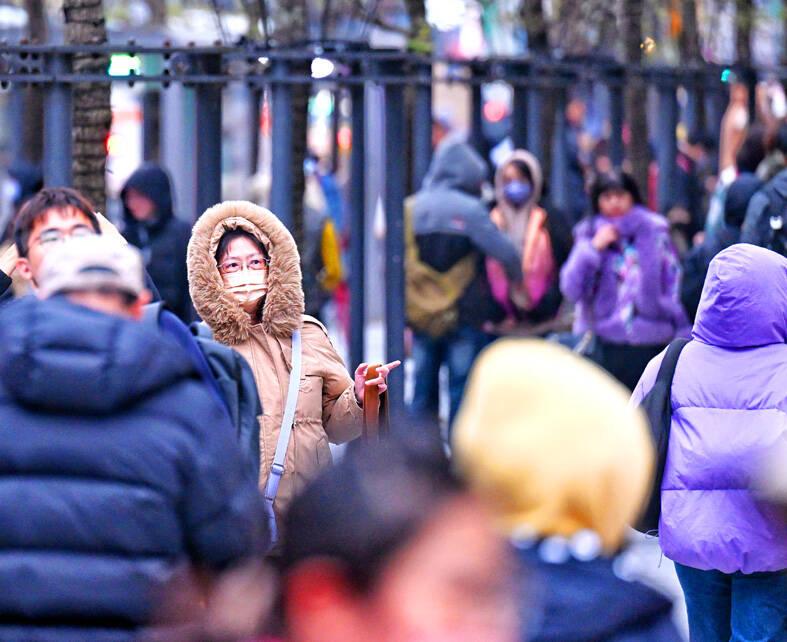
Photo: Fang Pin-chao, Taipei Times
Rainfall was mostly concentrated in the north and east, with 644.2mm of accumulated rainfall, about the same as usual, Lo said.
However, there were only 26.5 days of rainfall, the fifth-lowest on record and well below the average of 33.9 days, she said.
Thirteen typhoons formed in the northwest Pacific this fall, above the average of 10.8, and two of them threatened Taiwan: Typhoon Ragasa in September and Typhoon Fung-wong this month, Lo said.
The total number of typhoons so far this year has been 27, exceeding the annual average of 25 to 26, she added.
Looking toward the winter, as the tropical Pacific Ocean is currently cooler in the east and warmer in the west, there is a more than 50-percent chance that a La Niña weather pattern would form, and a high chance of normal conditions returning in the spring, Lo said.
Considering current forecasts and international data, Taiwan is likely to have slightly below-average rainfall and slightly above-average temperatures from next month to February, she said.
As cold air masses move south and affect Taiwan, people should remember to keep warm and ensure proper ventilation when using gas heaters to prevent carbon monoxide poisoning, the CWA said.
Since December to February is the dry season for western Taiwan, people should also be mindful of conserving water, it added.

Yangmingshan National Park authorities yesterday urged visitors to respect public spaces and obey the law after a couple was caught on a camera livestream having sex at the park’s Qingtiangang (擎天崗) earlier in the day. The Shilin Police Precinct in Taipei said it has identified a suspect and his vehicle registration number, and would summon him for questioning. The case would be handled in accordance with public indecency charges, it added. The couple entered the park at about 11pm on Thursday and began fooling around by 1am yesterday, the police said, adding that the two were unaware of the park’s all-day live

Fast food chain McDonald's is to raise prices by up to NT$5 on some products at its restaurants across Taiwan, starting on Wednesday next week, the company announced today. The prices of all extra value meals and sharing boxes are to increase by NT$5, while breakfast combos and creamy corn soup would go up by NT$3, the company said in a statement. The price of the main items of those meals, if ordered individually, would remain the same. Meanwhile, the price of a medium-sized lemon iced tea and hot cappuccino would rise by NT$3, extra dipping sauces for chicken nuggets would go up

Yangmingshan National Park’s Qingtiangang (擎天崗) nature area has gone viral after a park livestream camera observed a couple in the throes of intimate congress, which was broadcast live on YouTube, drawing large late-night crowds and sparking a backlash over noise, bright lights and disruption to wildlife habitat. The area’s livestream footage appeared to show a couple engaging in sexual activity on a picnic table in the park on Friday last week, with the uncensored footage streamed publicly online. The footage quickly spread across social media, prompting a tide of visitors to travel to the site to “check in” and recreate the

Minister of Digital Affairs Lin Yi-ching (林宜敬) yesterday cited regulatory issues and national security concerns as an expert said that Taiwan is among the few Asian regions without Starlink. Lin made the remarks on Facebook after funP Innovation Group chief executive officer Nathan Chiu (邱繼弘) on Friday said Taiwan and four other countries in Asia — China, North Korea, Afghanistan and Syria — have no access to Starlink. Starlink has become available in 166 countries worldwide, including Ukraine, Malaysia, the Philippines and Vietnam, in the six years since it became commercial, he said. While China and North Korea block Starlink, Syria is not


 RSS
RSS