


Over the first nine months of the year, a record 6 percent of newborn babies in Taiwan were given their mother’s maiden name, the Ministry of the Interior said yesterday
Of the 81,381 babies born in Taiwan during that period, 4,884 babies, or about 6 percent, were given their mother’s maiden name, up from 5.2 percent during the same period in 2020, the ministry added.
Meanwhile, 93.9 percent of babies took their father’s surname, while fewer than 0.1 percent were given an indigenous name, ministry data showed.
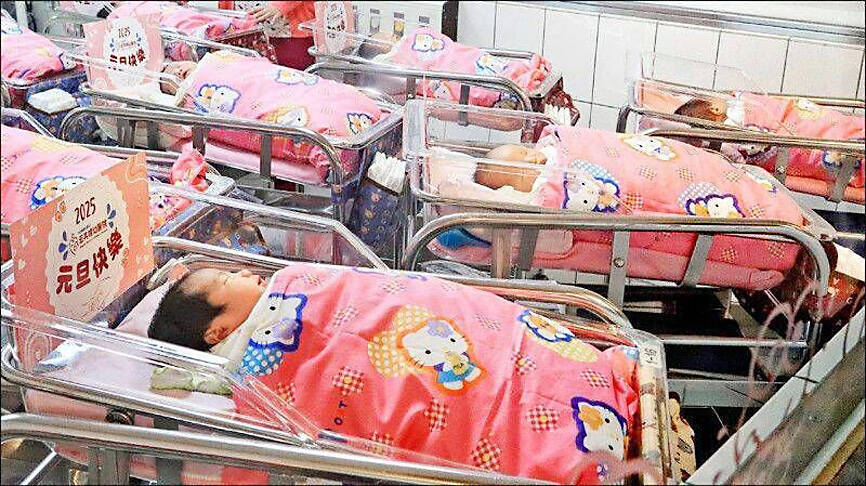
Photo: Lee Wen-hsin, Taipei Times
Taitung and Hualien had the highest number of babies who took their mother’s maiden name, at 16.8 percent and 16.5 percent respectively, followed by Pingtung (9 percent), Nantou (7.4) percent and Keelung (7.3 percent), the ministry said.
Academia Sinica’s Institute of Sociology adjunct research fellow Yang Wen-shan (楊文山) said the high numbers in Taitung and Hualien were due to their large indigenous populations, which tend to be more matriarchal.
As of the end of September, 79,175 babies, or 97.3 percent of the total, were given surnames decided by both parents, the ministry said.
Of those babies, 96.5 percent took their father’s surname, while 3.4 percent took their mother’s, the ministry added.
Meanwhile, of the 2,037 babies, or 2.5 percent of the total, whose surname was chosen by one parent, 99.1 percent took their mother’s surname, while 0.8 percent took their father’s, the data showed.
Under Article 1059 of the Civil Code, mothers and fathers are required to jointly decide whose surname their child will take before the child is registered at a Household Registration Office.
If the parents cannot reach an agreement, the child’s surname is determined by drawing lots at the registration office, the article states.

Considering that most countries issue more than five denominations of banknotes, the central bank has decided to redesign all five denominations, the bank said as it prepares for the first major overhaul of the banknotes in more than 24 years. Central bank Governor Yang Chin-lung (楊金龍) is expected to report to the Legislative Yuan today on the bank’s operations and the redesign’s progress. The bank in a report sent to the legislature ahead of today’s meeting said it had commissioned a survey on the public’s preferences. Survey results showed that NT$100 and NT$1,000 banknotes are the most commonly used, while NT$200 and NT$2,000

The Centers for Disease Control (CDC) yesterday reported the first case of a new COVID-19 subvariant — BA.3.2 — in a 10-year-old Singaporean girl who had a fever upon arrival in Taiwan and tested positive for the disease. The girl left Taiwan on March 20 and the case did not have a direct impact on the local community, it said. The WHO added the BA.3.2 strain to its list of Variants Under Monitoring in December last year, but this was the first imported case of the COVID-19 variant in Taiwan, CDC Deputy Director-General Lin Ming-cheng (林明誠) said. The girl arrived in Taiwan on

ANNUAL EVENT: Two massive Pokemon balloons are to be set up in Daan Park, with an event zone operating from 10am to 6pm This year’s Taipei Floral Picnic is to be held at Daan Park today and tomorrow, featuring an exclusive Pokemon Go event, a themed food market, a coffee rave picnic area and stage performances, the Taipei Department of Information and Tourism said yesterday. Two massive Pokemon balloons are to be set up in the park as attractions, with an exclusive event zone operating from 10am to 6pm, it said. Participants who complete designated tasks on-site would have a chance to receive limited-edition souvenirs, it added. People could also try the newly launched game Pokemon Pokopia in the trial area, the department said. Three PokeStops are
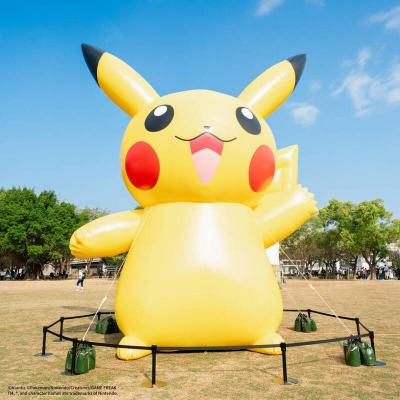
This year’s Taipei Floral Picnic is to be held at Daan Park this weekend, featuring an exclusive Pokemon Go event, a theme food market, a coffee rave picnic area and stage performances. Pokemon Go Two massive Pokemon balloons are to be set up in the park as photo attractions, with an exclusive event zone operating from 10am to 6pm. Participants who complete designated tasks on-site would have a chance to receive limited-edition souvenirs. Pokemon trainers could also experience the newly launched game Pokemon Pokopia in the trial area. Three PokeStops are to be set up in the park. Trainers are invited to take


 RSS
RSS