


A Chinese Nationalist Party (KMT) bill to shorten the pre-election media blackout period from 10 days to three could open the door to foreign interference, Democratic Progressive Party (DPP) Legislator Chuang Jui-hsiung (莊瑞雄) said on Sunday.
KMT Legislator Weng Hsiao-ling (翁曉玲) introduced draft amendments to Article 53 of the Public Officials Election and Recall Act (公職人員選舉罷免法), saying that no evidence shows pre-election polls influence voters’ decisions.
Most countries with similar restrictions limit the publication of polls to one to six days before voting, and many have moved to shorten that period, Weng said.

Photo: Taipei Times file photo
Her bill seeks to protect the public’s right to know, in line with the Constitution’s protection of freedom of speech, she said.
The bill passed its preliminary review in December last year after KMT lawmakers blocked DPP members from entering the meeting room and approved it unanimously in the legislature’s Internal Administration Committee.
The proposed three-day blackout period might appear to enhance transparency, but would weaken safeguards against the spread of fake polls and external manipulation, Chuang said.
The 10-day blackout period is designed to prevent fabricated polls from influencing election results, he said, adding that reducing it to three days would leave insufficient time to fact-check and counter misinformation.
Given China’s long history of using disinformation and fake polls to manipulate public opinion in Taiwan, the potential risks should be carefully considered, he said.
While the public’s right to know is important, national security and electoral integrity must also be ensured, he added.
If the blackout period is shortened, fact-checking mechanisms, penalties and media self-regulation must also be enhanced; otherwise, more false polls could circulate, Chuang said, urging the governing and opposition parties to evaluate the proposal cautiously.
Citizen Congress Watch executive director Chang Hung-lin (張宏林) on Sunday said that shortening the blackout period could create social disruption ahead of elections.
China has interfered in Taiwan’s elections, and even the KMT has acknowledged the problem, he said, citing former Broadcasting Corp of China chairman Jaw Shaw-kong (趙少康), who condemned China for allegedly employing online operatives to manipulate the KMT’s chairperson election.
Taiwan currently lacks legal provisions to penalize people who fabricate election polls, Chang said.
The legislature should focus on amending regulations to penalize the dissemination of fake polls rather than shortening the blackout period, which could further polarize society during elections, he said.
The influence of external disinformation and fake social media accounts on Taiwan’s elections should also be addressed, he added.
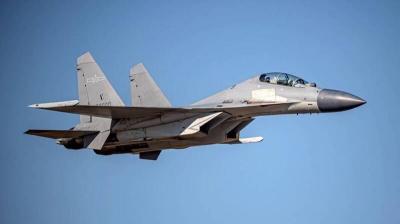
Eight Chinese naval vessels and 24 military aircraft were detected crossing the median line of the Taiwan Strait between 6am yesterday and 6am today, the Ministry of National Defense said this morning. The aircraft entered Taiwan’s northern, central, southwestern and eastern air defense identification zones, the ministry said. The armed forces responded with mission aircraft, naval vessels and shore-based missile systems to closely monitor the situation, it added. Eight naval vessels, one official ship and 36 aircraft sorties were spotted in total, the ministry said.
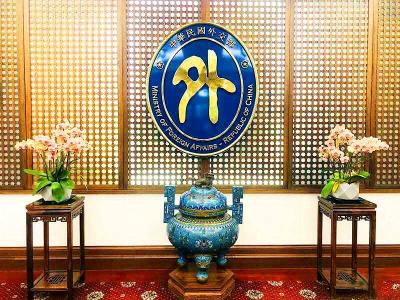
The Ministry of Foreign Affairs (MOFA) today said that if South Korea does not reply appropriately to its request to correct Taiwan’s name on its e-Arrival card system before March 31, it would take corresponding measures to alter how South Korea is labeled on the online Taiwan Arrival Card system. South Korea’s e-Arrival card system lists Taiwan as “China (Taiwan)” in the “point of departure” and “next destination” fields. The ministry said that it changed the nationality for South Koreans on Taiwan’s Alien Resident Certificates from “Korea” to “South Korea” on March 1, in a gesture of goodwill and based on the
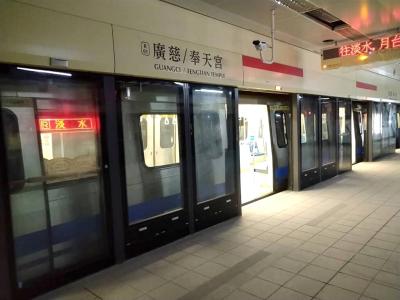
The New Taipei Metro's Sanyin Line and the eastern extension of the Taipei Metro's Tamsui-Xinyi Line (Red Line) are scheduled to begin operations in June, the National Development Council said today. The Red Line, which terminates at Xiangshan Station, would be connected by the 1.4km extension to a new eastern terminal, Guangci/Fengtian Temple Station, while the Sanyin Line would link New Taipei City's Tucheng and Yingge stations via Sanxia District (三峽). The council gave the updates at a council meeting reviewing progress on public construction projects for this year. Taiwan's annual public infrastructure budget would remain at NT$800 billion (US$25.08 billion), with NT$97.3

Taiwanese officials were shown the first of 66 F-16V fighter jets purchased by Taiwan from the United States, the Ministry of National Defense said yesterday, adding the aircraft has completed an initial flight test and is expected to be delivered later this year. A delegation led by Deputy Minister of National Defense Hsu Szu-chien (徐斯儉) visited Lockheed Martin’s F-16 C/D Block 70 (also known as F-16V) assembly line in South Carolina on March 16 to view the aircraft. The jet will undergo a final acceptance flight in the US before being delivered to Taiwan, the


 RSS
RSS