


The government should ban the purchase and delivery of meat products from foreign-based shopping Web sites, such as Taobao and Pinduoduo, to better prevent African swine flu (ASF) outbreak in Taiwan, Democratic Progressive Party (DPP) Legislator Rosalia Wu (吳思瑤) said yesterday.
Taobao has more than 130,000 meat-related products for sale, she said, adding that the loophole undermines food safety and could be a national security issue.
She urged the Cabinet to prohibit the purchase and delivery of meat products from foreign-based online platforms, and to perform strict checks on food items at customs.
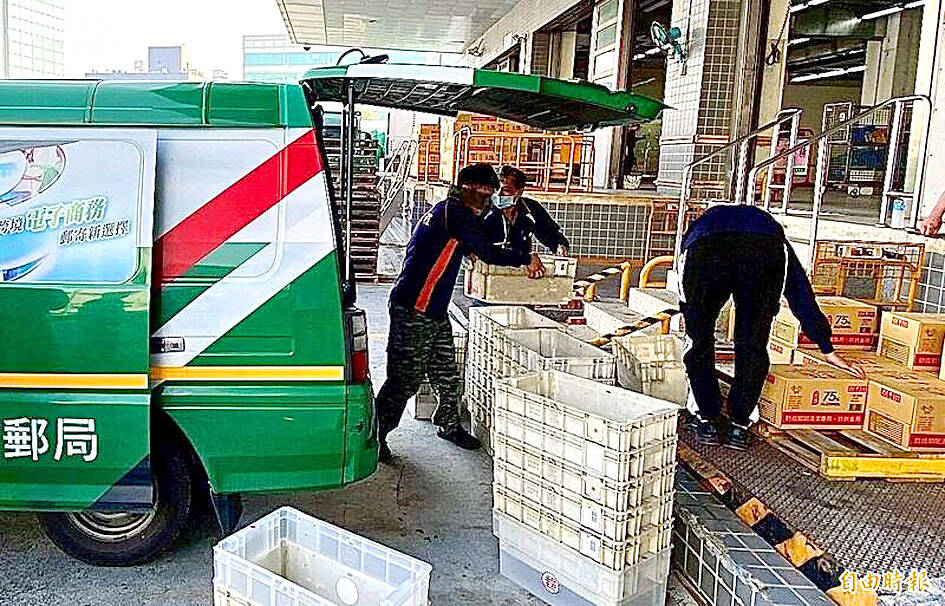
Photo: Huang Hsu-lei, Taipei Times
People are ordering sausages, pork floss, pork jerky, canned meat products and other pork or meat items on Taobao and Pinduoduo, Wu said.
“They come in small packages, so they could fly under the radar of Taiwan’s border inspection authorities,” she said.
“We did an online search for ‘Taobao meat products,’ and an advertisement jumped out saying, ‘You can buy all kinds of foodstuffs here,’ followed by a tagline that said the platform currently has 130,873 meat-related items for sale,” Wu said.
“Taobao and Pinduoduo are based in China, and meat products they sell to Taiwanese customers could potentially contain ASF or other contagious viral diseases,” she said. “Each of them could be seen as a biological weapon that could endanger our food supply chain and wreak havoc on Taiwan’s economy.”
“This is an crisis that is encroaching on Taiwan,” Wu said, adding that Chunghwa Post has been processing massive numbers of Taobao and Pinduoduo packages since August, with orders coming in at ports in Taichung and Kaohsiung and delivered to warehouses across the country.
Chunghwa Post has since August processed more than 50 cargo containers containing more than 60,000 packages in Taichung and about 60 cargo containers, with more than 90,000 packages, in Kaohsiung, she said.
“Even Chunghwa Post employees were scared of handling food packages from China, because many were sausages, meat items or moon cakes containing pork,” she added.
The Ministry of Agriculture has already mandated a ban on purchasing meat products from PChome and Shopee, e-commerce Web sites with offices based in Taiwan, “but they did not impose such a ban on foreign-based shopping sites,” she said.
Wu called for the loophole to be patched up by amending the Customs Anti-Smuggling Act (海關緝私條例) and the Act on the Prevention and Control of Infectious Animal Disease (動物傳染病防治條例).
“Cabinet officials must take action now,” she said, calling for stricter border control checks, and more severe fines and punishment for those who contravene the meat policy.
In related news, Chunghua Post regional supervisors said that since August, they have needed to work extra shifts and pay higher wages due to the increase in overtime work to process the large volume of packages arriving from China.
The packages were mainly online purchases from Taobao and Pinduoduo, they said, adding that many were labeled as containing meat products, sausages and items with pork ingredient.
All inbound parcels must undergo X-ray checks at customs and those suspected to contain animal or plant matter would be reported to local authorities for further inspections, Chunghwa Post said, adding that dogs would also used to help occasionally.
Additional reporting by Esme Yeh

The Ministry of Finance this afternoon announced the winning numbers for the March-April uniform invoice lottery. The winning number for the NT$10 million (US$318,060) special prize is 19531471, and the winning number for the NT$2 million grand prize is 85941329. Three numbers were drawn for the NT$200,000 first prize: 07225810, 20231230 and 83518781. Those with receipts matching the last seven digits of any of the first-prize numbers will win the NT$40,000 second prize, while those matching the last six digits will win the NT$10,000 third prize. Those whose receipts match the last five digits of the first-prize numbers can claim the NT$4,000 fourth prize,

SIX SUBSIDIES: The monthly allowance for older farmers is to increase to NT$10,000, and NT$5,000 is to be given to homemakers under the national pension system, Lai said The government is to implement major welfare policies for disadvantaged groups, including raising the monthly allowance for older farmers to NT$10,000 and providing homemakers with NT$5,000 per month, President William Lai (賴清德) said yesterday. Lai made the remarks during a visit to Wangling Temple in Chiayi County, saying that the planned increases were being introduced amid economic growth and an increase in tax revenue. Touting a policy, in which the government plans to provide a monthly allowance of NT$5,000 for every child under the age of 18 in a bid to address Taiwan’s low birthrate, Lai said that if received for the
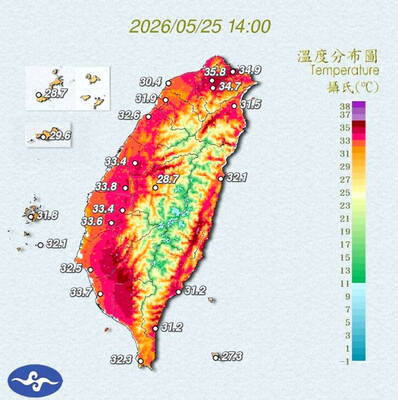
STAY COOL: The HPA recommended that people stay hydrated, use air-conditioning or fans while indoors, wear loose-fitting clothes and walk in the shade while outdoors Employers must implement measures such as installing cooling equipment, and providing drinking water and rest breaks for outdoor workers starting from Monday next week, the Taipei Department of Labor said on Sunday. Employers who fail to comply could face fines of NT$30,000 to NT$300,000 under the Occupational Safety and Health Act (職業安全衛生法), the department said. Businesses in Taipei employing fewer than 100 workers, as well as registered self-employed workers with labor insurance coverage, could receive on-site assessments and guidance from occupational safety consultants to help them apply for central government subsidies to implement or improve heat-protection measures, it said. Under the Ministry of
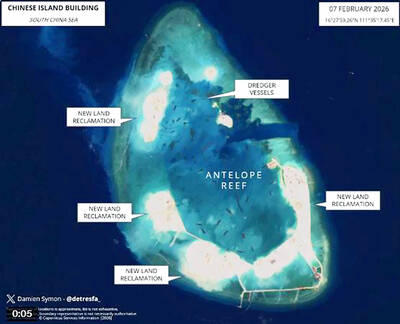
ISOLATION: The outposts would serve as support and backup bases, forcing US forces to either face China head-on or reroute, increasing travel time and operational costs China’s outposts in the South China Sea could be used to delay and constrain foreign forces during a conflict in the Taiwan Strait, giving Beijing a critical window to carry out amphibious landing and blockade operations, a report said. The Chinese Communist Party’s (CCP) forward operating bases on islands and reclaimed features in the South China Sea could delay foreign forces long enough for the Chinese People’s Liberation Army (PLA) to secure a key 48-to-72-hour window in the Taiwan Strait, a report commissioned by the Mainland Affairs Council found. The report, conducted by the Institute for National Defense and Security Research, examined


 RSS
RSS