


The Taiwan Pride parade, themed “Beyond links, more than clicks,” promoted understanding of different life experiences amid global hostility toward diversity, equity and inclusion (DEI) initiatives, the Taiwan Rainbow Civil Action Association said at the event yesterday.
Nearly 150,000 people attended the parade, said the association, which organized the parade.
Association president Simon Tai (戴佑勳) said that a wave of sentiment against DEI has been rising over the past year since US President Donald Trump took office, while many European countries’ DEI policies are going backward.
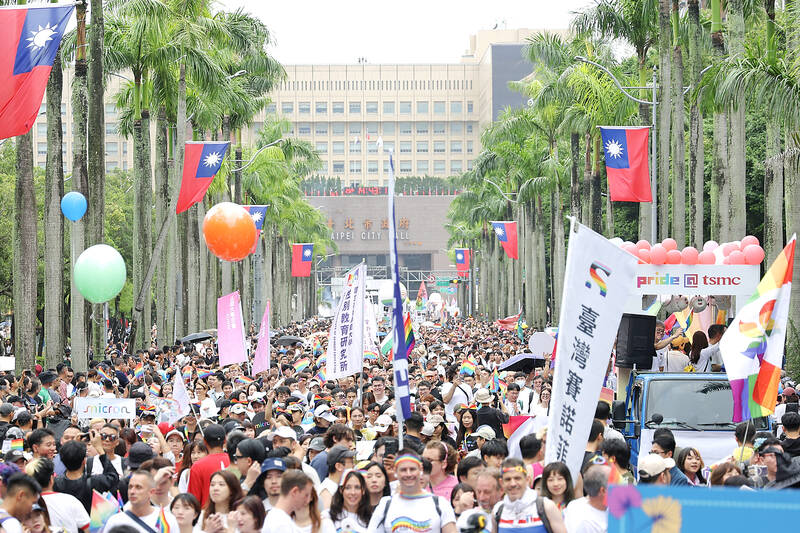
Photo: CNA
The sentiment that gender equity is a burdensome issue is growing and affecting public discussions about gender issues in Taiwan, Tai said.
Gender issues are complicated and should not be simplified, but many discourses on the Internet have become polarized, with common ground hard to find, he said.
“We hope the theme of the parade this year would remind people that we can try to understand one another’s life experience regardless of our positions,” he said. “That would provoke more in-depth and constructive discussion and thereby help promote gender-friendly policies.”
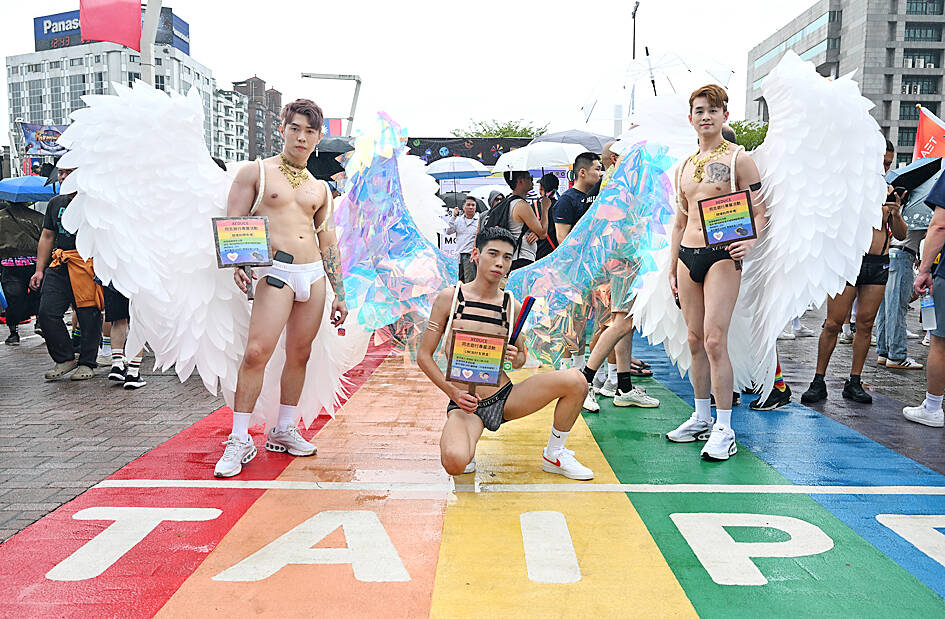
Photo: Liao Chen-huei, Taipei Times
The parade aimed to raise awareness of how online algorithms and public opinion influence perspectives about gender issues, he said.
Online discussions about gender issues must go beyond clicking on links and liking social media posts, Tai said, adding that embracing differences is the key to overcoming biases and fear.
Fletcher Hong (洪浩哲), the association’s spokesman, said that nearly 180 organizations signed up for this year’s parade and 110 stalls were set up, 36 of which were run by charitable organizations, a record high of more than 30 percent.
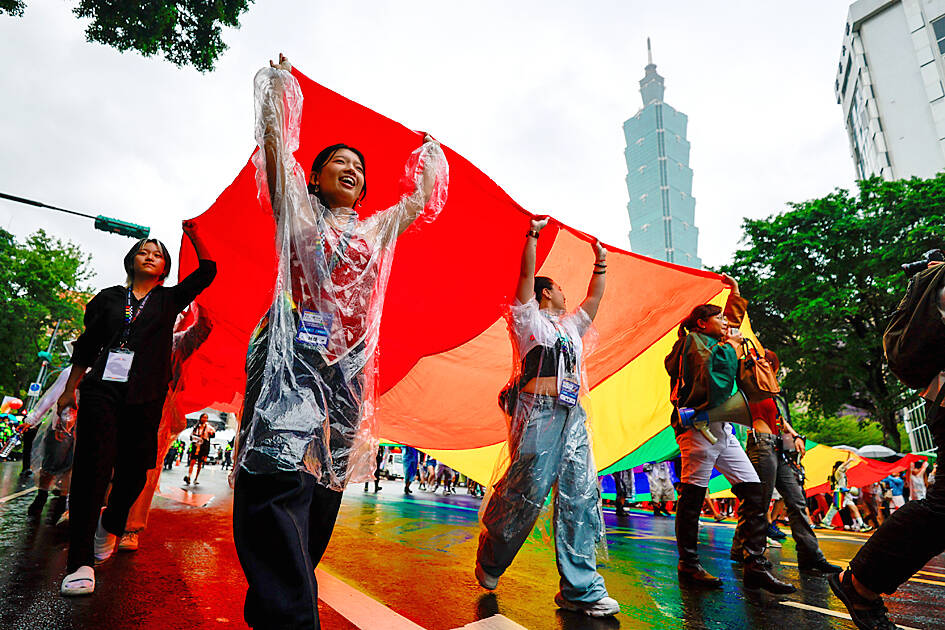
Photo: Ritchie B. Tongo, EPA
Asked about a push to allow government recognition of gender choice regardless of genital surgery, Hong said that “requiring people to undergo surgery before they can change their legal gender constitutes a major infringement of bodily autonomy and right to health.”
Gender recognition would not threaten women, as safety can be improved by promoting gender education and enhancing public space management, he said.
“The real goal is to provide safe public spaces for transgender and cisgender women, instead of polarizing them,” he said.
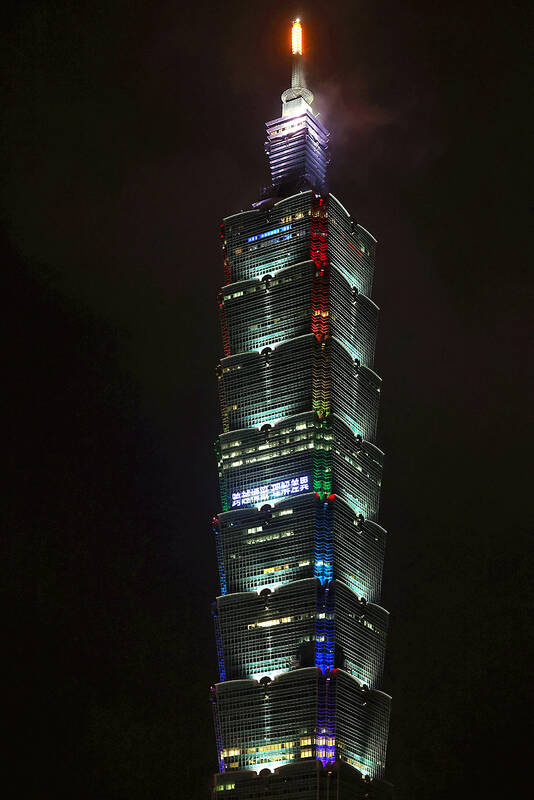
Photo: CNA
Asked about a controversy regarding the use of red in the rainbow flag — which symbolizes the “right to sex” — Hong said that the color and the universal right to sex would be upheld, but “the meaning is open to new interpretations.”
Taiwan’s gender and LGBT movement has entered a new era after many years of social change, he said, adding that the association would invite gender advocates to explore how to reinterpret the flag’s six colors to make it more suitable for today’s social context.

Considering that most countries issue more than five denominations of banknotes, the central bank has decided to redesign all five denominations, the bank said as it prepares for the first major overhaul of the banknotes in more than 24 years. Central bank Governor Yang Chin-lung (楊金龍) is expected to report to the Legislative Yuan today on the bank’s operations and the redesign’s progress. The bank in a report sent to the legislature ahead of today’s meeting said it had commissioned a survey on the public’s preferences. Survey results showed that NT$100 and NT$1,000 banknotes are the most commonly used, while NT$200 and NT$2,000

The Centers for Disease Control (CDC) yesterday reported the first case of a new COVID-19 subvariant — BA.3.2 — in a 10-year-old Singaporean girl who had a fever upon arrival in Taiwan and tested positive for the disease. The girl left Taiwan on March 20 and the case did not have a direct impact on the local community, it said. The WHO added the BA.3.2 strain to its list of Variants Under Monitoring in December last year, but this was the first imported case of the COVID-19 variant in Taiwan, CDC Deputy Director-General Lin Ming-cheng (林明誠) said. The girl arrived in Taiwan on

South Korea is planning to revise its controversial electronic arrival card, a step Taiwanese officials said prompted them to hold off on planned retaliatory measures, a South Korean media report said yesterday. A Yonhap News Agency report said that the South Korean Ministry of Foreign Affairs is planning to remove the “previous departure place” and “next destination” fields from its e-arrival card system. The plan, reached after interagency consultations, is under review and aims to simplify entry procedures and align the electronic form with the paper version, a South Korean ministry official said. The fields — which appeared only on the electronic form

The Ministry of Foreign Affairs (MOFA) is suspending retaliation measures against South Korea that were set to take effect tomorrow, after Seoul said it is updating its e-arrival system, MOFA said today. The measures were to be a new round of retaliation after Taiwan on March 1 changed South Korea's designation on government-issued alien resident certificates held by South Korean nationals to "South Korea” from the "Republic of Korea," the country’s official name. The move came after months of protests to Seoul over its listing of Taiwan as "China (Taiwan)" in dropdown menus on its new online immigration entry system. MOFA last week


 RSS
RSS