

Toilet paper is safe to flush, as 26 off-the-shelf toilet paper brands with a “Green Mark” have been certified water-soluble in Taiwan, the Ministry of Environment said last week.
The “Do Not Flush Toilet Paper” signs posted in many restrooms have misled people to believe that toilet paper would clog the toilet, ministry officials told a forum in Taipei on Wednesday held jointly with the Taiwan Toilet Association on the cleanup and management of public restrooms.
Toilet paper is made of short cellulose fibers that can easily break apart in water, they said.
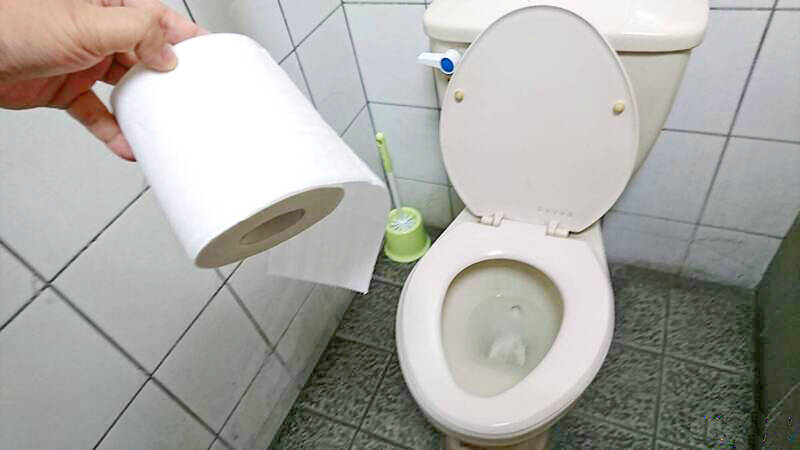
Twenty-six toilet paper brands circulating in Taiwan passed the CNS 1091 test and are certified water-soluble, they said.
Toilet paper would not block a toilet’s drainpipe, which is about 10cm wide, if it passes through the narrower P-trap, at about 5cm.
Taiwan Institute of Property Management president Kuo Chi-tzu (郭紀子) said that rather than toilet paper, household goods such as wet wipes, cotton swabs, cotton balls, tampons or dental floss are the main cause of blocked toilets.
While slurry, tile fragments or steel bars could fall into the pipelines of toilets and cause a blockage, aging pipes or greasy dirt, urine scale and fecal residue that have accumulated at pipe curves could narrow the inside diameter of the pipeline and block water flow, he said.
Therefore, regular maintenance of drainage systems is crucial to ensuring unobstructed water flow, including pipeline inspections and high-pressure washing, he added.
The ministry has launched an online poll (https://esms.moenv.gov.tw/toilet/VoteToilet2025) for people to select “The Best Public Toilet” from 40 restrooms qualified for the vote, with each person allowed to cast four votes per day. The poll runs through the end of this month.
Meanwhile, Friends of Daan Forest Park Foundation managing director Tsai Chien-sheng (蔡建生) said on the ministry’s podcast that the P-trap and drainpipe sizes are worldwide standards.
However, paper towels or wet wipes made of nonwoven fabric, which is insoluble in water, are difficult to break apart in water, he said.
Regarding why toilet paper is sometimes not flushed into the pipeline, Tsai said the key lies in the flushing power of the toilet.
Toilets with a low-profile tank produce less noise, but have weaker flushing power, which usually requires an additional 2kg of water pressure from outside the tank to create a vortex for the flush, he said.
Many silent flush toilets, which are widely introduced in concert halls, are rather impractical for public restrooms, as the ceiling or roof is usually not high enough to offer extra water pressure, he said.

Minister of Sports Lee Yang (李洋) today said the Chinese Taipei Basketball Association (CTBA) has been urged not to undermine Taiwan’s credibility in international competitions, after a Taiwanese team advanced to the semi-finals of the 45th William Jones Cup over the Philippines last week due to a controversial new rule guaranteeing a semi-final place to the host team. The Republic of China Blue team advanced to the semi-finals after winning just one game in the group round due to a “host guarantee” spot, overtaking the Philippines, who held a 5-1 record ahead of the semi-finals. The Blue team finished the tournament
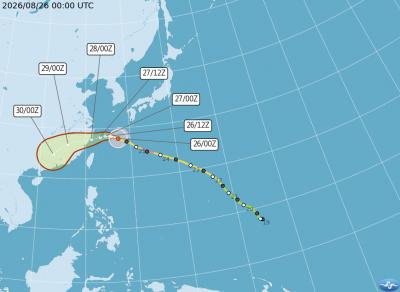
A sea warning for Typhoon Saudel, which has shifted to a more northerly track as it nears Taiwan, is expected early tomorrow, the Central Weather Administration (CWA) said today. As of this morning, Saudel was about 650km east-northeast of Taipei, moving west-northwest at 12kph with maximum sustained winds of 162kph, CWA data showed. Although Saudel remains a moderate typhoon, it has weakened and is expected to weaken further as it nears Taiwan due to unfavorable atmospheric and ocean conditions, CWA forecaster Lin Po-tung (林伯東) said. The storm is forecast to make its closest approach to Taiwan tomorrow and on Friday, Lin added. According to
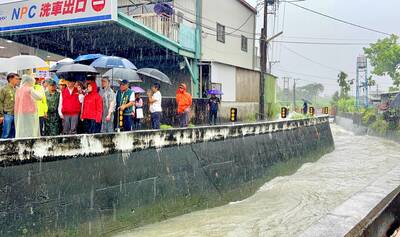
SEA WARNING EXPECTED: As atmospheric conditions are unfavorable for its development, the storm’s intensity is continuing to weaken, a CWA official said Typhoon Saudel is continuing to weaken and shift its path northward, with a sea warning expected to be issued this evening, the Central Weather Administration (CWA) said yesterday. The agency did not rule out issuing a land warning for outlying Lienchiang County (Matsu) tomorrow morning, although all storm warnings could be lifted by Friday night. Saudel is expected to be closest to Taiwan from tomorrow night to Friday, bringing localized heavy rain to northern and southern Taiwan, as well as central mountainous areas, the agency said. As of 2pm yesterday, the center of moderate Typhoon Saudel was about 890km east-northeast
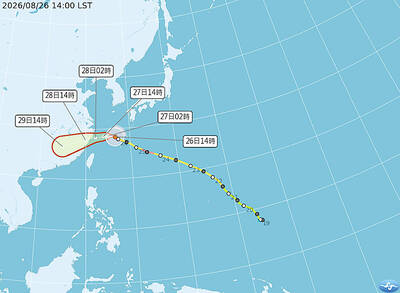
MODERATE TYPHOON: Localized heavy rain is forecast to hit central and southern Taiwan, the CWA said, adding that the storm would likely move away on Saturday A sea warning for Typhoon Saudel, which shifted to a more northerly track as it approached Taiwan, is likely early today, the Central Weather Administration (CWA) said yesterday. As of 2pm yesterday, the center of typhoon was about 630km northeast of Taipei, moving west-northwest at 14kph with maximum wind gusts of up to 162kph, CWA data showed. Saudel is a moderate typhoon and is expected to weaken as it nears Taiwan due to atmospheric and ocean conditions, CWA forecaster Lin Po-tung (林伯東) said. A sea warning indicates hazardous typhoon conditions in waters surrounding Taiwan within 24 hours, Lin said. The storm is forecast to


 RSS
RSS