

The Ministry of Finance and the Ministry of Economic Affairs must take action and assist the domestic beer industry amid declining market share due to competition from cheap beer imported from China, Democratic Progressive Party (DPP) lawmakers said on Friday.
The market share of Chinese beer in Taiwan has increased to 39 percent, while the share for domestic beer was at 36 percent, DPP Legislator Kuo Kuo-wen (郭國文) said.
“There is a real risk of further intrusion by Chinese goods associated with the ‘red supply chain,’ which could endanger our national and economic security,” he said, adding that there was evidence that many of Chinese breweries receive large financial incentives and subsidies from the Chinese government.

Photo: Liao Chen-huei, Taipei Times Photo: Liao Chen-huei, Taipei Times Warning: Excessive consumption of alcohol can damage your health
The ministries should compile reports on the beer industry in Taiwan and come up with ways to boost domestic brewers’ market share, Kuo said.
DPP Legislator Hsu Fu-kuei (徐富癸) said that in the first half of the year, the market share of domestic beer declined to 36 percent.
“Although the Ministry of Finance imposed anti-dumping duties on Chinese-made beer on July 3, imports of beer last month increased by 27 percent compared with the same period last year,” Hsu said. “These figures point to serious issues.”
“Growth in the volume of imported beer was higher than the increase in their value, indicating that the beer imports were low to medium-priced products,” Hsu said.
He cited as an example Chinese-made Bar Beer and Busch Snow Mountain Beer, which face anti-dumping duties of 13 percent and 33 percent respectively, saying that the tariffs were still too low and had little effect in deterring China from dumping in low-priced beer in Taiwan.
“Even after imposing anti-dumping duties, this did not stop their sales promotion, low prices and volume discounts,” Hsu said.
DPP Legislator Chung Chia-pin (鍾佳濱) said that Chinese beer companies were also falsely marketing their products as being made in the US, Japan or Taiwan, and called on government agencies to amend the Regulations Governing Trade Between the Taiwan Area and the Mainland Area (台灣地區與大陸地區貿易許可辦法) to ensure clear labeling of products’ country of origin.
National Treasury Administration deputy head Lin Hsiu-yen (林秀燕) said the agency would discuss adjusting duties on the import of ingredients for beer production.
Bureau of Foreign Trade official Huang Ching-hsuan (黃?萱) said they would coordinate with the finance ministry to provide guidance for the beer industry, and discuss possible additional conditions importers must meet to obtain permits to sell in Taiwan.
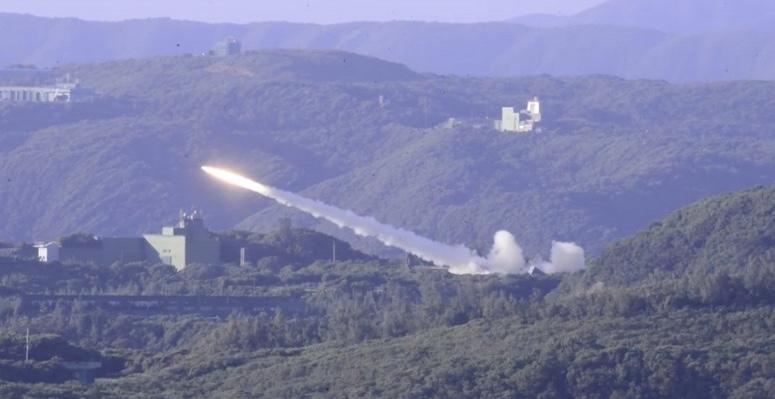
A Chinese military drone was spotted conducting reconnaissance off Taitung County as President William Lai (賴清德) visited Pingtung County this morning to inspect a drill of the armed forces’ precision-strike capabilities, prompting the military to closely monitor its actions. Today was the final day of a three-day military exercise at Jioupeng Base (九鵬基地) to test the joint combat capabilities of the armed forces and coast guard. The exercise began on Wednesday simulating air defense interception and yesterday tested long-range strike capabilities and new air defense weapons. This morning, the military conducted a final exercise involving air defense, anti-ship and drone operations. Military sources said

OCT. 31: The antiviral drugs Tamiflu and Eraflu have been distributed to about 4,000 medical facilities nationwide for people in seven groups who develop flu-like symptoms As the domestic influenza epidemic enters its peak season and continues to escalate, the Centers for Disease Control (CDC) yesterday announced that publicly funded influenza antiviral drugs for seven eligible groups have been extended to Oct. 31, allowing those who develop flu-like symptoms to receive the medication without undergoing a rapid influenza test. The CDC has extended the expanded use of flu antiviral drugs to seven groups: healthcare and influenza-prevention personnel; residents and staff at nursing homes, long-term care facilities and similar institutions; kindergarten and daycare workers and home-based caregivers; students from kindergarten through high school, vocational high school and the
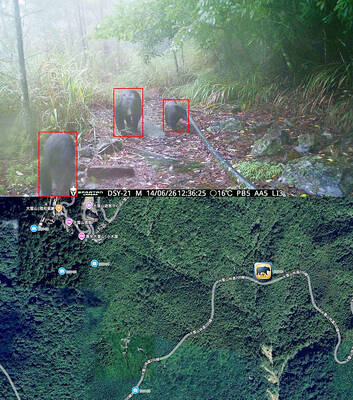
RARE PEEK: The footage released showed one of the bears staying in a cave for as long as 70 days, providing the first record of Formosan black bear’s overwintering The Forestry and Nature Conservation Agency yesterday released tracking records of released Formosan black bears for the first time, showing that they get much closer to human settlements than previously thought. The agency said it had captured two bears, Da Qu-ali (達古阿里) and Aziman (阿里曼), in indigenous villages in Hualien County and began to track them with a camera-mounted satellite collar after releasing them back into the wild. The results confirmed that the bears have moved from deep mountain areas into lowland hills closer to human communities, leading to an increase in human-bear conflicts, it said. The agency has introduced artificial intelligence-assisted early

Taiwanese Tsai Chin-shu (蔡金樹), who had been imprisoned in China for engaging in activity that “endangers national security,” said on Facebook on Friday that he has returned to Taiwan. Tsai, chairman of the Southern Taiwan Union of Cross-strait Relations Associations, had traveled frequently between Taiwan and China for years, and at one time ran a trading company in China’s Pingtan. In July 2018, he traveled to Quanzhou, Fujian Province, to attend a cross-strait food trade fair and stayed at a hotel in Xiamen. He checked out the following day and then disappeared. His family had made repeated appeals to the authorities


 RSS
RSS