


More than 500 Taiwanese troops participated in Northern Strike, a joint military exercise held in Michigan, US military newspaper Stars and Stripes reported yesterday.
The exercise ran throughout Michigan’s Great Lakes region from Aug. 2 to Saturday, featuring 7,500 participants across all branches of the US armed forces, as well as nine international partners.
Although officials did not comment on Taiwanese participation, the report cites an Aug. 4 briefing at which a defense official reportedly confirmed that 500 troops from Taiwan were set to participate, and a presentation slide which indicated that forces from Taiwan have participated since at least 2021.
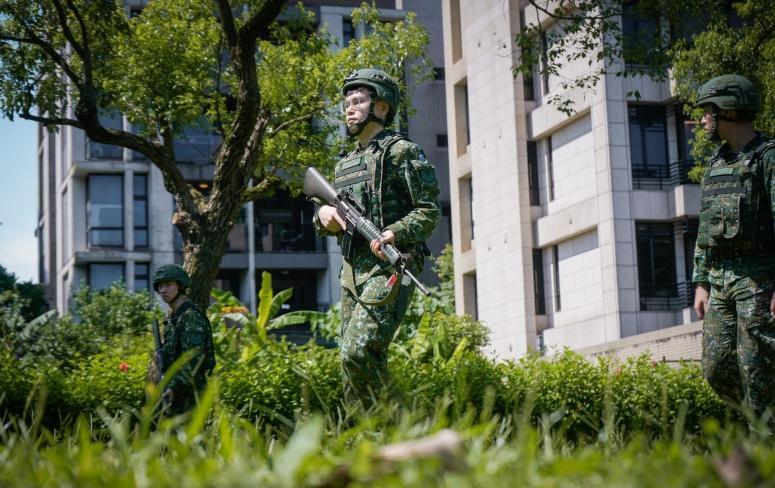
Photo: Liu Yu-chieh, Taipei Times
In a departure from previous editions, this year’s exercises simulated a conflict in the Indo-Pacific, reflecting the US Department of Defense’s concern about tensions in the region, the report said.
“As we’ve seen the national priority shift ... we need to align and plan for that region,” the report cited a US Army official as saying.
The region’s geography allowed them to “replicate” the island environments US forces would have to fight in, the report cited another official as saying.
This included exercises such as resupplying at sea, delivering supplies to islands and operating aircraft out of dispersed island bases in the Indo-Pacific, the report said.
For example, the report describes the US Air Force using new corrosion-resistant materials to repair runways as part of “contingency” planning.
In August 2023, five Chinese students from the University of Michigan were caught spying at the camp that hosts the exercise, the report said, although arrest warrants remain outstanding on charges of conspiracy and lying to investigators.
Defense expert Mei Fu-hsing (梅復興) said that last year’s Northern Strike exercise also saw live-fire tests of loitering munitions, demonstrating increasing cooperation between the US and Taiwan.
US military sources said that senior Taiwanese military officials and representatives were present to observe the tests, he said.
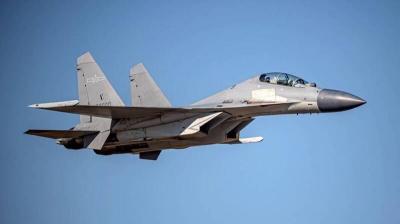
Eight Chinese naval vessels and 24 military aircraft were detected crossing the median line of the Taiwan Strait between 6am yesterday and 6am today, the Ministry of National Defense said this morning. The aircraft entered Taiwan’s northern, central, southwestern and eastern air defense identification zones, the ministry said. The armed forces responded with mission aircraft, naval vessels and shore-based missile systems to closely monitor the situation, it added. Eight naval vessels, one official ship and 36 aircraft sorties were spotted in total, the ministry said.
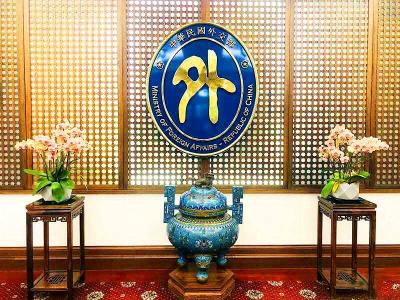
The Ministry of Foreign Affairs (MOFA) today said that if South Korea does not reply appropriately to its request to correct Taiwan’s name on its e-Arrival card system before March 31, it would take corresponding measures to alter how South Korea is labeled on the online Taiwan Arrival Card system. South Korea’s e-Arrival card system lists Taiwan as “China (Taiwan)” in the “point of departure” and “next destination” fields. The ministry said that it changed the nationality for South Koreans on Taiwan’s Alien Resident Certificates from “Korea” to “South Korea” on March 1, in a gesture of goodwill and based on the

Taiwanese officials were shown the first of 66 F-16V fighter jets purchased by Taiwan from the United States, the Ministry of National Defense said yesterday, adding the aircraft has completed an initial flight test and is expected to be delivered later this year. A delegation led by Deputy Minister of National Defense Hsu Szu-chien (徐斯儉) visited Lockheed Martin’s F-16 C/D Block 70 (also known as F-16V) assembly line in South Carolina on March 16 to view the aircraft. The jet will undergo a final acceptance flight in the US before being delivered to Taiwan, the
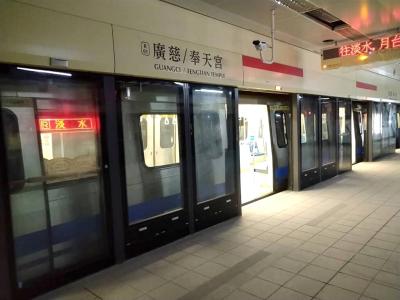
The New Taipei Metro's Sanyin Line and the eastern extension of the Taipei Metro's Tamsui-Xinyi Line (Red Line) are scheduled to begin operations in June, the National Development Council said today. The Red Line, which terminates at Xiangshan Station, would be connected by the 1.4km extension to a new eastern terminal, Guangci/Fengtian Temple Station, while the Sanyin Line would link New Taipei City's Tucheng and Yingge stations via Sanxia District (三峽). The council gave the updates at a council meeting reviewing progress on public construction projects for this year. Taiwan's annual public infrastructure budget would remain at NT$800 billion (US$25.08 billion), with NT$97.3


 RSS
RSS