


Taipei prosecutors today searched the offices and residences of Taipei City Council Deputy Speaker Yeh Lin-chuan (葉林傳) and seven other people in connection with a corruption investigation.
Seventeen locations were searched, while 12 defendants, including Yeh and a computer game center owner surnamed Chi (紀) and three witnesses, were summoned for questioning, prosecutors said.
A small suitcase was taken away by the prosecutors after a two-hour search this morning.
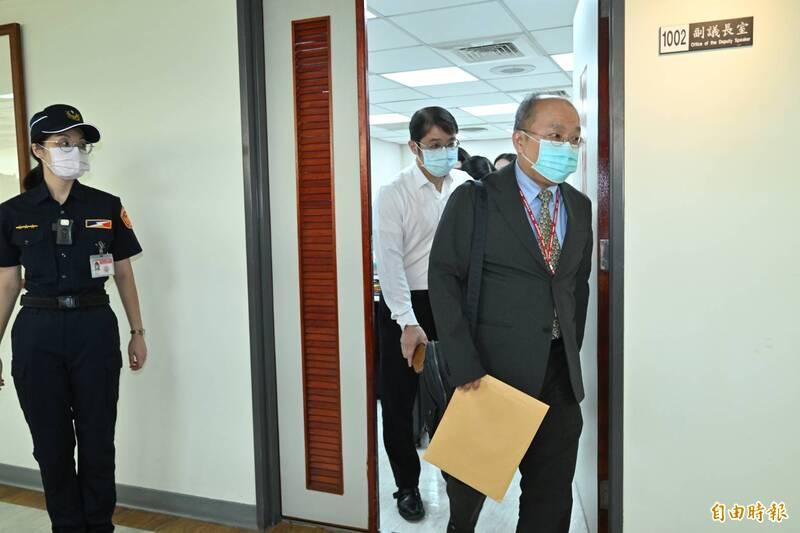
Photo: Tien Yu-hua, Taipei Times
Yeh was suspected to have contravened the Anti-Corruption Act (貪污治罪條例), while the other 11 people were suspected to have contravened Article 268 of the Criminal Code for allegedly intending to profit from a gambling business, prosecutors said.
Yeh reportedly attempted to push through amendments to Article 10 of the Taipei City Electronic Game Management and Autonomy Regulations (台北市電子遊戲場業設置管理自治條例) between 2017 and 2018 to legalize Chi’s business, prosecutors said.
Yeh is suspected of running a computer game center registered under the names of Chi and others in Zhongshan District (中山), prosecutors said.
Yeh did not avoid a conflict of interest when the Taipei City Council discussed the amendments, they said.
The case might be related to an investigation over the alleged involvement of two of Yeh’s former and current staffers in a bribery case last year, people familiar with the matter said.
A former head of Yeh’s office, surnamed Chang (張), and the current head, surnamed Lin (林), who were suspected to have bribed the police, were eventually released without bail last year.
The two were alleged to have bribed a police officer, surnamed Liu (劉), from the Songshan precinct to allow various businesses in the gambling and sex industries to run since 2009, investigators said last year.
Yeh had nothing to do with the case, investigators said at the time.
Thirty-six people, including Liu and his daughter, were summoned for questioning last year.
The investigation is still ongoing.
Additional reporting by Yang Hsin-hui, Tung Kuan-yi and Wu Sheng-ju

AGING: While Japan has 22 submarines, Taiwan only operates four, two of which were commissioned by the US in 1945 and 1946, and transferred to Taiwan in 1973 Taiwan would need at least 12 submarines to reach modern fleet capabilities, CSBC Corp, Taiwan chairman Chen Cheng-hung (陳政宏) said in an interview broadcast on Friday, citing a US assessment. CSBC is testing the nation’s first indigenous defense submarine, the Hai Kun (海鯤, Narwhal), which is scheduled to be delivered to the navy next month or in July. The Hai Kun has completed torpedo-firing tests and is scheduled to undergo overnight sea trials, Chen said on an SET TV military affairs program. Taiwan would require at least 12 submarines to establish a modern submarine force after assessing the nation’s operational environment and defense

A white king snake that frightened passengers and caused a stir on a Taipei MRT train on Friday evening has been claimed by its owner, who would be fined, Taipei Rapid Transit Corp (TRTC) said yesterday. A person on Threads posted that he thought he was lucky to find an empty row of seats on Friday after boarding a train on the Bannan (Blue) Line, only to spot a white snake with black stripes after sitting down. Startled, he jumped up, he wrote, describing the encounter as “terrifying.” “Taipei’s rat control plan: Release snakes on the metro,” one person wrote in reply, referring
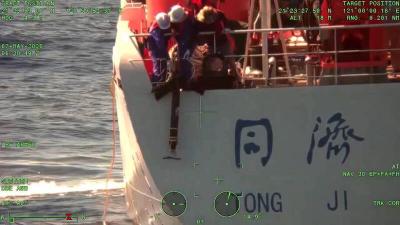
The coast guard today said that it had disrupted "illegal" operations by a Chinese research ship in waters close to the nation and driven it away, part of what Taipei sees a provocative pattern of China's stepped up maritime activities. The coast guard said that it on Thursday last week detected the Chinese ship Tongji (同濟號), which was commissioned only last year, 29 nautical miles (54km) southeast of the southern tip of Taiwan, although just outside restricted waters. The ship was observed lowering ropes into the water, suspected to be the deployment of scientific instruments for "illegal" survey operations, and the coast
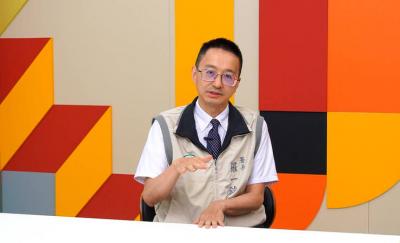
Taiwan’s two cases of hantavirus so far this year are on par with previous years’ case numbers, and the government is coordinating rat extermination work, so there should not be any outbreaks, Centers for Disease Control (CDC) Director-General Philip Lo (羅一鈞) said today in an interview with the Liberty Times (the Taipei Times’ sister newspaper). An increase in rat sightings in Taipei and New Taipei City has raised concerns about the spread of hantavirus, as rats can carry the disease. In January, a man in his 70s who lived in Taipei’s Daan District (大安) tested positive posthumously for hantavirus, Taiwan’s


 RSS
RSS