


GreenHarvest, a Taiwan-based renewable energy firm, today announced a strategic collaboration with Amogy, a U.S.-based company providing scalable and efficient ammonia-to-power solutions. The companies will jointly advance the deployment of ammonia-to-hydrogen power systems in large electricity consumer facilities in Taiwan, supporting industrial decarbonization efforts targeting Scope 1 and Scope 2 emissions.
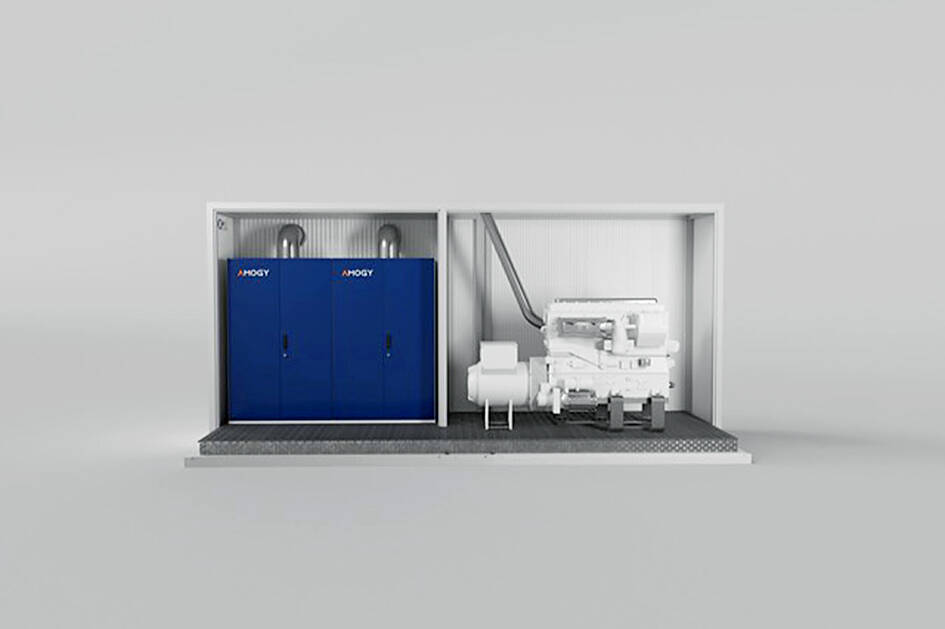
Amogy’s proprietary ammonia cracking technology utilizes advanced catalyst materials to efficiently convert ammonia into hydrogen. The hydrogen is then funneled into a hydrogen engine, generating high-performance power with zero carbon emissions. This system offers a modular, efficient, and safe clean energy solution for hard-to-abate sectors.
Seonghoon Woo, CEO at Amogy stated: “We are proud to bring our ammonia-powered technology to Taiwan with a forward-looking partner like GreenHarvest. This project not only represents the first deployment of our technology in Taiwan, but also a critical step toward decarbonizing industrial energy use in one of the world’s most important digital infrastructure economies. ”
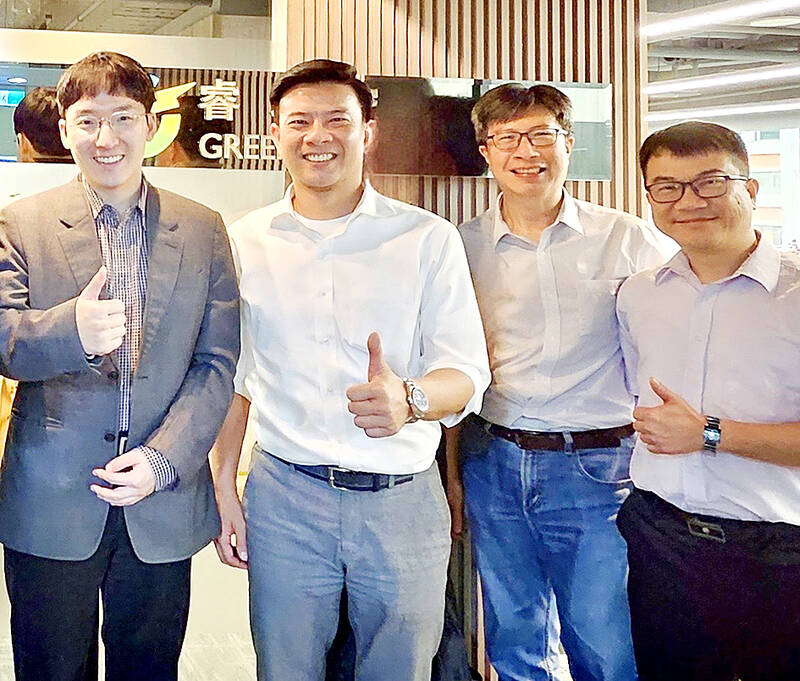
Since 2020, GreenHarvest has focused on rooftop solar PV development in Taiwan and has expanded internationally through a green hydrogen partnership with H2U in Australia. It plans to begin importing green ammonia to Taiwan by 2030. Its retail subsidiary, Mr. Watt, secured multiple contracts from manufacturing clients in 2025, with a projected total contracted green power supply exceeding 2 billion kWh.
KH Chen, Chairman of GreenHarvest, commented: “GreenHarvest has long been committed to rooftop solar development, providing industrial electricity users with a reliable and user-friendly source of green power. At the same time, we are actively deploying next-generation green electricity technologies. Through our 2024 collaboration with H2U in Australia on a green hydrogen project and this deployment of Amogy’s ammonia-to-power energy solution at customer sites, it further reinforces our confidence and momentum in ammonia-based energy applications.”
This deployment targets the first implementation of Amogy’s technology in Taiwan. Installation is scheduled for late 2026 to early 2027.
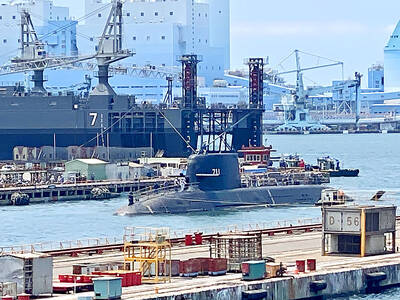
AGING: While Japan has 22 submarines, Taiwan only operates four, two of which were commissioned by the US in 1945 and 1946, and transferred to Taiwan in 1973 Taiwan would need at least 12 submarines to reach modern fleet capabilities, CSBC Corp, Taiwan chairman Chen Cheng-hung (陳政宏) said in an interview broadcast on Friday, citing a US assessment. CSBC is testing the nation’s first indigenous defense submarine, the Hai Kun (海鯤, Narwhal), which is scheduled to be delivered to the navy next month or in July. The Hai Kun has completed torpedo-firing tests and is scheduled to undergo overnight sea trials, Chen said on an SET TV military affairs program. Taiwan would require at least 12 submarines to establish a modern submarine force after assessing the nation’s operational environment and defense

A white king snake that frightened passengers and caused a stir on a Taipei MRT train on Friday evening has been claimed by its owner, who would be fined, Taipei Rapid Transit Corp (TRTC) said yesterday. A person on Threads posted that he thought he was lucky to find an empty row of seats on Friday after boarding a train on the Bannan (Blue) Line, only to spot a white snake with black stripes after sitting down. Startled, he jumped up, he wrote, describing the encounter as “terrifying.” “Taipei’s rat control plan: Release snakes on the metro,” one person wrote in reply, referring
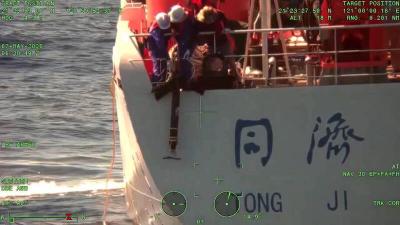
The coast guard today said that it had disrupted "illegal" operations by a Chinese research ship in waters close to the nation and driven it away, part of what Taipei sees a provocative pattern of China's stepped up maritime activities. The coast guard said that it on Thursday last week detected the Chinese ship Tongji (同濟號), which was commissioned only last year, 29 nautical miles (54km) southeast of the southern tip of Taiwan, although just outside restricted waters. The ship was observed lowering ropes into the water, suspected to be the deployment of scientific instruments for "illegal" survey operations, and the coast
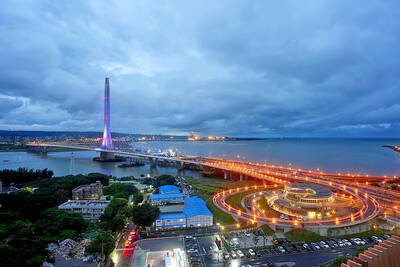
An inauguration ceremony was held yesterday for the Danjiang Bridge, the world’s longest single-mast asymmetric cable-stayed bridge, ahead of its official opening to traffic on Tuesday, marking a major milestone after nearly three decades of planning and construction. At the ceremony in New Taipei City attended by President William Lai (賴清德), Premier Cho Jung-tai (卓榮泰), Minister of Transportation and Communications Chen Shih-kai (陳世凱) and New Taipei City Mayor Hou Yu-ih (侯友宜), the bridge was hailed as both an engineering landmark and a long-awaited regional transport link connecting Tamsui (淡水) and Bali (八里)


 RSS
RSS