


President William Lai (賴清德) is expected next week to mark for the first time in Taiwan the end of World War Two in Europe and underscore that aggression must be defeated, sources told Reuters, at a time when Taiwan is facing increasing military pressure from China.
Taiwan has since the start of this year sought to cast the war as a lesson to China in why aggression would end in failure, and take back the narrative from Beijing that it was not communist forces who were mainly responsible for victory.
World War Two, and the full-scale Japanese invasion of China in 1937 that preceded the start of the conflict in 1939, is a touchy historical subject in both China and Taiwan.
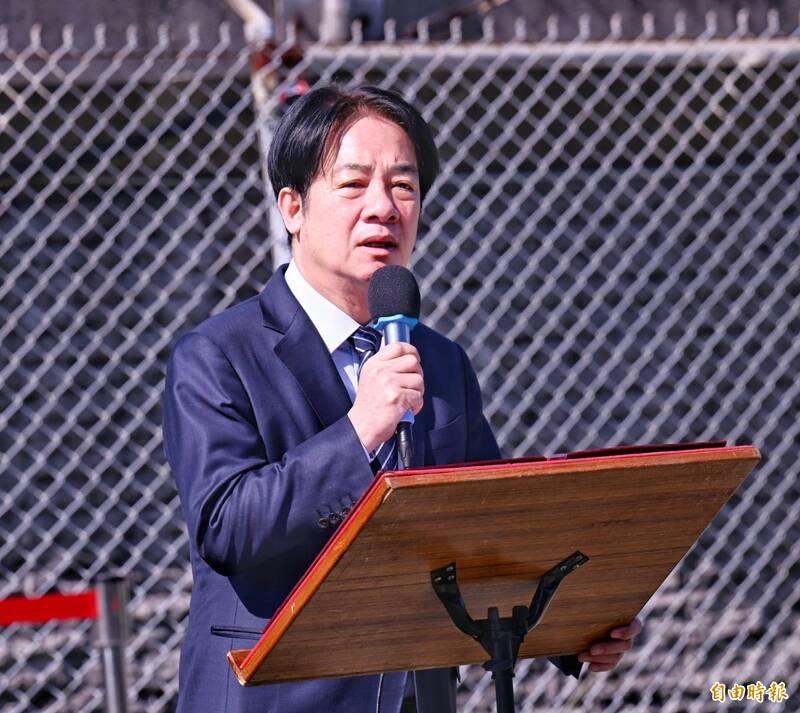
Photo: Fang Pin-chao, Taipei Times
The Chinese government at the time was the Republic of China, part of the US and British-led alliance, and its forces did much of the fighting against Japan, putting on pause a bitter civil war with Mao Zedong's (毛澤東) Communists whose military also fought the Japanese.
The republican government then fled to Taiwan in 1949 after finally being defeated by the Communists, and the Republic of China remains Taiwan's official name.
Four sources familiar with the matter, speaking on condition of anonymity as they were not authorized to speak to the media, told Reuters that Lai is to host foreign diplomats and other dignitaries in Taipei next Thursday and give a speech about the 80th anniversary of the war's end.
This marks the first time that Taiwan would formally commemorate the victory of the war in Europe. By doing so, Lai is expected to call on Taiwan's friends to unite in the face of the growing aggression from China, Russia, Iran and North Korea, two of the sources said.
"The victory in World War Two came from the unity of these nations, and it's important to note that aggression must be defeated. All these peace-loving nations must unite," the source said.
The source said Lai is likely to remind the world that democracies are now facing the same threats to democracy as 80 years ago, pointing to examples including China's military aggression, political coercion and disinformation campaigns.
Taiwan's presidential office did not respond to a request for comment.
China's foreign ministry, asked about Taiwan's interpretation of the war and the events it is planning to mark its end, said the "distortion of history, tampering with facts and spreading of lies and fallacies" had long been a ploy of its ruling party.
"Bringing about the reunification of the motherland and national rejuvenation are the best ways to commemorate the victory in the war," it said in a statement sent to Reuters.
Lai would be speaking ahead of the following day's military parade in Moscow hosted by President Vladimir Putin to mark the war's end, which Russia's government says Chinese President Xi Jinping (習近平) is to attend.
The event is to be held at the Taipei Guest House, the sources said, the residence of the governor general under Japanese colonial rule of Taiwan, which ended in 1945.
A second source familiar with Lai's event next week said it was also about Taiwan trying to take back the narrative about the war from China.
"Lai has a strong sense of history," the source said, pointing to previous comments from him including last year where he said if China's claims on Taiwan are about territorial integrity, then it should also take back land from Russia signed over by the last Chinese dynasty in the 19th century.
Lai, who took office in May last year, is condemned by Beijing as a "separatist." He says only Taiwan's people can decide their future.

SECURITY: Starlink owner Elon Musk has taken pro-Beijing positions, and allowing pro-China companies to control Taiwan’s critical infrastructure is risky, a legislator said Starlink was reluctant to offer services in Taiwan because of the nation’s extremely high penetration rates in 4G and 5G services, the Ministry of Digital Affairs said yesterday. The ministry made the comments at a meeting of the legislature’s Transportation Committee, which reviewed amendments to Article 36 of the Telecommunications Management Act (電信管理法). Article 36 bans foreigners from holding more than 49 percent of shares in public telecommunications networks, while shares foreigners directly and indirectly hold are also capped at 60 percent of the total, unless specified otherwise by law. The amendments, sponsored by Chinese Nationalist Party (KMT) Legislator Ko
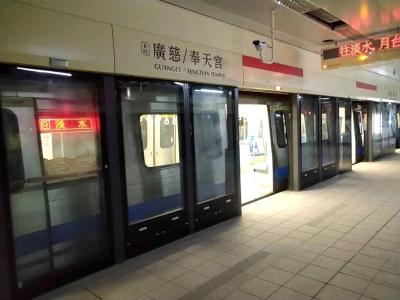
The eastern extension of the Taipei MRT Red Line could begin operations as early as late June, the Taipei Department of Rapid Transit Systems said yesterday. Taipei Rapid Transit Corp said it is considering offering one month of free rides on the new section to mark its opening. Construction progress on the 1.4km extension, which is to run from the current terminal Xiangshan Station to a new eastern terminal, Guangci/Fengtian Temple Station, was 90.6 percent complete by the end of last month, the department said in a report to the Taipei City Council's Transportation Committee. While construction began in October 2016 with an
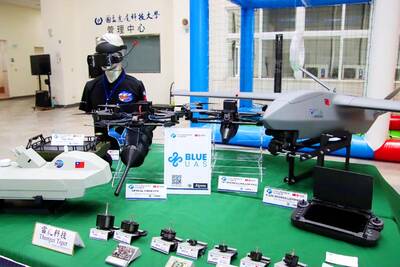
NON-RED SUPPLY: Boosting the nation’s drone industry is becoming increasingly urgent as China’s UAV dominance could become an issue in a crisis, an analyst said Taiwan’s drone exports to Europe grew 41.7-fold from 2024 to last year, with demand from Ukraine’s fight against Russian aggression the most likely driver of growth, a study showed. The Institute for Democracy, Society and Emerging Technology (DSET) in a statement on Wednesday said it found that many of Taiwan’s uncrewed aerial vehicle (UAV) sales were from Poland and the Czech Republic. These countries likely transferred the drones to Ukraine to aid it in its fight against the Russian invasion that started in 2022, it said. Despite the gains, Taiwan is not the dominant drone exporter to these markets, ranking second and fourth
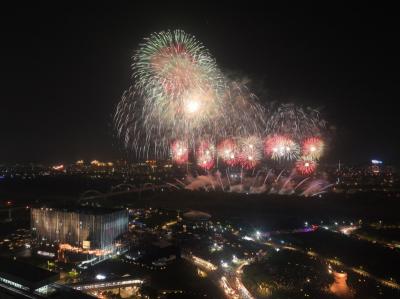
The New Taipei City Art Museum this weekend plans to celebrate its first anniversary with a two-day extravaganza featuring live concerts and a large-scale synchronized fireworks and drone display, the New Taipei City Cultural Affairs Department said. The two-day celebrations are to take place in the museum’s outdoor park, with markets and live performances by singers including Ann Bai (白安), Bii (畢書盡) and the Cosmos People (宇宙人), the department said. The highlight on both evenings would be the "Echoes of Light" show, an aerial spectacle combining fireworks and drone performances designed around the concept of "dual stages in the sky," it


 RSS
RSS