


Deputy Legislative Speaker Johnny Chiang (江啟臣) departed for Washington yesterday with a delegation of lawmakers to hold meetings on issues including US tariffs.
Chiang, of the Chinese Nationalist Party (KMT), departed Taiwan with lawmakers Chang Chih-lun (張智倫) and Huang Chien-hao (黃健豪) of the KMT and Lin Yi-chun (林憶君) of the smaller opposition Taiwan People’s Party, a release from Chiang’s office said.
Legislators Wang Ting-yu (王定宇), Chiu Yi-ying (邱議瑩) and Ngalim Tiunn (張雅琳) of the ruling Democratic Progressive Party would also join the delegation after departing Taiwan today, the statement said.
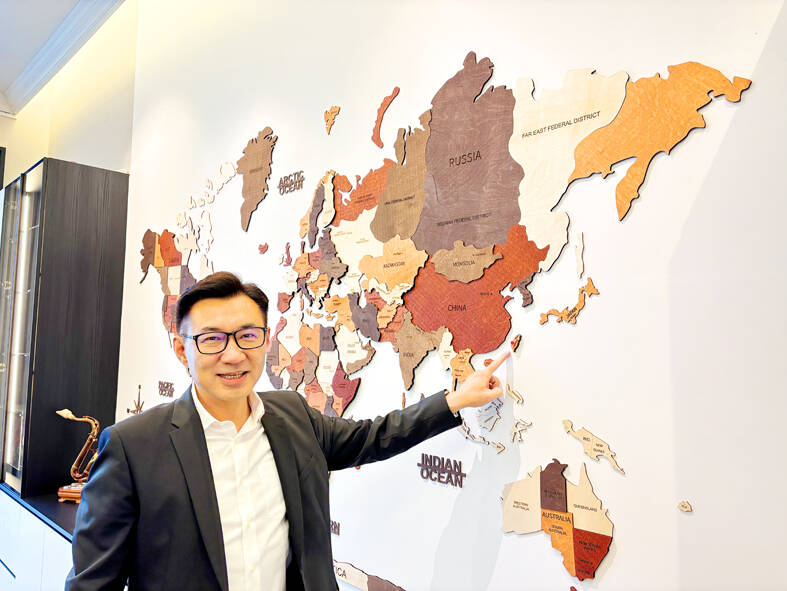
Photo: Lin Hsin-han, Taipei Times
Chiang said that he had spent more than 20 days meeting with representatives of various industries in Taiwan, listening to their concerns about US tariffs, geopolitical risks and investment needs.
In addition to wishing the government success in its tariff negotiations with the US, Chiang said he also wanted to use the trip to discuss broader opportunities for mutually-beneficial bilateral cooperation, outside of just “Taiwan Semiconductor Manufacturing Co and semiconductors.”
During their visit to Washington, the legislative delegation is scheduled to meet with US lawmakers, think tanks, companies and US government agencies, the statement said.
Aside from addressing tariff issues, the delegation would also advocate for the passage of a US-Taiwan double taxation relief bill, meet with officials to ensure the timely delivery of US arms purchased by Taiwan and promote broader Taiwan-US defense cooperation, it said.
The lawmakers in the delegation are all members of either the Taiwan-US parliamentary friendship group or the legislature’s Foreign Affairs and National Defense Committee, it added.
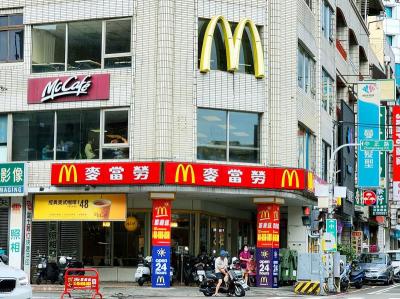
Fast food chain McDonald's is to raise prices by up to NT$5 on some products at its restaurants across Taiwan, starting on Wednesday next week, the company announced today. The prices of all extra value meals and sharing boxes are to increase by NT$5, while breakfast combos and creamy corn soup would go up by NT$3, the company said in a statement. The price of the main items of those meals, if ordered individually, would remain the same. Meanwhile, the price of a medium-sized lemon iced tea and hot cappuccino would rise by NT$3, extra dipping sauces for chicken nuggets would go up
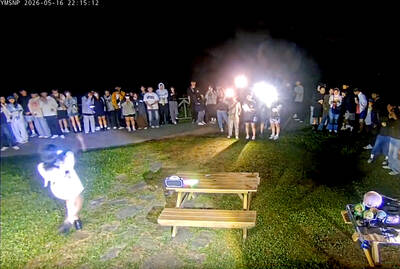
Yangmingshan National Park’s Qingtiangang (擎天崗) nature area has gone viral after a park livestream camera observed a couple in the throes of intimate congress, which was broadcast live on YouTube, drawing large late-night crowds and sparking a backlash over noise, bright lights and disruption to wildlife habitat. The area’s livestream footage appeared to show a couple engaging in sexual activity on a picnic table in the park on Friday last week, with the uncensored footage streamed publicly online. The footage quickly spread across social media, prompting a tide of visitors to travel to the site to “check in” and recreate the
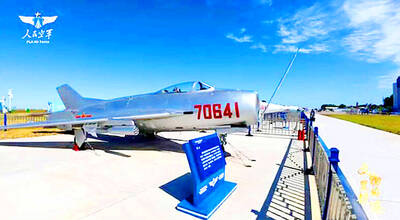
GROUNDED: A KMT lawmaker proposed eliminating drone development programs and freezing funding for counterdrone systems, despite China’s adoption of the technology China has deployed attack drones at air bases near the Taiwan Strait in a strategy aimed at overwhelming Taiwan’s air defense systems through saturation attacks, the Mainland Affairs Council (MAC) said. The council’s latest quarterly report on China said that satellite imagery and open-source intelligence indicate that the Chinese People’s Liberation Army (PLA) had converted retired J-6 fighter jets into J-6W drones, which the PLA has stationed at six air bases near Taiwan, five in China’s Fujian Province and one in Guangdong Province. The report cited J. Michael Dahm, a senior fellow at the US-based Mitchell Institute, as saying that China has

Carrefour Taiwan is to begin using a new name from the start of July, but it cannot divulge the name until then, the chairman of the supermarket chain's parent company said today. President Chain Store Co chairman Lo Chih-hsien (羅智先) was asked by reporters after a shareholders' meeting to confirm whether the company has settled on a new name for the supermarket brand. In March, the government-registered name of two Carrefour Taiwan branches was quietly changed to "Le Chia Kang" (樂家康) in Chinese, raising speculation that has been selected as the name. Lo said that because of local regulations and contractual obligations, the


 RSS
RSS