


Premier Cho Jung-tai (卓榮泰) and other members of a Taiwan-US trade task force briefed President William Lai (賴清德) yesterday evening on the potential impacts of reciprocal tariffs the US is set to introduce, including contingency preparations.
The Executive Yuan established a US-Taiwan economic and trade task force in November last year, holding interministerial meetings and cooperating with the National Security Council (NSC) to stay updated on the latest developments in US trade and tariff policies.
Cho is monitoring the team to ensure that potential US trade policies are analyzed in advance, allowing the government to assess potential impacts and prepare countermeasures, government officials said.
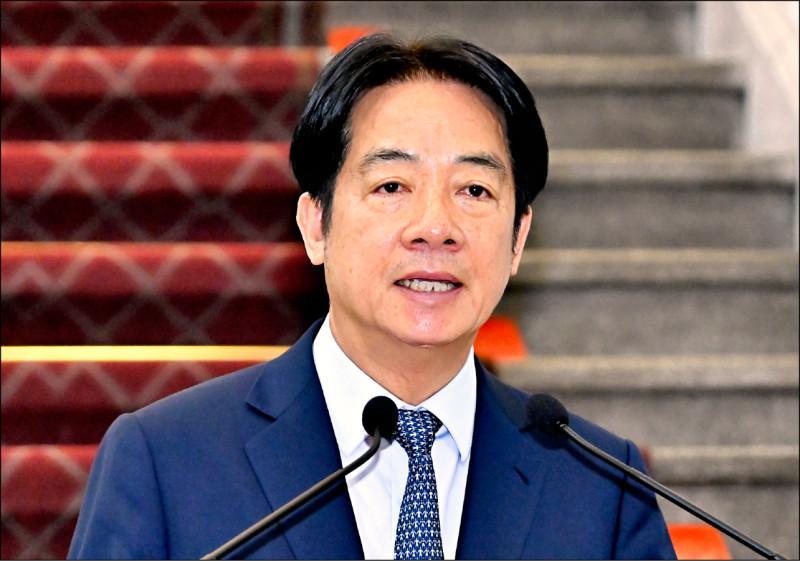
Photo: Taipei Times
US President Donald Trump yesterday said that reciprocal tariffs he is set to announce this week would include all nations, not just a smaller group of 10 to 15 countries with the biggest trade imbalances.
Trump has promised to unveil a massive tariff plan on Wednesday, which he has dubbed "Liberation Day."
He has already imposed tariffs on aluminum, steel and autos, along with increased tariffs on all goods from China.
The task force, led by Vice Premier Cheng Li-chun (鄭麗君), is working with the Office of Trade Negotiations, Ministry of Economic Affairs and Ministry of Finance on preparation work.
Their efforts focus on industry communication, evaluating policy tools, engaging in negotiations with the US and analyzing the global industrial and economic competitive landscape, officials said.
According to reports, Lai thanked Cho and the task force for their work hard over the past few months, cooperating with the NSC to prepare for various uncertainties in the global economy.
Lai requested that Cho and NSC Secretary-General Joseph Wu (吳釗燮) lead their teams in continuing to monitor the latest developments, conducting careful assessments and preparing the most appropriate responses.
This would protect national interests and ensure the stability and growth of the economy, he said.
He added that strong support must be provided for industries that would be impacted by changing global policies.
Additional reporting by Reuters
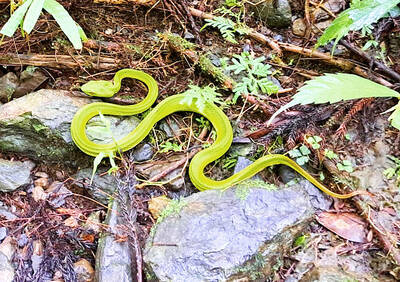
More than half of the bamboo vipers captured in Tainan in the past few years were found in the city’s Sinhua District (新化), while other districts had smaller catches or none at all. Every year, Tainan captures about 6,000 snakes which have made their way into people’s homes. Of the six major venomous snakes in Taiwan, the cobra, the many-banded krait, the brown-spotted pit viper and the bamboo viper are the most frequently captured. The high concentration of bamboo vipers captured in Sinhua District is puzzling. Tainan Agriculture Bureau Forestry and Nature Conservation Division head Chu Chien-ming (朱健明) earlier this week said that the
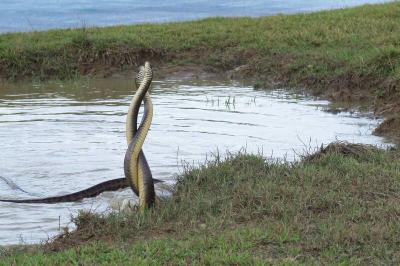
Kenting National Park service technician Yang Jien-fon (楊政峰) won a silver award in World Grand Prix Photography Awards Spring Season for his photograph of two male rat snakes intertwined in combat. Yang’s colleagues at Kenting National Park said he is a master of nature photography who has been held back by his job in civil service. The awards accept entries in all four seasons across six categories: architectural and urban photography, black-and-white and fine art photography, commercial and fashion photography, documentary and people photography, nature and experimental photography, and mobile photography. Awards are ranked according to scores and divided into platinum, gold and
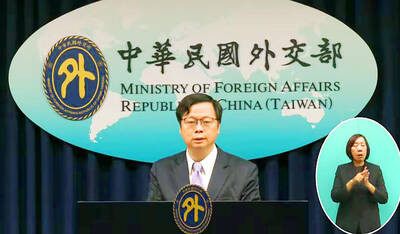
NAMING SPAT: The foreign ministry called on Denmark to propose an acceptable solution to the erroneous nationality used for Taiwanese on residence permits Taiwan has revoked some privileges for Danish diplomatic staff over a Danish permit that lists “Taiwan” as “China,” Eric Huang (黃鈞耀), head of the Ministry of Foreign Affairs’ Department of European Affairs, told a news conference in Taipei yesterday. Reporters asked Huang whether the Danish government had responded to the ministry’s request that it correct the nationality on Danish residence permits of Taiwanese, which has been listed as “China” since 2024. Taiwan’s representative office in Denmark continues to communicate with the Danish government, and the ministry has revoked some privileges previously granted to Danish representatives in Taiwan and would continue to review
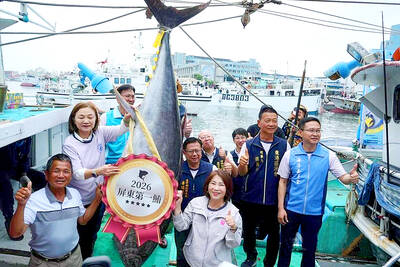
The first bluefin tuna of the season, brought to shore in Pingtung County and weighing 190kg, was yesterday auctioned for NT$10,600 (US$333.5) per kilogram, setting a record high for the local market. The auction was held at the fish market in Donggang Fishing Harbor, where the Siaoliouciou Island-registered fishing vessel Fu Yu Ching No. 2 delivered the “Pingtung First Tuna” it had caught for bidding. Bidding was intense, and the tuna was ultimately jointly purchased by a local restaurant and a local company for NT$10,600 per kilogram — NT$300 ,more than last year — for a total of NT$2.014 million. The 67-year-old skipper


 RSS
RSS