


Another destination for direct flights between Taiwan and Texas could be set up, Deputy Legislative Speaker Johnny Chiang (江啟臣) said.
Chiang, who is also the president of the Association of Overseas Taiwanese Businessmen at the Legislative Yuan, made the remarks at the opening ceremony of the 31st World Taiwanese Chambers of Commerce (WTCC) board meeting in Houston on Saturday last week.
Other attendees included Democratic Progressive Party lawmakers Michelle Lin (林楚茵) and Lo Mei-ling (羅美玲), Taiwan People’s Party Legislator Lin Yi-chun (林憶君), Overseas Community Affairs Council Minister Hsu Chia-ching (徐佳青), Representative to the US Alexander Yui (俞大?), US Representative for Texas Al Green, American Institute in Taiwan Washington Office Managing Director Ingrid Larson, Texas Secretary of State Jane Nelson and WTCC president Kenneth Wu (吳光宜).

Photo courtesy of Chiang’s office
Houston is an important starting point for Taiwanese companies that are developing businesses in Texas, as it is the fourth-largest city and has the second-largest port in the US, Chiang said.
Bilateral ties greatly deepened after the State of Texas Taiwan Office was established last year, with the Texas government and Taiwan signing an Economic Development Statement of Intent, he said.
Taiwan is the third country Texas has signed such a statement with, following the UK and France, Chiang added.
In addition to Houston, another destination for direct flights between Taiwan and Texas could be set up soon, he said, adding that he was happy to see it happen and that he is aware of the challenges facing Taiwanese businesses in the US.
The newly inaugurated US government’s policies change as radically as global geopolitics, which must have been palpable to Taiwanese businesspeople in the US, Chiang said.
However, they must be able to overcome the challenges and seize opportunities to shape the business landscape, he said, expressing his confidence in them.
Chiang also said that he and all attending legislators would provide bipartisan support and improve their service for overseas Taiwanese businesspeople and expatriates.
A Houston City Government official said that March 22 has been declared as the World Taiwanese Chambers of Commerce Day.
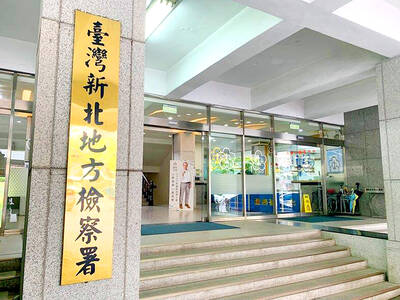
Prosecutors in New Taipei City yesterday indicted 31 individuals affiliated with the Chinese Nationalist Party (KMT) for allegedly forging thousands of signatures in recall campaigns targeting three Democratic Progressive Party (DPP) lawmakers. The indictments stem from investigations launched earlier this year after DPP lawmakers Su Chiao-hui (蘇巧慧) and Lee Kuen-cheng (李坤城) filed criminal complaints accusing campaign organizers of submitting false signatures in recall petitions against them. According to the New Taipei District Prosecutors Office, a total of 2,566 forged recall proposal forms in the initial proposer petition were found during the probe. Among those
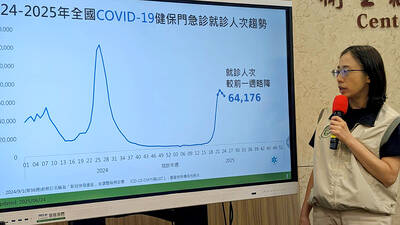
ECHOVIRUS 11: The rate of enterovirus infections in northern Taiwan increased last week, with a four-year-old girl developing acute flaccid paralysis, the CDC said Two imported cases of chikungunya fever were reported last week, raising the total this year to 13 cases — the most for the same period in 18 years, the Centers for Disease Control (CDC) said yesterday. The two cases were a Taiwanese and a foreign national who both arrived from Indonesia, CDC Epidemic Intelligence Center Deputy Director Lee Chia-lin (李佳琳) said. The 13 cases reported this year are the most for the same period since chikungunya was added to the list of notifiable communicable diseases in October 2007, she said, adding that all the cases this year were imported, including 11 from

China might accelerate its strategic actions toward Taiwan, the South China Sea and across the first island chain, after the US officially entered a military conflict with Iran, as Beijing would perceive Washington as incapable of fighting a two-front war, a military expert said yesterday. The US’ ongoing conflict with Iran is not merely an act of retaliation or a “delaying tactic,” but a strategic military campaign aimed at dismantling Tehran’s nuclear capabilities and reshaping the regional order in the Middle East, said National Defense University distinguished adjunct lecturer Holmes Liao (廖宏祥), former McDonnell Douglas Aerospace representative in Taiwan. If
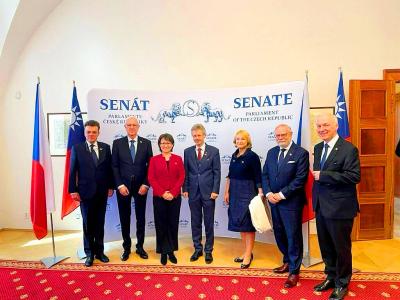
The Mainland Affairs Council (MAC) today condemned the Chinese Communist Party (CCP) after the Czech officials confirmed that Chinese agents had surveilled Vice President Hsiao Bi-khim (蕭美琴) during her visit to Prague in March last year. Czech Military Intelligence director Petr Bartovsky yesterday said that Chinese operatives had attempted to create the conditions to carry out a demonstrative incident involving Hsiao, going as far as to plan a collision with her car. Hsiao was vice president-elect at the time. The MAC said that it has requested an explanation and demanded a public apology from Beijing. The CCP has repeatedly ignored the desires


 RSS
RSS