


Taiwan ranked 27th globally in this year’s World Happiness Report released today, coming first in East Asia, surpassing Singapore, Japan, South Korea and China.
The report, which was topped by Finland, was released by the University of Oxford's Wellbeing Research Centre and done in partnership with the analytics firm Gallup and the UN Sustainable Development Solutions Network.
All countries in the report are ranked according to self-assessed life evaluations averaged from 2022 to last year.
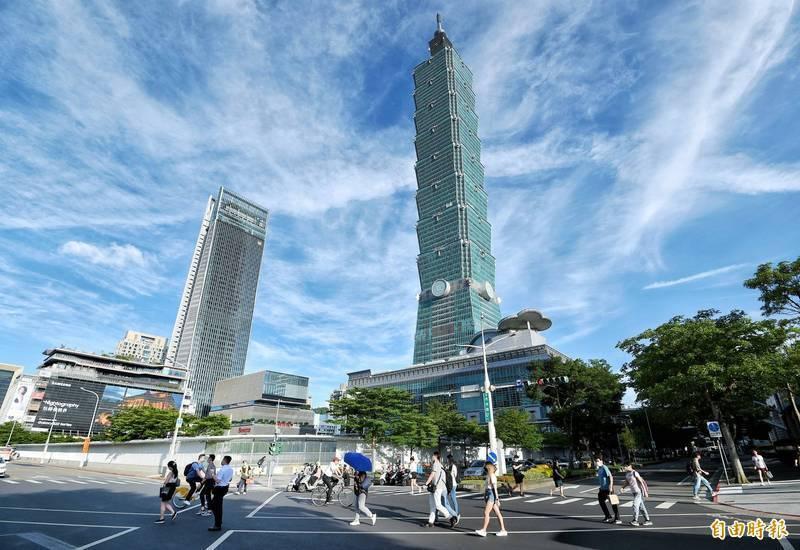
Photo: Taipei Times
Country rankings were based on answers provided by people from more than 140 countries asked to rate their own lives on a zero to 10 scale, with 10 representing their best possible life.
Taiwan ranked 27th globally with a score of 6.669, up from 31st in last year’s report.
This made it the third-happiest place in Asia, following Israel at No. 8 with a score of 7.234 and the United Arab Emirates at No. 21 with a score of 6.759.
Researchers in the report said that beyond health and wealth, some factors that influence happiness sound deceptively simple: sharing meals with others, having somebody to count on for social support and household size.
Believing in the kindness of others is also much more closely tied to happiness than previously thought, according to the latest findings.
As an example, the report suggests that people who believe that others are willing to return their lost wallet is a strong predictor of the overall happiness of a population.
In Taiwan, 56.6 percent helped a stranger, while 41.2 percent donated, ranking 86th and 34th respectively.
Only 15.2 percent volunteered, ranking 106th globally in this aspect.
In general, Taiwan was globally ranked 33rd and 34th in terms of social support and generosity respectively.
Overall, researchers said global evidence on the perceived and actual return of lost wallets shows that people are much too pessimistic about the kindness of their communities compared to reality — actual rates of wallet return are about twice as high as people expect.
Nordic nations ranked among the top for expected and actual return of lost wallets, the study found.
Finland was named the happiest country in the world for the eighth year in a row, followed by Denmark, Iceland and Sweden.
When it comes to decreasing happiness — or growing unhappiness — the US dropped to its lowest-ever position at 24, having previously peaked at 11th place in 2012.
The report states that the number of people dining alone in the US has increased by 53 percent over the past two decades.
Afghanistan again ranked as the unhappiest country in the world, with Afghan women saying their lives are especially difficult.
In a concerning development, the study said 19 percent of young adults across the world reported in 2023 that they had no one they could count on for social support.
That is a 39 percent increase compared to 2006.
Experts in economics, psychology and sociology sought to explain the variations across countries and over time using factors such as GDP per capita, healthy life expectancy, having someone to count on, a sense of freedom, generosity and perceptions of corruption.

NATIONAL SECURITY: Authorities are working to confirm the identities of the military personnel involved and investigating possible illegal conduct and regulatory violations Authorities are probing possible national security implications after Kinmen police and immigration officers on Sunday found a Chinese woman allegedly posing as a tourist while engaging in prostitution involving more than 10 military personnel. The woman, surnamed Chen (陳), has since been deported, authorities said, adding that investigators are still working to confirm the identities of those implicated, as the records only listed code names and aliases. The case stemmed from a report received by the Kinmen District Prosecutors’ Office on Friday last week from the Jinhu Precinct of the Kinmen County Police Bureau. On Sunday, police, along with the National Immigration
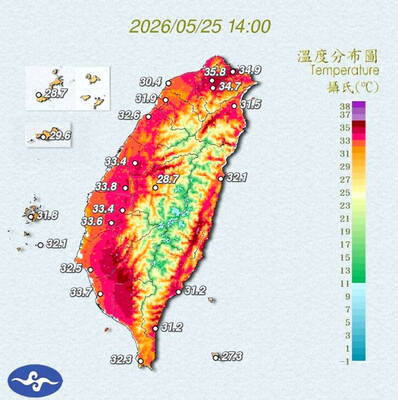
STAY COOL: The HPA recommended that people stay hydrated, use air-conditioning or fans while indoors, wear loose-fitting clothes and walk in the shade while outdoors Employers must implement measures such as installing cooling equipment, and providing drinking water and rest breaks for outdoor workers starting from Monday next week, the Taipei Department of Labor said on Sunday. Employers who fail to comply could face fines of NT$30,000 to NT$300,000 under the Occupational Safety and Health Act (職業安全衛生法), the department said. Businesses in Taipei employing fewer than 100 workers, as well as registered self-employed workers with labor insurance coverage, could receive on-site assessments and guidance from occupational safety consultants to help them apply for central government subsidies to implement or improve heat-protection measures, it said. Under the Ministry of

GLOBALGIVING: ‘ Caving to external pressure is not acceptable for an organization that has cultivated justice reform and human rights for 30 years,’ one NGO said A slew of non-government organizations (NGOs) have withdrawn from the GlobalGiving fundraising platform after it announced it would use “Chinese Taipei” instead of “Taiwan” from next month. The Taiwan Good Rice Association wrote on Facebook on Friday that it was informed on April 28 via a teleconference call of the change, which was made because the platform wanted to operate in China. Taiwan Good Rice is to terminate all cooperative relationships with GlobalGiving in response to the platform’s “unilateral and non-negotiable” decision to remove references to Taiwan, the NGO said. “Taiwan is in the official name of Taiwan Good Rice Association and the

Chinese Nationalist Party (KMT) Chairwoman Cheng Li-wun (鄭麗文) yesterday briefed her party’s Central Standing Committee regarding her scheduled visit to the US between Monday next week and June 16, saying that her purpose would be to persuade the US that the Republic of China (ROC) Constitution was a “one China” constitution that would foster stable and peaceful cross-strait relations. The ROC Constitution is the most important defense for all Taiwanese citizens, as it upholds our democracy and has contributed to our robust economy, which aligns with international and US interests, she said. “We would not be troublemakers and drag the US under,”


 RSS
RSS