


The government would be open to discussion, research and collaboration with the world’s leading nuclear energy developers, and would not rule out use of new nuclear energy, Premier Cho Jung-tai (卓榮泰) said today.
The issue has resurfaced in the past week after American Institute in Taiwan (AIT) Director Raymond Greene on Friday said that the US could be a reliable energy source for Taiwan, including nuclear energy.
As the world’s largest energy exporter, the US could provide Taiwan with liquefied natural gas and nuclear energy, Greene said, adding that the AIT is already negotiating with Taiwanese businesses and government organizations on how to better support Taiwan’s energy supply.
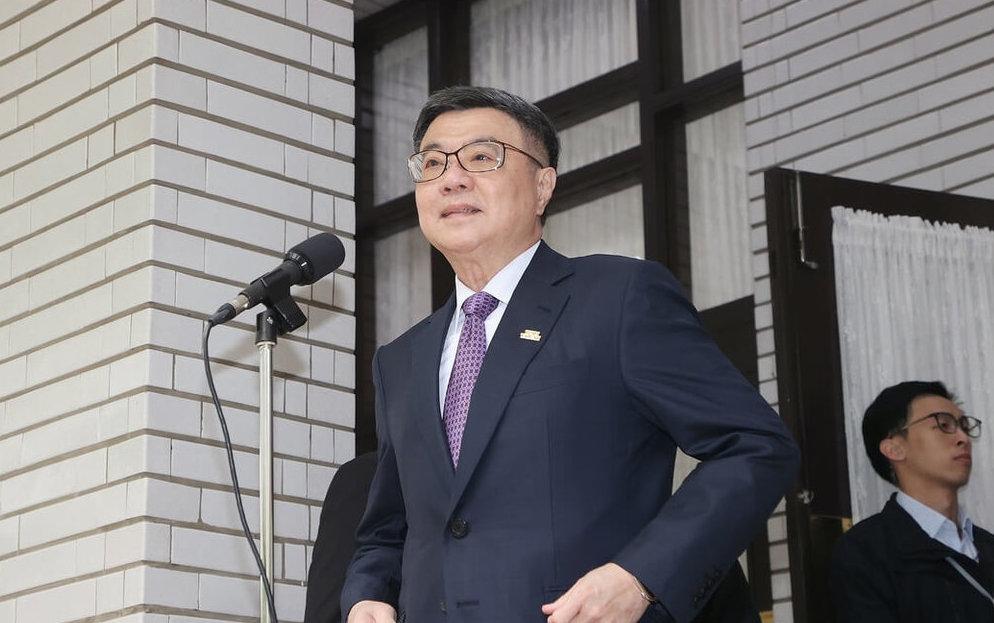
Photo: CNA
Taiwan is highly dependent on energy imports, although domestic green energy development is expanding, Cho said.
The government’s current policy prioritizes reducing carbon emissions, with the goal of achieving net zero carbon emissions through the development of renewable energy sources, he said.
Taiwan is also focused on transitioning aging coal-fired power plants to natural gas-fired units, he added.
The government would consider the use of new nuclear energy if there were public support, safety assurances, and a viable and sustainable nuclear waste disposal method, Cho said.
Taiwan is to close the No. 2 reactor of the Ma-anshan Nuclear Power Plant in May in accordance with the Nuclear Reactor Facilities Regulation Act (核子反應器設施管制法), he said.
It is the final reactor still in operation in the nation’s only active nuclear plant in Pingtung County’s Hengchun Township (恆春).
Some lawmakers have proposed nuclear energy amendments that could affect the regulations, although the bills are still in the early stages, Cho said.
The government has a responsibility to ensure a stable and sufficient power supply in Taiwan, which in turn has a responsibility to the world in housing and developing key technologies while playing a critical role in global supply chains, he said.
Minister of Economic Affairs J.W. Kuo (郭智輝) said that the government is open to all energy sources and adopts a diversified energy policy.
Kuo dismissed the claim that Taiwan Semiconductor Manufacturing Co (TSMC) is expanding investments in the US due to insufficient domestic energy and water supplies, saying that Taiwan’s utilities are sufficient.
Although Taiwan might face some constraints with available land and utilities, the government has adequately prepared for such situations, he said.
Moreover, TSMC’s proposal to invest in the US is not finalized, as it has not yet entered the administrative review process at the Department of Investment Review, he added.
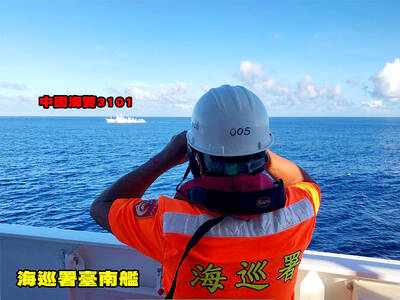
The Coast Guard Administration (CGA) yesterday said it had deployed patrol vessels to expel a China Coast Guard ship and a Chinese fishing boat near Pratas Island (Dongsha Island, 東沙群島) in the South China Sea. The China Coast Guard vessel was 28 nautical miles (52km) northeast of Pratas at 6:15am on Thursday, approaching the island’s restricted waters, which extend 24 nautical miles from its shoreline, the CGA’s Dongsha-Nansha Branch said in a statement. The Tainan, a 2,000-tonne cutter, was deployed by the CGA to shadow the Chinese ship, which left the area at 2:39pm on Friday, the statement said. At 6:31pm on Friday,
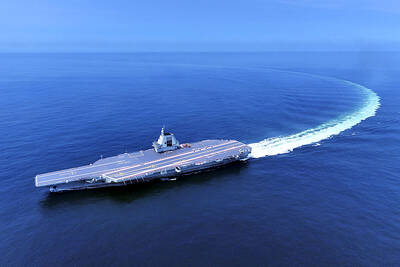
The Chinese People’s Liberation Army Navy’s (PLAN) third aircraft carrier, the Fujian, would pose a steep challenge to Taiwan’s ability to defend itself against a full-scale invasion, a defense expert said yesterday. Institute of National Defense and Security Research analyst Chieh Chung (揭仲) made the comment hours after the PLAN confirmed the carrier recently passed through the Taiwan Strait to conduct “scientific research tests and training missions” in the South China Sea. China has two carriers in operation — the Liaoning and the Shandong — with the Fujian undergoing sea trials. Although the PLAN needs time to train the Fujian’s air wing and

STRIKE: Some travel agencies in Taiwan said that they were aware of the situation in South Korea, and that group tours to the country were proceeding as planned A planned strike by airport personnel in South Korea has not affected group tours to the country from Taiwan, travel agencies said yesterday. They added that they were closely monitoring the situation. Personnel at 15 airports, including Seoul’s Incheon and Gimpo airports, are to go on strike. They announced at a news conference on Tuesday that the strike would begin on Friday next week and continue until the Mid-Autumn Festival next month. Some travel agencies in Taiwan, including Cola Tour, Lion Travel, SET Tour and ezTravel, said that they were aware of the situation in South Korea, and that group

Taiwanese celebrities Hank Chen (陳漢典) and Lulu Huang (黃路梓茵) announced yesterday that they are planning to marry. Huang announced and posted photos of their engagement to her social media pages yesterday morning, joking that the pair were not just doing marketing for a new show, but “really getting married.” “We’ve decided to spend all of our future happy and hilarious moments together,” she wrote. The announcement, which was later confirmed by the talent agency they share, appeared to come as a surprise even to those around them, with veteran TV host Jacky Wu (吳宗憲) saying he was “totally taken aback” by the news. Huang,


 RSS
RSS