


The Ministry of Education yesterday launched a five-year program to promote social-emotional learning (SEL) in schools, with the goal of improving the mental health of students and teachers.
SEL is a process that aims to foster self-awareness, emotional management ability and social skills through education. It has in recent years become a popular research topic in pedagogy.
The ministry said in a statement that the first phase of the medium and long-term SEL program has been implemented and would run through 2029.
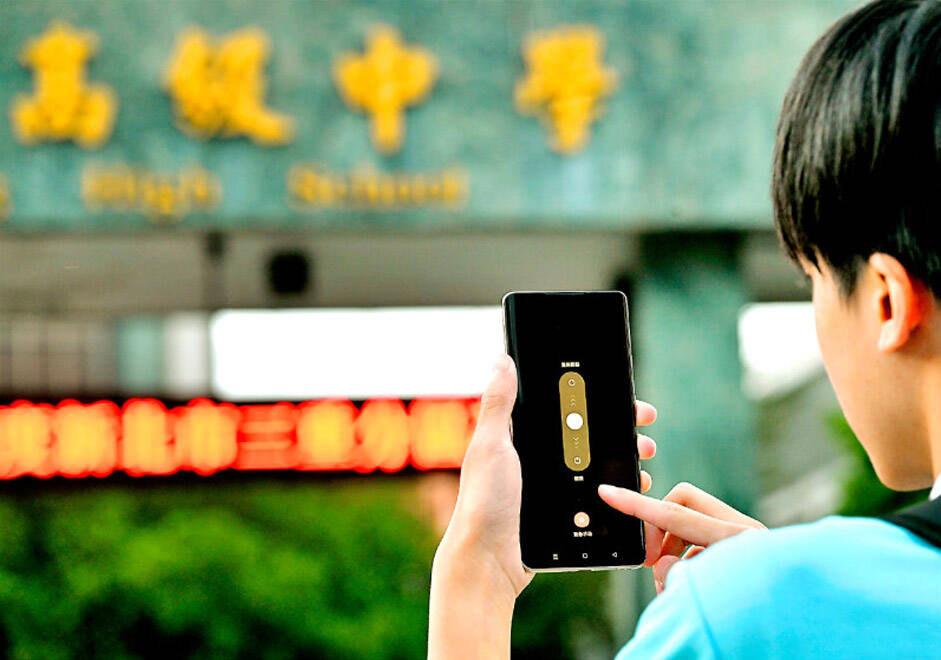
Photo: Taipei Times
As efficient and convenient as they are, digital technology and artificial intelligence have posed challenges to students’ mental health and the educational environment, it said.
The habitual use of mobile phones has led to an attention deficit, while social media has resulted in issues such as nomophobia, or the fear or anxiety about not having mobile phone connectivity, Internet addiction, cyberbullying, gaming disorder and interpersonal alienation, the ministry said.
It is important to help students learn to manage their life and emotions, as well as interact and empathize with others, it said.
The program is indispensable, especially as students fare well in global educational assessments, but score low in affective terms such as motivation and confidence, the ministry said.
SEL courses can help children and teenagers reduce or transform their feelings of alienation while building mental resilience and a sense of well-being, which are useful mental assets that would contribute to their future personal and professional life, as well as social harmony and national development, it said.
Department of Student Affairs and Special Education chief Yang Yi-yin (楊奕愔) said that the program would be implemented in collaboration with the National Academy for Educational Research, local governments, civic groups, academics and experts, as part of the “Healthy Taiwan” policy.
The academy said SEL could help students learn to make responsible decisions and build positive social networks.
Each school would integrate the program with the curriculum guidelines the ministry released in 2019 for 12-year basic education, in line with the school’s mission statement, academic courses and extracurricular activities, it said.
Additional reporting by CNA

Yangmingshan National Park authorities yesterday urged visitors to respect public spaces and obey the law after a couple was caught on a camera livestream having sex at the park’s Qingtiangang (擎天崗) earlier in the day. The Shilin Police Precinct in Taipei said it has identified a suspect and his vehicle registration number, and would summon him for questioning. The case would be handled in accordance with public indecency charges, it added. The couple entered the park at about 11pm on Thursday and began fooling around by 1am yesterday, the police said, adding that the two were unaware of the park’s all-day live

A former soldier and an active-duty army officer were yesterday indicted for allegedly selling classified military training materials to a Chinese intelligence operative for a total of NT$79,440. The Taipei District Prosecutors’ Office indicted Chen Tai-yin (陳泰尹) and Lee Chun-ta (李俊達) for contravening the National Security Act (國家安全法) and the Anti-Corruption Act (貪污治罪條例). Chen left the military in September 2013 after serving alongside then-staff sergeant Lee, now an army lieutenant, at the 21st Artillery Command of the army’s Sixth Corps from 2011 to 2013, according to the indictment. Chen met a Chinese intelligence operative identified as “Wang” (王) through a friend in November

Minister of Digital Affairs Lin Yi-ching (林宜敬) yesterday cited regulatory issues and national security concerns as an expert said that Taiwan is among the few Asian regions without Starlink. Lin made the remarks on Facebook after funP Innovation Group chief executive officer Nathan Chiu (邱繼弘) on Friday said Taiwan and four other countries in Asia — China, North Korea, Afghanistan and Syria — have no access to Starlink. Starlink has become available in 166 countries worldwide, including Ukraine, Malaysia, the Philippines and Vietnam, in the six years since it became commercial, he said. While China and North Korea block Starlink, Syria is not
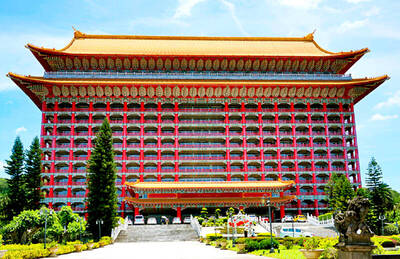
The Grand Hotel Taipei has rejected media reports claiming that the hotel had prevented CBS from broadcasting coverage of the Beijing summit between U.S. President Donald Trump and Chinese President Xi Jinping (習近平) on its premises. Media reports alleging that the hotel owner, dissatisfied with CBS’s coverage, prohibited the network from broadcasting political content on the hotel premises, are not true, the hotel said in a statement issued last night. The reports were “inconsistent with how the hotel actually handled the matter,” it said. The hotel said it received a refund request from a


 RSS
RSS