


A reporter and professor were sentenced to nine and six months in prison respectively and stripped of their civil rights for two years by the Taichung branch of the High Court today for fabricating election polls during the last presidential election.
Reporter Lin Hsien-yuan (林獻元) allegedly accepted 130,000 yuan (US$17,936) from the Chinese Communist Party and worked with Taichung-based Tunghai University professor Su Yuan-hwa (蘇雲華) to disseminate fake polls that would influence election results.
The dissemination of fake opinion polls misleads voters and endangers the nation’s sovereignty and democracy, prosecutors said, accusing Lin and Su of contravening the Anti-infiltration Act (反滲透法).
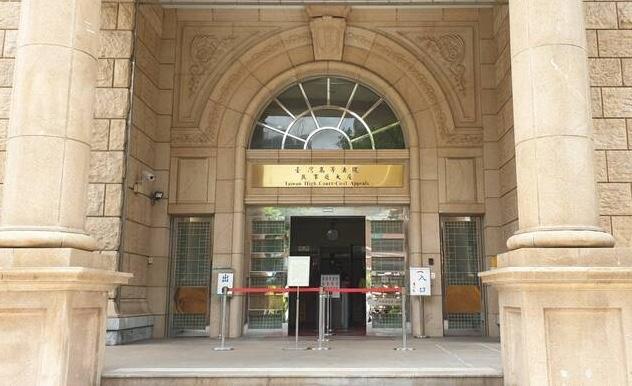
Photo: Chang Jui-chen, Taipei Times
The Taichung District Court ruled this law did not apply, and instead sentenced Lin and Su to eight and four months in prison respectively for contravening the Presidential and Vice Presidential Election and Recall Act (總統副總統選罷法).
The prosecution was dissatisfied with this ruling and appealed.
The Taichung branch of the High Court issued a second ruling today, stating that the defendants contravened both acts and increased their sentences.
The High Court also granted Su a two-year probation.
It did not provide additional reasoning for the ruling, which can be appealed.
Prosecutors initially accused the defendants of following instructions from China’s Taiwan Affairs Office spokesman Chen Binhua (陳斌華) to publish nine false presidential election polls.
In the first trial by the district court, Su admitted to the crimes, while Lin said that his manipulation of polling data was not politically motivated and that the money he received was for purchasing teapots on behalf of his Chinese friends.
As Lin had been engaged in cross-strait journalism for a long period, the court ruled that interactions with Chinese reporters and officials were understandable and did not indicate he was following their commands.
The false polls released before Nov. 24, 2023, were deemed not punishable, as candidates had not yet registered at that time.
The two polls fabricated after that date were ruled to have contravened the Presidential and Vice Presidential Election and Recall Act.
The district court also ruled that Lin contravened the Company Act (公司法) by borrowing money from a friend to meet the minimum capital threshold required to found his media company.
The High Court maintained this ruling.

EXCUSES: Beijing is using government and research vessels as a pretext to harass the nation and enter its EEZ, and engage in ‘hegemonic expansion,’ the coast guard said The Coast Guard Administration yesterday said it drove away Chinese oceanographic research vessel Xiang Yang Hong 22 (向陽紅33) from restricted waters after warning it that it was in Taiwan’s exclusive economic zone (EEZ). The Chinese vessel entered restricted waters off the coast of Yilan County’s Suao (蘇澳) at 11:35pm on Thursday, the coast guard said, adding that it dispatched the Lanyu patrol vessel and the boat PP-10077 to shadow the Chinese ship and issue radio warnings ordering it to leave. China has no sovereignty over waters off Taiwan’s east coast, Lanyu’s crew told Xiang Yang Hong 22 over the radio, and demanded

BAIT AND SWITCH: Allowing KMT-run counties to sell to China while the threat of abrupt cancelations hangs overhead is another form of coercion, officials said Beijing is using agricultural purchase offers announced during the Straits Forum to deepen Taiwan’s dependence on the Chinese market, a Taiwanese official said yesterday as they criticized the Taitung County commissioner’s participation in the initiative. During the Straits Forum held in Xiamen on Saturday, Chinese officials announced a sales and purchase agreement for agricultural products from some counties led by the Chinese Nationalist Party (KMT). Taitung County Commissioner Yao Ching-ling (饒慶鈴), who was barred from attending the event in person by the Mainland Affairs Council, participated via video. Under the agreement, China would purchase atemoyas, pomeloes, tea and grouper harvested in Taitung,
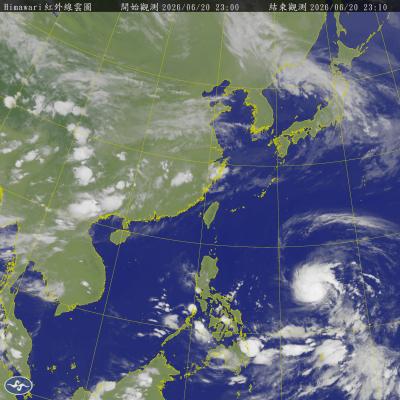
Tropical Storm Mekkhala is forecast to strengthen into a typhoon tomorrow and could come close enough to Taiwan later in the week to prompt a sea warning, the Central Weather Administration (CWA) said yesterday. As of 2 pm, the storm was located 1,870 kilometers southeast of Taiwan's southern tip and moving west- northwest at 23 km per hour. CWA forecaster Cheng Chieh-jen (鄭傑仁) said Mekkhala is expected to continue moving west-northwest through Tuesday under the influence of the Pacific high- pressure system before gradually turning north toward waters east of Taiwan or south of the Ryukyu Islands. The timing and angle of the
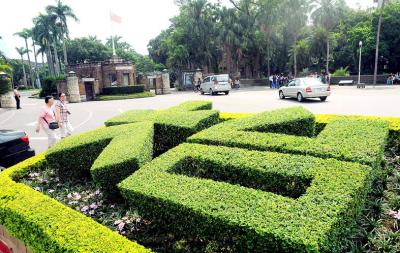
Four Taiwanese universities have been ranked among the world's top 200 institutions in the Quacquarelli Symonds (QS) World University Rankings for next year, the highest Taiwan has ever placed in the category, with National Taiwan University (NTU) achieving its best performance at 54th globally and 17th in Asia. The four Taiwanese institutions in the global top 200 are NTU (54th), National Tsing Hua University (142nd), National Yang Ming Chiao Tung University (177th) and National Cheng Kung University (191st), the rankings showed. All four universities achieved their highest-ever global rankings this year, QS data showed. National Cheng Kung University entered the top 200 for


 RSS
RSS