


The National Communications Commission (NCC) yesterday announced that it would suspend the collection of inspection fees for telecommunication radio frequency devices purchased from overseas through online shopping, after the new policy triggered a backlash from users and lawmakers across party lines.
The nation’s telecom service regulator last week said that people who purchase two or fewer Class 2 telecommunications radio frequency devices from abroad through online shopping would be asked to start paying inspection fees, with each case costing NT$750.
The policy would not affect people who carry such devices when returning to Taiwan from overseas.
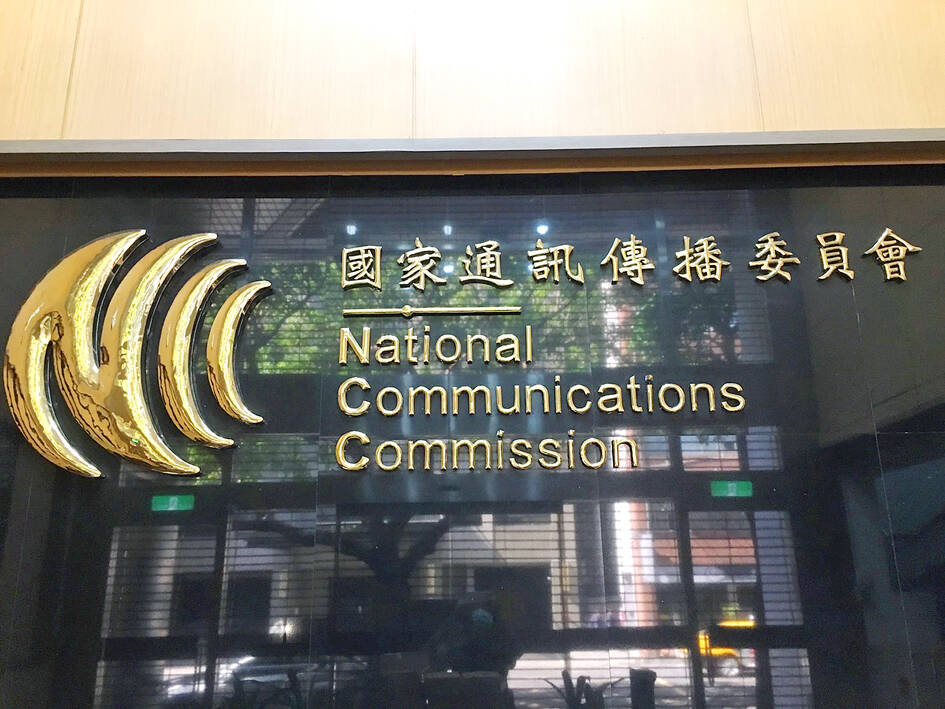
Photo: Yang Mien-chieh, Taipei Times
Devices that are subject to inspection are those that would transmit low-power radio waves, including mobile phones, tablet computers, Bluetooth headsets, Wi-Fi access points, and wireless keyboards and mouses.
The commission defended the policy last week, saying that the fee is charged to cover the rising administrative costs that the agency has incurred as an increasing number of people purchase radio frequency devices through online shopping.
The Charges and Fees Act (規費法) also stipulates that fees must be charged based on costs, it said.
However, lawmakers across party lines have urged the agency to reconsider the policy due to responses from their constituents.
“We would review the pricing scheme of the inspection fee as well as who should pay the fee after considering public reactions to the new policy,” the commission said. “As such, those who apply to have the radio frequency devices inspected would be told that they have unpaid fees, pending the decision from the agency.”
Users would be allowed to import the devices to the country even if they have yet to pay the inspection fee, the commission said.
Some users have also proposed to change the policy on the National Development Council’s Public Policy Online Participation Network Platform, with the number of people seconding to the proposal reaching the threshold for an official government response, the commission said.
“We would humbly review input from all relevant parties and immediately start proceedings to consider the most reasonable and appropriate ways of charging users after taking into relevant administrative costs,” it said.
The legislature had earlier slashed 50 percent of the commission’s budget and froze 10 percent of the remaining amount.

FUKUOKA SITUATION: Japanese media reported that the pathogen is expected to be identified by the summer, while the CDC downplayed the idea that it was hMPV A “mysterious cold-like illness” reported in Japan’s Fukuoka Prefecture does not seem to be a new disease, but Japanese authorities have been asked about the situation, the Centers for Disease Control (CDC) said yesterday. The Fukuoka Prefectural Medical Association on Wednesday told a news conference that a “mystery cold” that has become a hot topic on social media is “highly likely to be caused by some kind of viral infection,” Japan’s KBC News reported. “Many people are experiencing symptoms starting with a sore throat, followed by a runny nose, phlegm and a severe cough,” KBC News reported, citing association officials. Health authorities are

Nvidia Corp CEO Jensen Huang (黃仁勳) arrived in Taiwan yesterday ahead of upcoming AI and technology events, saying he plans to meet with clients and Taiwan Semiconductor Manufacturing Co Chairman C.C. Wei (魏哲家) during his visit. After landing at Taipei Songshan Airport, Huang posed for photos with fans and handed out Yakult drinks to reporters and supporters waiting at the scene, saying he has “a lot to do” during the trip. Asked about reports that Nvidia’s planned headquarters site in Taipei’s Beitou Shilin Technology Park could break ground on May 27, Huang said that if the company holds an event, he would

Carrefour Taiwan is to begin using a new name from the start of July, but it cannot divulge the name until then, the chairman of the supermarket chain's parent company said today. President Chain Store Co chairman Lo Chih-hsien (羅智先) was asked by reporters after a shareholders' meeting to confirm whether the company has settled on a new name for the supermarket brand. In March, the government-registered name of two Carrefour Taiwan branches was quietly changed to "Le Chia Kang" (樂家康) in Chinese, raising speculation that has been selected as the name. Lo said that because of local regulations and contractual obligations, the
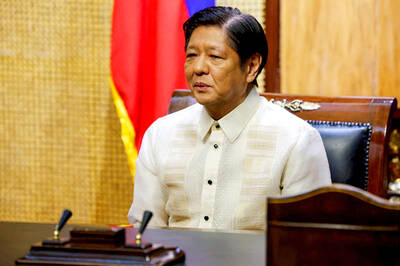
The Philippines would likely be involved in any conflict over Taiwan due to its proximity to the democracy claimed by China, President Ferdinand Marcos Jr said, reiterating a stance that risks angering Beijing. “In the Philippines, we do not have a choice because Taiwan is so close to the Philippines and we have almost 200,000 Filipino nationals living and working in Taiwan,” Marcos said in an interview with Japanese media in Manila on Monday. The Philippine leader’s comments come ahead of a state visit to Japan next week, where he is to meet with Japanese Prime Minister Sanae Takaichi to discuss security


 RSS
RSS