


The Ministry of Health and Welfare has announced that E-Da Hospital in Kaohsiung’s Yanchao District (燕巢) is the fourth medical center — the top-level medical institution in the healthcare system — for the Kaohsiung-Pingtung region.
E-Da Hospital has for seven years been accredited as a “quasi-medical center” — a quality regional hospital being reviewed for the potential to become a medical center, Minister of Health and Welfare Chiu Tai-yuan (邱泰源) said last week.
Promoting it to a medical center is expected to improve healthcare services in Kaohsiung’s mountainous areas, and in Pingtung and Penghu counties, places that are “relatively disadvantaged in medical resources,” Chiu said.
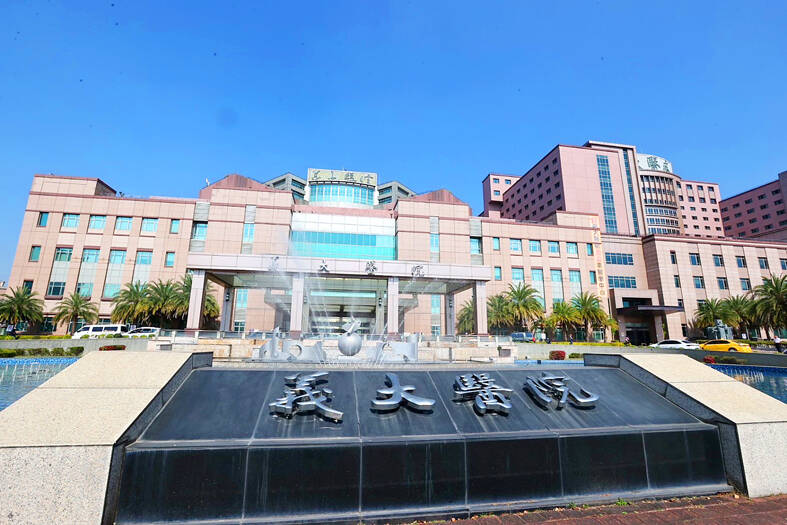
Photo: CNA
The accreditation system can help improve the quality of medical service providers and ensure the reasonable allocation of medical resources across different regions, he added.
E-Da Hospital met the standard required to become the nation’s 23rd medical center during a review conducted last year of medical centers and regional hospitals in central, southern and eastern Taiwan.
The hospital joined Kaohsiung Chang Gung Memorial Hospital, Kaohsiung Veterans General Hospital and Kaohsiung Medical University Chung-Ho Memorial Hospital to become the fourth medical center in the region.
However, with the new status patients would have to pay more for clinic visits and emergency services at E-Da Hospital from March 1.
A clinic visit is to cost NT$420 for people without referrals from a regional hospital or a clinic, and NT$170 for those with a referral, compared with the NT$240 and NT$100 E-Da Hospital currently charges respectively, National Health Insurance Administration Director-General Shih Chung-liang (石崇良) said.
The cost of a visit to the emergency room would increase from NT$400 to NT$750, he added.
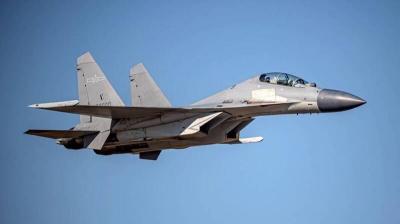
Eight Chinese naval vessels and 24 military aircraft were detected crossing the median line of the Taiwan Strait between 6am yesterday and 6am today, the Ministry of National Defense said this morning. The aircraft entered Taiwan’s northern, central, southwestern and eastern air defense identification zones, the ministry said. The armed forces responded with mission aircraft, naval vessels and shore-based missile systems to closely monitor the situation, it added. Eight naval vessels, one official ship and 36 aircraft sorties were spotted in total, the ministry said.
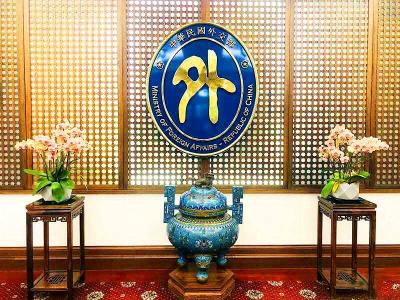
The Ministry of Foreign Affairs (MOFA) today said that if South Korea does not reply appropriately to its request to correct Taiwan’s name on its e-Arrival card system before March 31, it would take corresponding measures to alter how South Korea is labeled on the online Taiwan Arrival Card system. South Korea’s e-Arrival card system lists Taiwan as “China (Taiwan)” in the “point of departure” and “next destination” fields. The ministry said that it changed the nationality for South Koreans on Taiwan’s Alien Resident Certificates from “Korea” to “South Korea” on March 1, in a gesture of goodwill and based on the
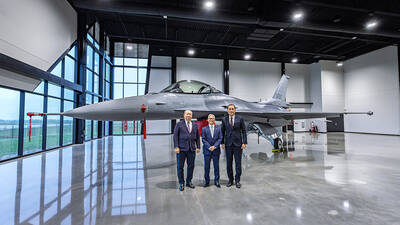
Taiwanese officials were shown the first of 66 F-16V fighter jets purchased by Taiwan from the United States, the Ministry of National Defense said yesterday, adding the aircraft has completed an initial flight test and is expected to be delivered later this year. A delegation led by Deputy Minister of National Defense Hsu Szu-chien (徐斯儉) visited Lockheed Martin’s F-16 C/D Block 70 (also known as F-16V) assembly line in South Carolina on March 16 to view the aircraft. The jet will undergo a final acceptance flight in the US before being delivered to Taiwan, the
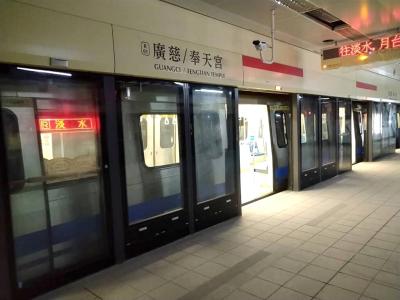
The New Taipei Metro's Sanyin Line and the eastern extension of the Taipei Metro's Tamsui-Xinyi Line (Red Line) are scheduled to begin operations in June, the National Development Council said today. The Red Line, which terminates at Xiangshan Station, would be connected by the 1.4km extension to a new eastern terminal, Guangci/Fengtian Temple Station, while the Sanyin Line would link New Taipei City's Tucheng and Yingge stations via Sanxia District (三峽). The council gave the updates at a council meeting reviewing progress on public construction projects for this year. Taiwan's annual public infrastructure budget would remain at NT$800 billion (US$25.08 billion), with NT$97.3


 RSS
RSS