


The Supreme Court yesterday upheld an eight-month sentence handed down to a Chinese national who drove a speedboat into the Tamsui River (淡水河) last year for breaching Taiwan's immigration law.
The court dismissed the man's appeal, after a previous appeal was dismissed by the High Court last month, making the ruling final.
The man, identified as Ruan Fangyong (阮芳勇), left the Chinese coast off Fujian Province in a speedboat at about 10pm on June 8 last year, and arrived at one of the piers in the Tamsui River not far from Tamsui Old Street at 10:19am the next day, according to court papers.
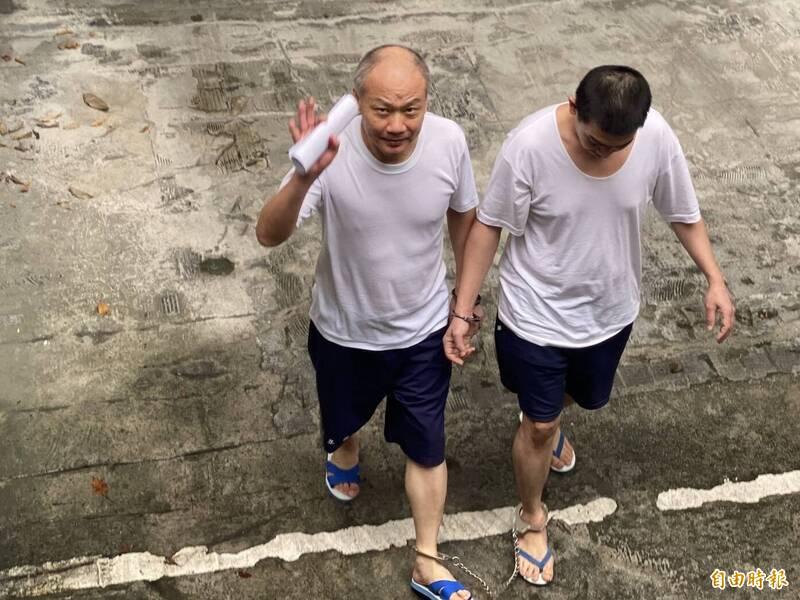
Photo: Chang Wen-chuan, Taipei Times
The small boat that Ruan was navigating had been monitored by the Coast Guard Administration after it received a report that the speedboat collided with a local ferry, the documents said.
Ruan then went ashore and told coast guard officers who came to apprehend him that he wanted to surrender, and said he had escaped from China and came to Taiwan for democracy, the court said.
He was then arrested by the coast guard and detained by the National Immigration Agency (NIA) while his case was investigated by prosecutors.
Ruan was indicted by the Shilin District Prosecutors' Office for breaching immigration laws in August.
The Shilin District Court in September ruled that the man was guilty of entering Taiwan without permission, but also argued that he should be handed a lenient sentence for surrendering himself to the authorities, and gave him an eight-month sentence.
On Dec. 20, the High Court dismissed his appeal, finding no fault with the lower court's sentence.
According to the law, Ruan could be simply deported for entering Taiwan without permission.
However, after the district court's ruling, the NIA was cited by local media as saying that once the verdict was finalized, Ruan would be deported if he was not sentenced to jail time, indicating he would likely have to serve time for the offense.

SPACE VETERAN: Kjell N. Lindgren, who helps lead NASA’s human spaceflight missions, has been on two expeditions on the ISS and has spent 311 days in space Taiwan-born US astronaut Kjell N. Lindgren is to visit Taiwan to promote technological partnerships through one of the programs organized by the US for its 250th national anniversary. Lindgren would be in Taiwan from Tuesday to Saturday next week as part of the US Bureau of Educational and Cultural Affairs’ US Speaker Program, organized to celebrate the 250th anniversary of the signing of the Declaration of Independence, the American Institute in Taiwan (AIT) said in a statement yesterday. Lindgren plans to engage with key leaders across the nation “to advance cutting-edge technological partnerships and inspire the next generation of scientists and engineers,”

UNREASONABLE SURVEILLANCE: A camera targeted on an road by a neighbor captured a man’s habitual unsignaled turn into home, netting him dozens of tickets The Taichung High Administrative Court has canceled all 45 tickets given to a man for failing to use a turn signal while driving, as it considered long-term surveillance of his privacy more problematic than the traffic violations. The man, surnamed Tseng (曾), lives in Changhua County and was reported 45 times within a month for failing to signal while driving when he turned into the alley where his residence is. The reports were filed by his neighbor, who set up security cameras that constantly monitored not only the alley but also the door and yard of Tseng’s house. The surveillance occurred from July

A Japan Self-Defense Forces vessel entered the Taiwan Strait yesterday, Japanese media reported. After passing through the Taiwan Strait, the Ikazuchi was to proceed to the South China Sea to take part in a joint military exercise with the US and the Philippines, the reports said. Japan Self-Defense Force vessels were first reported to have passed through the strait in September, 2024, with two further transits taking place in February and June last year, the Asahi Shimbun reported. Yesterday’s transit also marked the first time since Japanese Prime Minister Sanae Takaichi took office that a Japanese warship has been sent through the Taiwan
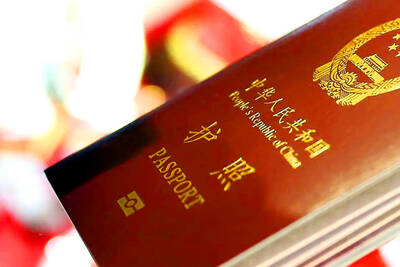
ANOTHER OPTION: The 13-year-old, whose residency status was revoked for holding a Chinese passport, could still apply for residency on humanitarian grounds, the government said The Executive Yuan has rejected an appeal from a 13-year-old Chinese student surnamed Lu (陸), whose permanent residency was revoked after immigration officers discovered he held a Chinese passport. Lu in December 2023 applied to settle in Taiwan to be with his mother, surnamed Lin (林), who is a Taiwan resident, an appeal decision released this month by the Executive Yuan showed. Lin settled in Taiwan after marrying a Taiwanese man in 2003, but the two divorced in 2011, and after marrying a Chinese man, she had Lu, the Executive Yuan’s appeals committee said. Lu’s application was approved in December 2024, and in


 RSS
RSS