


Members of a Taiwanese delegation who were in Palau to attend the inauguration of Palauan President Surangel Whipps Jr and sustained minor injuries in a car accident on Friday night have returned to Taiwan, the Ministry of Foreign Affairs said yesterday.
At about 9pm on Friday (Palau time), a vehicle transporting the delegates was involved in a road accident.
All those who were injured were immediately sent to Belau National Hospital for medical treatment.
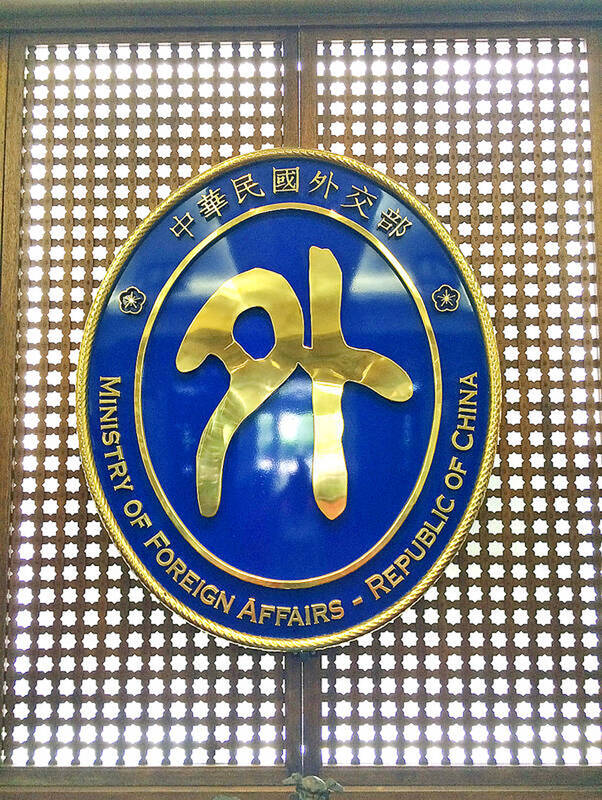
Photo: Taipei Times
None of them had serious injuries.
The delegation included Shin Kong Hospital president Hou Sheng-mou (侯勝茂) and Deputy Minister of Health and Welfare Lin Ching-yi (林靜儀), who were medical doctors, so they were able to help take care of the injured, the ministry said.
The ministry did not specify how many people were injured, nor did it provide any details, apart from confirming that the Palau police were investigating the incident.
Minister of Foreign Affairs Lin Chia-lung (林佳龍), who led the delegation to Palau, and Palauan Minister of State Gustav Aitaro also visited the hospital to make sure the injured were okay.
After a short stay at the hospital, those who were injured were discharged and returned to Taiwan along with the rest of the delegation on Saturday, the ministry said.
Lin, on behalf of President William Lai (賴清德), had led the delegation to attend Whipps’ inauguration on Thursday and to congratulate him on winning a second term in office.
Palau is one of 12 states that have diplomatic relations with Taipei instead of Beijing.
Whipps has been supportive of Taiwan since he first took office in 2021 and has repeatedly accused China of pressuring Palau to switch sides by weaponizing tourism.
He secured a second term in office after defeating former Palauan president Tommy Remengesau Jr during the presidential election in November last year.
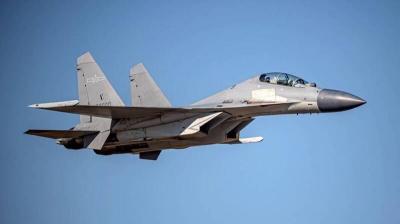
Eight Chinese naval vessels and 24 military aircraft were detected crossing the median line of the Taiwan Strait between 6am yesterday and 6am today, the Ministry of National Defense said this morning. The aircraft entered Taiwan’s northern, central, southwestern and eastern air defense identification zones, the ministry said. The armed forces responded with mission aircraft, naval vessels and shore-based missile systems to closely monitor the situation, it added. Eight naval vessels, one official ship and 36 aircraft sorties were spotted in total, the ministry said.
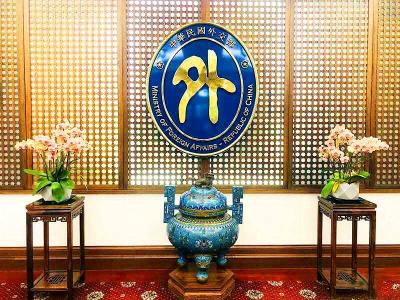
The Ministry of Foreign Affairs (MOFA) today said that if South Korea does not reply appropriately to its request to correct Taiwan’s name on its e-Arrival card system before March 31, it would take corresponding measures to alter how South Korea is labeled on the online Taiwan Arrival Card system. South Korea’s e-Arrival card system lists Taiwan as “China (Taiwan)” in the “point of departure” and “next destination” fields. The ministry said that it changed the nationality for South Koreans on Taiwan’s Alien Resident Certificates from “Korea” to “South Korea” on March 1, in a gesture of goodwill and based on the
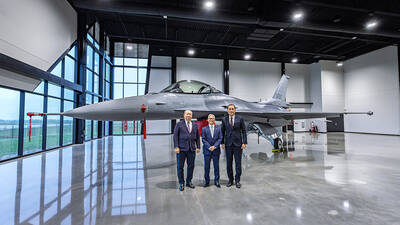
Taiwanese officials were shown the first of 66 F-16V fighter jets purchased by Taiwan from the United States, the Ministry of National Defense said yesterday, adding the aircraft has completed an initial flight test and is expected to be delivered later this year. A delegation led by Deputy Minister of National Defense Hsu Szu-chien (徐斯儉) visited Lockheed Martin’s F-16 C/D Block 70 (also known as F-16V) assembly line in South Carolina on March 16 to view the aircraft. The jet will undergo a final acceptance flight in the US before being delivered to Taiwan, the
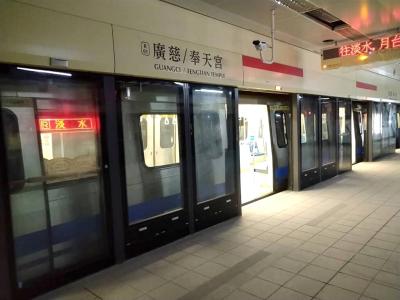
The New Taipei Metro's Sanyin Line and the eastern extension of the Taipei Metro's Tamsui-Xinyi Line (Red Line) are scheduled to begin operations in June, the National Development Council said today. The Red Line, which terminates at Xiangshan Station, would be connected by the 1.4km extension to a new eastern terminal, Guangci/Fengtian Temple Station, while the Sanyin Line would link New Taipei City's Tucheng and Yingge stations via Sanxia District (三峽). The council gave the updates at a council meeting reviewing progress on public construction projects for this year. Taiwan's annual public infrastructure budget would remain at NT$800 billion (US$25.08 billion), with NT$97.3


 RSS
RSS