


The Coast Guard Administration (CGA) caused a national security risk when it released a ship that was suspected of cutting an undersea cable near Keelung Harbor without going through proper procedures, an official said yesterday.
Cameroon-registered freighter Shunxing-39 (順興39號), which is owned by a company in Hong Kong, had allegedly cut an international undersea communications cable at 7am on Jan. 3 and then turned off its automatic identification system signal, reports said.
Chunghwa Telecom reported the incident to the CGA five hours later.
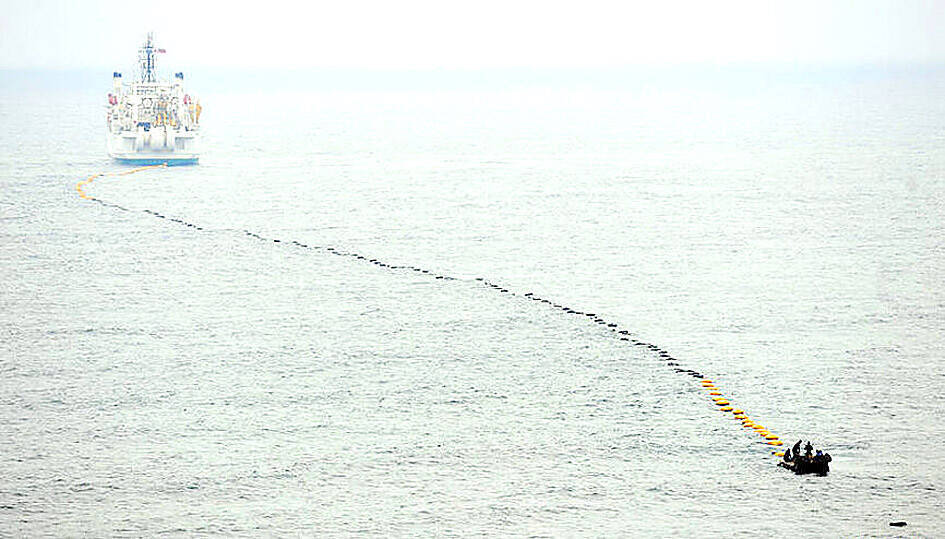
Photo: Taipei Times
The coast guard located the ship at about 4:40pm, but did not board it for inspection or detain it at Keelung Harbor, raising national security concerns, said the official, who asked to remain anonymous.
The coast guard released the Shunxing-39, because its destination was Busan, South Korea, and it did not have the necessary documents to dock in Keelung Harbor, the CGA told the Foreign Affairs and National Defense Committee at a meeting at the legislature on Thursday.
Additionally, due to bad weather conditions, which prevented coast guard personnel from boarding Shunxing-39, and the lack of incriminating evidence, the ship was not detained, CGA Deputy Director-General Hsieh Ching-chin (謝慶欽) said.
The coast guard could only detain a foreign vessel if it was caught in the act of breaking the law, he said.
The anonymous official said the coast guard did not effectively investigate the incident, as it had only contacted Shunxing-39 through a phone call and failed to board it for inspection.
The coast guard should have reported the incident to the National Security Council before releasing the ship, they said, adding that the Maritime and Port Bureau was also at fault.
The bureau did not allow the ship to be brought into the port, saying that it would incur docking fees, which they lacked the budget for, the official said.
Although the Shunxing-39 is large and weather conditions were poor, the coast guard could have dispatched a larger ship to escort it to the port, they said.
Chunghwa Telecom is also partly to blame for its delay in reporting the incident, the official added.
Additional reporting by CNA
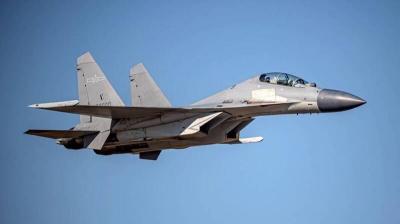
Eight Chinese naval vessels and 24 military aircraft were detected crossing the median line of the Taiwan Strait between 6am yesterday and 6am today, the Ministry of National Defense said this morning. The aircraft entered Taiwan’s northern, central, southwestern and eastern air defense identification zones, the ministry said. The armed forces responded with mission aircraft, naval vessels and shore-based missile systems to closely monitor the situation, it added. Eight naval vessels, one official ship and 36 aircraft sorties were spotted in total, the ministry said.
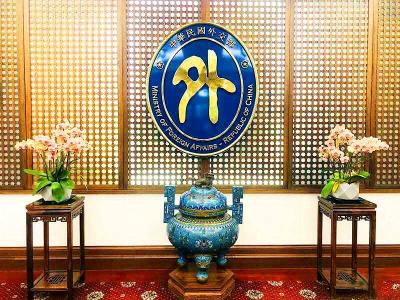
The Ministry of Foreign Affairs (MOFA) today said that if South Korea does not reply appropriately to its request to correct Taiwan’s name on its e-Arrival card system before March 31, it would take corresponding measures to alter how South Korea is labeled on the online Taiwan Arrival Card system. South Korea’s e-Arrival card system lists Taiwan as “China (Taiwan)” in the “point of departure” and “next destination” fields. The ministry said that it changed the nationality for South Koreans on Taiwan’s Alien Resident Certificates from “Korea” to “South Korea” on March 1, in a gesture of goodwill and based on the

Taiwanese officials were shown the first of 66 F-16V fighter jets purchased by Taiwan from the United States, the Ministry of National Defense said yesterday, adding the aircraft has completed an initial flight test and is expected to be delivered later this year. A delegation led by Deputy Minister of National Defense Hsu Szu-chien (徐斯儉) visited Lockheed Martin’s F-16 C/D Block 70 (also known as F-16V) assembly line in South Carolina on March 16 to view the aircraft. The jet will undergo a final acceptance flight in the US before being delivered to Taiwan, the
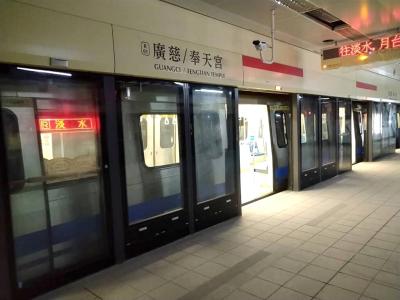
The New Taipei Metro's Sanyin Line and the eastern extension of the Taipei Metro's Tamsui-Xinyi Line (Red Line) are scheduled to begin operations in June, the National Development Council said today. The Red Line, which terminates at Xiangshan Station, would be connected by the 1.4km extension to a new eastern terminal, Guangci/Fengtian Temple Station, while the Sanyin Line would link New Taipei City's Tucheng and Yingge stations via Sanxia District (三峽). The council gave the updates at a council meeting reviewing progress on public construction projects for this year. Taiwan's annual public infrastructure budget would remain at NT$800 billion (US$25.08 billion), with NT$97.3


 RSS
RSS