


The Coast Guard Administration (CGA) yesterday said that a mechanism has been established to facilitate interdepartmental efforts to allow the detention of ships suspected of engaging in acts of sabotage in coastal waters.
The introduction of the new procedure followed an incident at sea earlier this month, when Chunghwa Telecom reported that one of its major undersea fiberoptic cables had allegedly been damaged by a vessel off Keelung.
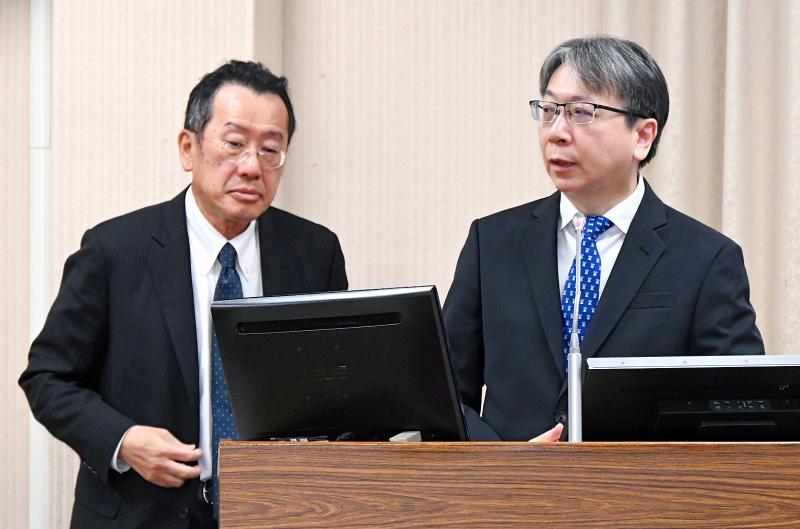
Photo: Liu Hsin-de, Taipei Times
At a legislative hearing yesterday, Democratic Progressive Party Legislator Lin Chu-yin (林楚茵) said that the Cameroon-flagged Shunxing-39 cargo ship, which is Chinese-owned, had not been detained and had sailed to Busan, South Korea.
Consequently, Taiwan now has to use diplomatic channels and ask for South Korea’s assistance in investigating the Jan. 3 incident, Lin said.
During the hearing, Lin asked CGA Deputy Director-General Hsieh Ching-chin (謝慶欽) why the coast guard had not been able to detain the vessel in Keelung Harbor.
Hsieh said that the ship’s destination was Busan, and it did not have the necessary documents for docking in Keelung Harbor.
Furthermore, under the previous procedure, the CGA could only detain a foreign vessel if it was caught in the act of breaking the law, Hsieh said.
In the case of the damaged cable, CGA vessels arrived on the scene four hours after the company filed the report, he added.
Following the incident, an interdepartmental meeting was called, during which agencies agreed on a mechanism to deal with suspected acts of sabotage at sea, Hsieh said.
Under the new mechanism, prosecutors would launch a probe upon receiving information about suspected acts of sabotage on undersea cables, and notify the CGA and the Maritime and Port Bureau of the incident, Hsieh said.
The CGA and the bureau would then bring the suspected vessel back to a port and detain it, Hsieh said.
National Security Bureau Director-General Tsai Ming-yen (蔡明彥) at the hearing said that the bureau would work with the CGA to improve the reporting of ships engaged in “suspicious” activities in waters around Taiwan, especially of vessels that have a “flag of convenience,” or vessels that are registered in a country other than their own.
Furthermore, the National Security Bureau would help CGA personnel deal with different “gray zone” activities done by Chinese ships, such as by providing information through lectures, Tsai said.
Before attending the hearing, Tsai told reporters that his agency had made a request to Taiwan’s international allies for an exchange of information on China’s “gray zone” activities around Taiwan.
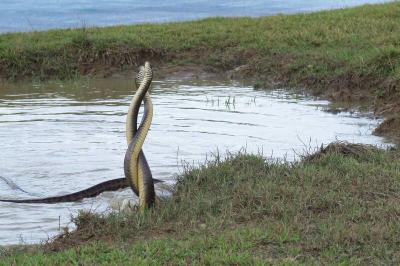
Kenting National Park service technician Yang Jien-fon (楊政峰) won a silver award in World Grand Prix Photography Awards Spring Season for his photograph of two male rat snakes intertwined in combat. Yang’s colleagues at Kenting National Park said he is a master of nature photography who has been held back by his job in civil service. The awards accept entries in all four seasons across six categories: architectural and urban photography, black-and-white and fine art photography, commercial and fashion photography, documentary and people photography, nature and experimental photography, and mobile photography. Awards are ranked according to scores and divided into platinum, gold and
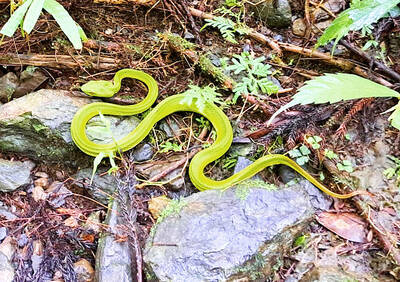
More than half of the bamboo vipers captured in Tainan in the past few years were found in the city’s Sinhua District (新化), while other districts had smaller catches or none at all. Every year, Tainan captures about 6,000 snakes which have made their way into people’s homes. Of the six major venomous snakes in Taiwan, the cobra, the many-banded krait, the brown-spotted pit viper and the bamboo viper are the most frequently captured. The high concentration of bamboo vipers captured in Sinhua District is puzzling. Tainan Agriculture Bureau Forestry and Nature Conservation Division head Chu Chien-ming (朱健明) earlier this week said that the
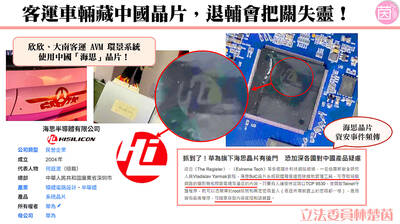
BREACH OF CONTRACT: The bus operators would seek compensation and have demanded that the manufacturer replace the chips with ones that meet regulations Two bus operators found to be using buses with China-made chips are to demand that the original manufacturers replace the systems and provide compensation for breach of contract, the Veterans Affairs Council said yesterday. Democratic Progressive Party Legislator Michelle Lin (林楚茵) yesterday said that Da Nan Bus Co and Shin-Shin Bus Co Ltd have fielded a total of 82 buses that are using Chinese chips. The bus models were made by Tron-E, while the systems provider was CYE Electronics, Lin said. Lin alleged that the buses were using chips manufactured by Huawei subsidiary HiSilicon Co, which presents a national security risk if the

The National Immigration Agency has banned two Chinese from returning to Taiwan, after they published social media content it described as disrespectful to national sovereignty. The agency imposed a two-month ban on a Chinese man surnamed Liang (梁) and a permanent ban on a woman surnamed Yang (楊), an influencer with 23 million followers, in October last year and last week respectively. Minister of the Interior Liu Shyh-fang (劉世芳) yesterday said on the sidelines of a legislative meeting that Chinese visitors to Taiwan are required to comply with the rules and regulations governing their entry permits. The government has handled the ban and


 RSS
RSS